season-guide
All 12 Personal Color Seasons Explained Simply
Not sure which of the 12 personal color seasons you are? Here's what each one looks like, in plain language — no jargon required.
The 12-season personal color system sounds complicated. Twelve categories, four parent seasons, three sub-seasons each — it can feel like a lot to hold in your head.
But the underlying logic is actually simple. Every season is defined by three qualities: how warm or cool, how light or deep, and how clear or muted. Once you understand those three axes, the 12 seasons stop feeling like a list to memorize and start making sense as a map.
Quick Answer: The 12 seasons divide into four families — Spring, Summer, Autumn, Winter. Within each family, there are three sub-seasons based on how light or deep and how bright or soft the coloring is. Spring and Autumn are warm. Summer and Winter are cool. That’s the whole structure.
The Three Axes
Before looking at each season, it helps to understand what’s actually being measured.
Warm vs cool. Skin with warm undertones has a golden, peachy, or olive quality. Skin with cool undertones has a pink, rosy, or bluish quality. Spring and Autumn are warm. Summer and Winter are cool. This is the most important axis — if you get this one right, you’ve already narrowed the field in half. The warm vs cool undertone guide goes into this in detail if you’re still working it out.
Light vs deep. Some people have light, delicate coloring where hair, skin, and eyes are all in a lighter range. Others have deep, high-contrast coloring where the darker values dominate. Most people fall somewhere in between.
Bright vs muted. Some coloring has a clear, vivid quality — colors need to match that crispness. Other coloring has a softer, more blended quality — muted and dusty colors look more harmonious than vivid ones.
These three qualities combine to produce the 12 seasons. Now let’s look at each family.
The Spring Family
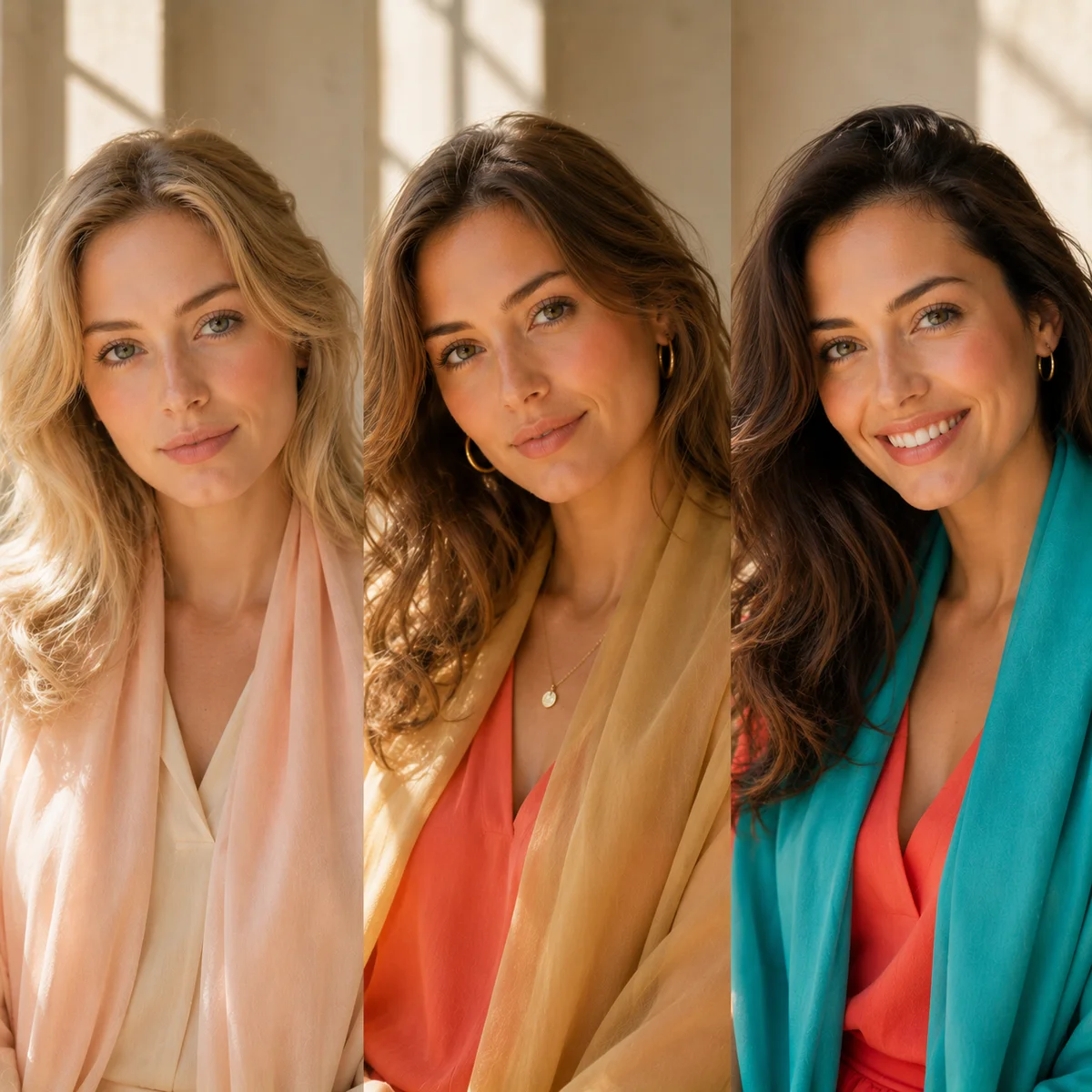
Spring seasons are warm and relatively light. The characteristic quality of Spring is warmth with brightness — these are the seasons that look best in warm, clear colors rather than warm, muted ones.
Light Spring
The most delicate of the Spring sub-seasons. Low contrast, light coloring, warm undertone. Think warm ivory skin, honey blonde hair, and light warm eyes. Colors that work: warm ivory, peach, soft coral, warm aqua. Colors to avoid: anything dark, cool, or vivid. Light Spring needs warmth and lightness together — rich colors are too much, cool colors are the wrong direction.
True Spring (Warm Spring)
The heart of the Spring family — fully warm, medium contrast, relatively bright. Think golden skin, warm chestnut or honey hair, warm hazel or golden eyes. Colors that work: warm coral, golden yellow, warm olive, terracotta, camel. True Spring can handle more saturation than Light Spring but still needs warmth. Cool or muted tones look flat.
Bright Spring
The most vivid Spring sub-season, sitting close to Bright Winter on the contrast scale. High contrast, warm undertone, but also the ability to handle clear, vivid colors. Think warm skin with striking eyes, or higher contrast between features. Colors that work: vivid warm tones — coral, warm turquoise, bright warm yellow. Bright Spring can handle more contrast than other Spring sub-seasons but still needs the warm direction.
The Summer Family
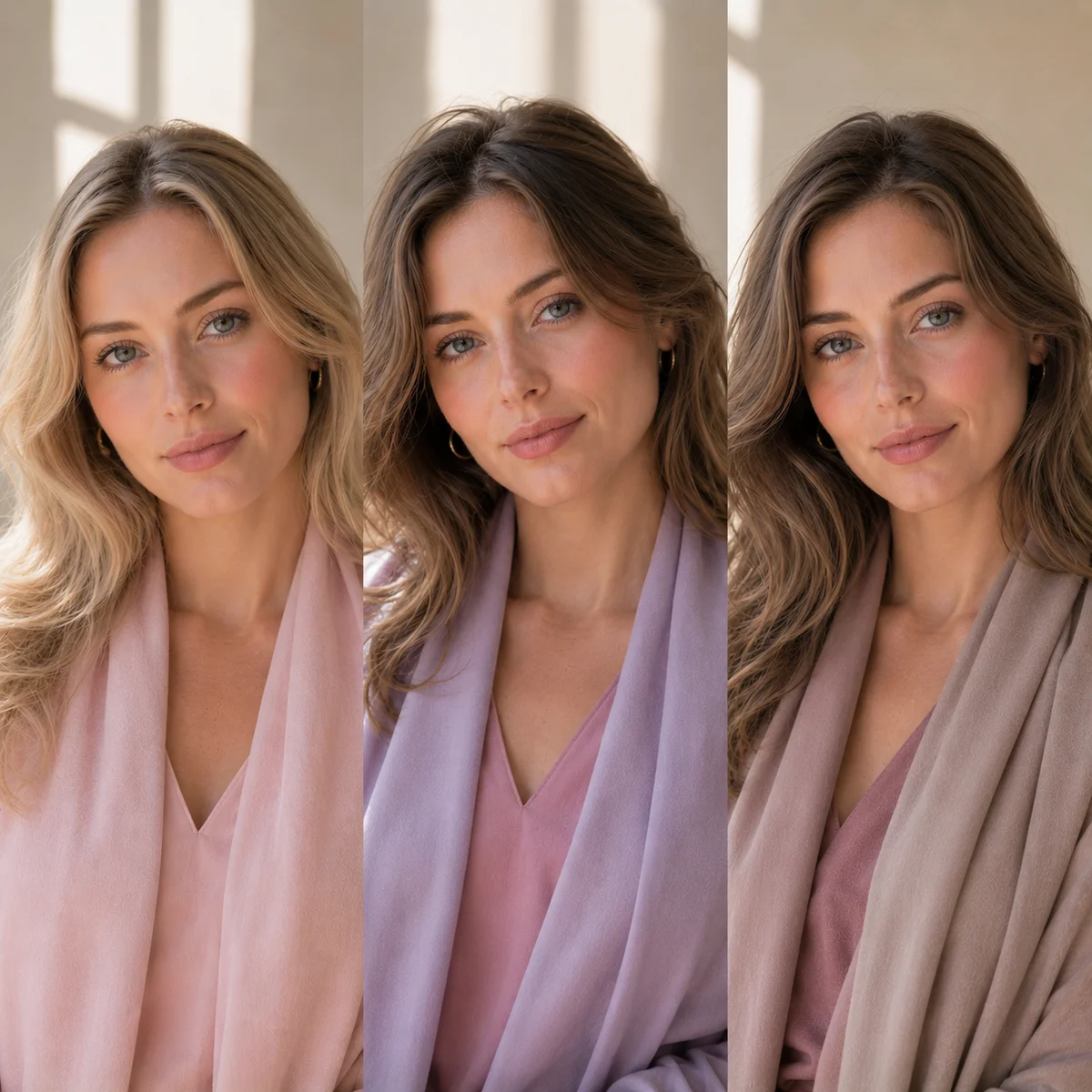
Summer seasons are cool and relatively light. The characteristic quality of Summer is coolness with softness — these seasons look best in cool, muted colors rather than cool, vivid ones.
Light Summer
The most delicate Summer sub-season. Low contrast, light coloring, cool undertone. Think cool fair skin, ash blonde hair, light cool blue or gray eyes. Colors that work: rose-white, soft pink, lavender, pale blue, cool mint. Light Summer needs coolness and lightness — dark or vivid colors overwhelm, warm colors look muddy. This season is often confused with Light Spring; the Light Spring vs Light Summer guide covers how to tell them apart.
True Summer (Cool Summer)
The heart of the Summer family — fully cool, medium contrast. Think cool ivory or pink-fair skin, ash or cool medium-brown hair, cool blue or gray eyes. Colors that work: clear rose, dusty lavender, soft navy, slate blue, cool gray, icy pink. True Summer can handle more contrast than Light Summer but stays in the muted, cool direction. Vivid or warm colors look harsh.
Soft Summer
The most muted Summer sub-season, sitting close to Soft Autumn on the muting scale. Low contrast, cool undertone, but with more of a dusty, blended quality than True Summer. Colors that work: dusty rose, warm taupe, muted sage, rose-brown. Soft Summer can occasionally borrow warm neutrals because of its Autumn influence — but the undertone is still cool. The Soft Summer vs Cool Summer guide explains how these two sub-seasons compare.
The Autumn Family
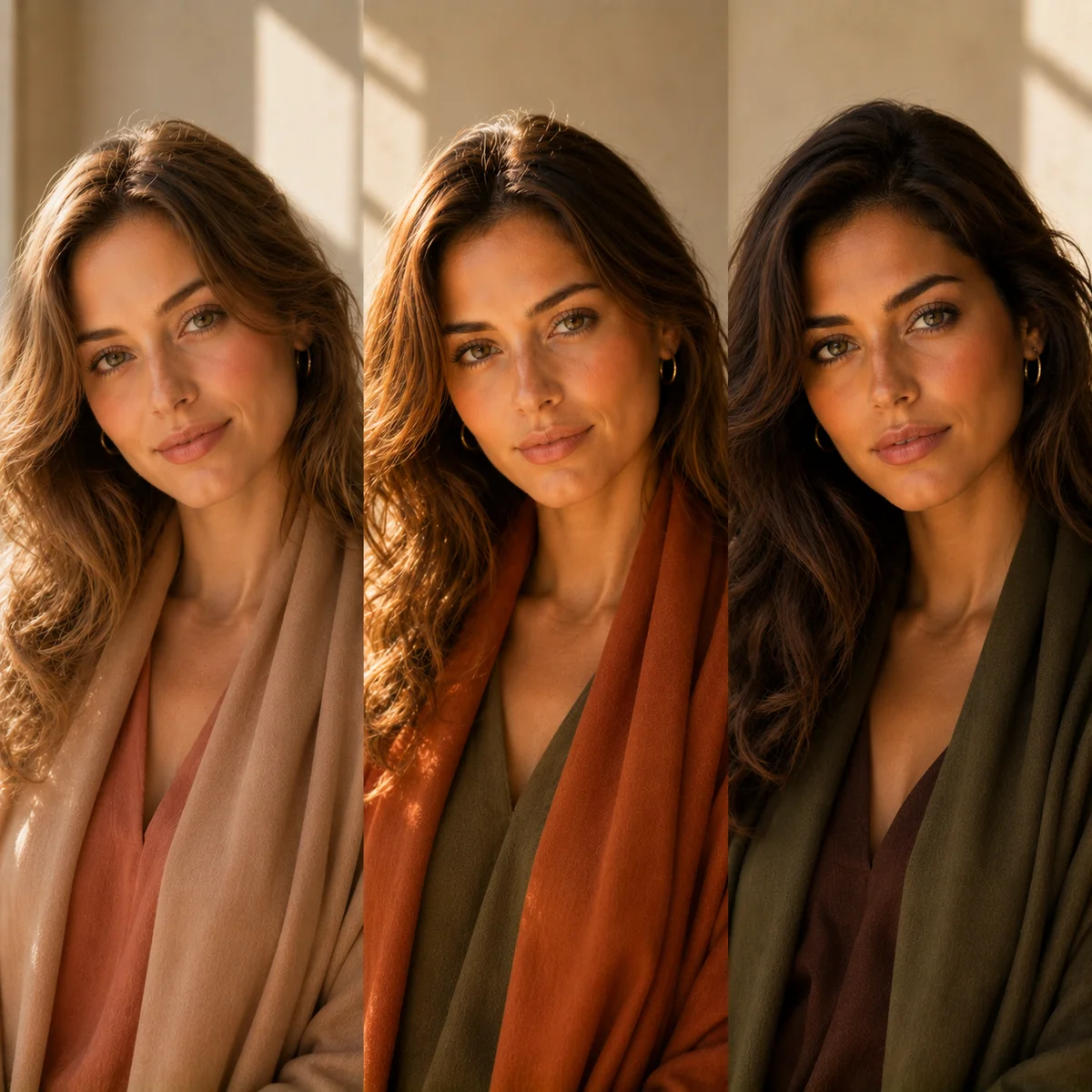
Autumn seasons are warm and relatively deep. The characteristic quality of Autumn is warmth with muting — these seasons look best in warm, earthy, muted tones rather than warm, bright ones.
Soft Autumn
The most delicate Autumn sub-season, sitting close to Soft Summer on the muting scale. Low contrast, warm undertone, but softer and dustier than True Autumn. Colors that work: dusty camel, muted terracotta, warm rose-brown, soft sage. Soft Autumn needs warmth but at a lower saturation — the rich versions of autumn colors can feel overwhelming. The True Autumn vs Soft Autumn guide breaks down exactly how these two differ.
True Autumn (Warm Autumn)
The heart of the Autumn family — fully warm, medium contrast, earthy richness. Think warm olive or peachy-tan skin, chestnut or copper hair, amber or warm brown eyes. Colors that work: rust, burnt orange, olive green, warm chocolate, deep camel, terracotta. True Autumn can handle the full richness of earth tones without being overwhelmed.
Deep Autumn
The deepest Autumn sub-season, sitting close to Deep Winter on the depth scale. High contrast, warm undertone, deeper coloring. Think warm dark skin with rich warm hair and eyes, or high-contrast dark coloring with a golden quality. Colors that work: very deep earth tones — dark chocolate, deep olive, burgundy with warmth, espresso. Deep Autumn can handle depth and contrast that would overwhelm Soft or True Autumn.
The Winter Family
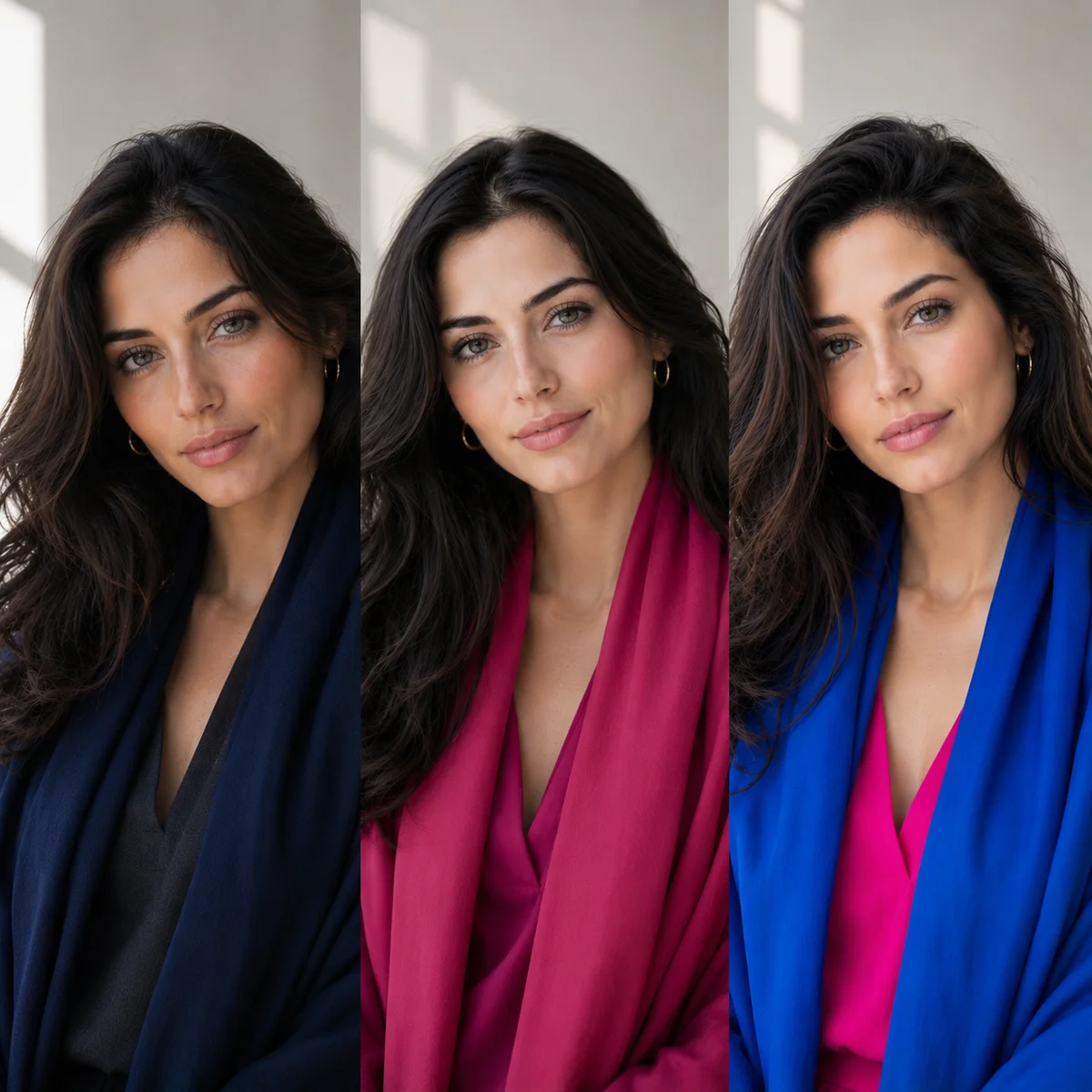
Winter seasons are cool and relatively deep. The characteristic quality of Winter is coolness with contrast — these seasons look best in cool, clear, high-contrast colors.
Deep Winter
The deepest Winter sub-season, sitting close to Deep Autumn on the depth scale. High contrast, cool undertone, very deep coloring. Think cool dark skin with cool dark hair and eyes, or high-contrast dark features with a cool quality. Colors that work: deep navy, dark charcoal, cool burgundy, deep plum. The darkness and contrast are the defining qualities — lighter or muted colors look washed out.
True Winter (Cool Winter)
The heart of the Winter family — fully cool, high contrast, clear and vivid. Think cool ivory or olive skin, dark cool hair, and striking cool eyes. Colors that work: true white, stark black, cool red, vivid blue, icy pink. True Winter can handle the most severe cool contrasts — dramatic combinations that would look harsh on other seasons work perfectly here.
Bright Winter
The most vivid Winter sub-season, sitting close to Bright Spring on the clarity scale. High contrast, cool undertone, but with the ability to handle very vivid, clear colors. Colors that work: vivid cool tones — bright fuchsia, electric blue, vivid cool red. Bright Winter shares the vivid quality with Bright Spring but keeps the cool direction. Muted or warm colors look wrong immediately.
How to Find Your Season
The three-axis approach is the fastest way to self-identify:
- Warm or cool? This is the most important question. The undertone guide is the best place to start if you’re unsure.
- Light, medium, or deep? Look at the overall depth of your coloring — hair, skin, eyes together.
- Bright or muted? Do vivid colors look harmonious or overwhelming? Do soft, dusty colors look natural or flat?
Those three answers point directly to your season family and sub-season. From there, the personal color analysis at everlyspark.com/analyze samples your photo’s colors and applies fixed rules to suggest a full color palette to explore.
FAQ
Do I need to know all 12 seasons? Only your own. Understanding the overall structure helps when you read about personal color — it’s easier to understand why certain colors work or don’t. But in practice, you only need to know your season’s palette.
What if I don’t fit neatly into one season? Most people do fit clearly into one season once they test with the right colors. The “I fit multiple seasons” experience usually means either the test colors weren’t distinct enough, or the person hasn’t tried clearly warm vs clearly cool at the right saturation level.
Is the 12-season system the only one? No. The original system had four seasons (Spring, Summer, Autumn, Winter). The 12-season system adds sub-seasons for more precision. Some systems use 16 or more. The 12-season model is the most widely used balance between specificity and practicality.
Can my season change? Your underlying undertone and contrast level stay stable throughout life. What can change is surface skin tone — tanning, aging, hair coloring — which might affect how you perceive your season. The core season is consistent.
Which season is most common? No season is significantly more common than others across a diverse population. Perceived prevalence varies by region and ethnicity, which is partly why the 12-season system is useful — it accounts for the full range of human coloring rather than assuming a narrow default.
Is there a season that can wear anything? No season can wear all colors equally well. Even Neutral seasons (those between families, like Soft Autumn or Bright Spring) have clear preferences. The goal isn’t to find a season that works with everything — it’s to find the color direction that makes your specific coloring look its best.
Where do I go from here? Once you’ve found your season, explore your complete color palette at everlyspark.com/seasons to see exactly which colors work best in makeup, clothing, hair, and accessories. And if you want a second opinion beyond self-identification, the personal color analysis samples the colors in your photo and applies a fixed set of rules to suggest a direction — it’s not a confirmed result, just another data point to weigh alongside your own eye.
Final Thoughts
The 12 personal color seasons are really just one question asked three ways: warm or cool, light or deep, bright or muted. Every season is an answer to those three questions — which means once you understand the structure, identifying your place in it becomes a lot more straightforward than it looks.
If you’re starting fresh, begin with finding your personal color season — it walks through the process step by step. Or go directly to the personal color analysis at everlyspark.com/analyze for a guided result.
Not sure which season fits you best?
Start with a simple photo-based personal color analysis, then explore makeup guides and product picks tailored to your results.