guide
A 5-Minute Personal Color Triage: Choose Your Next Test
Use five minutes to control lighting, sample temperature, value, chroma, and contrast, and choose a follow-up comparison—not to claim a final season.
Five minutes is enough to improve your setup, make a few initial observations, and choose the next comparison. It is not enough to guarantee a final season, subtype, or accuracy level.
This is directional triage. It uses EverlySpark’s four observation labels—temperature, value, chroma, and contrast—to decide what to test next. The labels organize styling observations; they are not a scientifically validated diagnostic method.
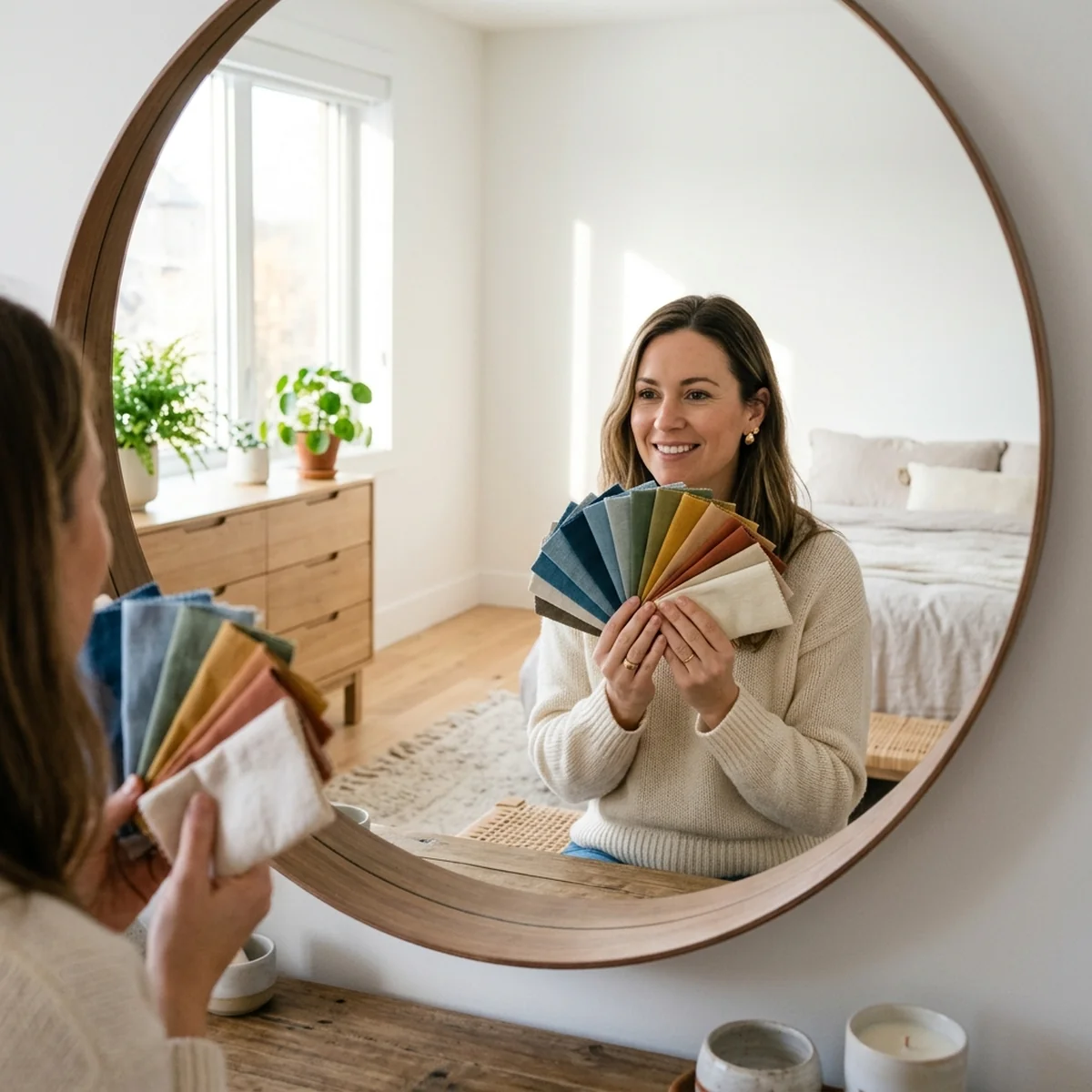
What you need
- indirect daylight from one window;
- a neutral background if available;
- a mirror or phone with filters disabled;
- four to eight garments, towels, or papers in contrasting color directions;
- a short note on your phone.
Avoid mixed window and overhead light. Keep makeup and hair position unchanged during the five minutes. If your phone allows exposure and white-balance lock, use it.
Minute 1: control the scene
Sit in one place. Hold each cloth in the same area beneath the chin. Keep camera distance and angle fixed. Do not compare a small scarf with a full sweater or a matte cotton with a reflective satin and assume color alone caused the difference.
Write: “indirect window light, same camera, same makeup, same fabric area.” If you cannot keep the scene stable, the best five-minute result is to postpone the comparison.
Minute 2: sample temperature
Compare one warm/cool pair at similar depth and saturation:
- tomato red versus blue-red;
- muted coral versus dusty rose;
- warm taupe versus cool taupe.
Record warm, cool, or unclear. Vein color and gold-versus-silver preference are not used as evidence here. They do not isolate temperature and can be affected by skin depth, anatomy, lighting, metal finish, size, and familiarity.
Minute 3: sample value
Choose one hue direction and compare a lighter and deeper version at similar clarity: light aqua versus deep teal, light gray versus charcoal, or apricot versus rust.
Record lighter, deeper, or unclear. This does not determine Spring, Summer, Autumn, or Winter. It only tells you whether value deserves attention in a follow-up test.
Minute 4: sample chroma
Compare a dusty, clean, and vivid version of one hue where possible: dusty rose, clear rose, vivid fuchsia—or muted olive, clean olive, vivid green.
Record softer, clearer, or unclear. Do not confuse very light with muted or very dark with saturated.
Minute 5: sample contrast and choose the next test
Keep the same top and change the supporting neutral:
- soft white versus black;
- dove gray versus charcoal;
- camel versus dark chocolate.
Record whether lower, medium, or sharper contrast appears more useful—or leave it unclear.
Now stop. The output is a next action, not a season label.
| Initial pattern | Next comparison |
|---|---|
| Warm + lighter | Compare Light Spring with Light Summer while holding lightness constant. |
| Warm + clearer | Compare Warm/True Spring with Bright Spring using a chroma ladder. |
| Warm + softer | Compare Soft Autumn with Soft Summer using matched muted pairs. |
| Warm + deeper | Compare Warm/True Autumn with Deep Autumn. |
| Cool + lighter | Compare Light Summer with Light Spring. |
| Cool + softer | Compare Soft Summer with Cool/True Summer. |
| Cool + clearer | Compare Bright Winter with Bright Spring while holding chroma constant. |
| Cool + deeper | Compare Deep Winter with Deep Autumn. |
| Mixed or unclear | Repeat one matched pair under a better-controlled setup. |
The 12-season guide provides the map. It should not be used to turn this quick screen into certainty.
What the five-minute result cannot tell you
It cannot reliably establish:
- a final four-season or 12-season classification;
- a percentage confidence or guaranteed accuracy;
- a biological undertone from veins or jewelry;
- a complete wardrobe palette;
- how every fabric, finish, print, or makeup color will behave;
- whether a camera-based result matches an in-person drape comparison.
EverlySpark’s photo-based tool is also an estimate. Its output can change with lighting, camera processing, makeup, hair color, and background. The site’s About page describes the tool and editorial boundaries.
Plan the follow-up comparison
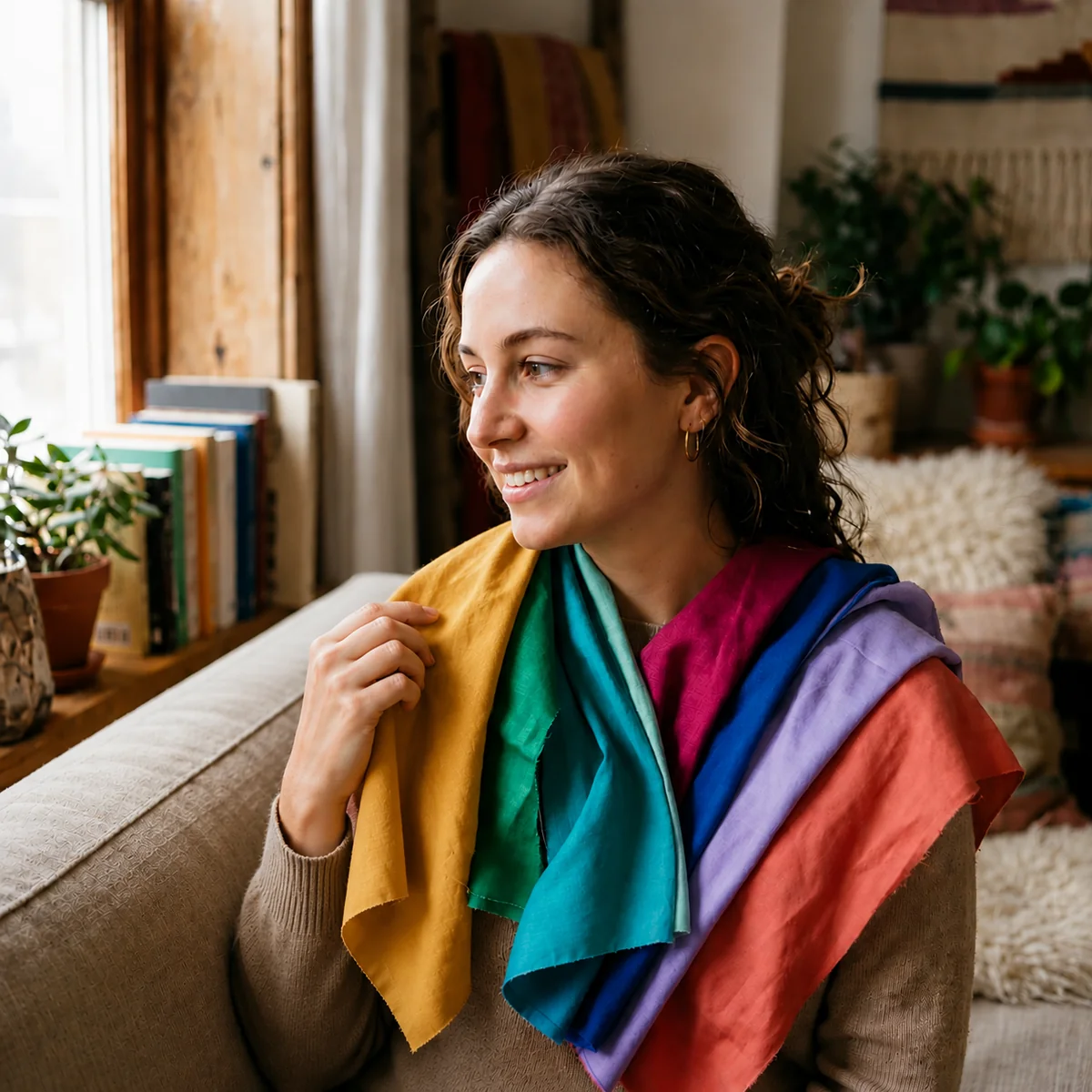
Choose the most uncertain or most useful axis. Schedule a longer comparison with three or four closer options. For example:
- If warm/cool was unclear, compare multiple matched temperature pairs.
- If vivid color dominated, build a chroma ladder before rejecting brightness.
- If black felt harsh, compare it with charcoal and softened navy.
- If light and deep both worked, keep value open and investigate temperature or chroma.
Repeat observations if practical, but do not treat five repetitions—or any fixed count—as a validated threshold. The purpose of repetition is to see whether an impression survives normal variation.
Use the result in one low-risk decision
Apply the tentative direction to one choice:
- choose between two tops with similar cut and fabric;
- select a near-face neutral for a jacket;
- decide whether to soften a vivid accent;
- move a difficult color away from the face;
- choose the pair you will compare again.
Do not replace an entire wardrobe from a five-minute screen.
FAQ
Can a selfie replace indirect daylight?
A selfie may help record the setup, but automatic white balance, exposure, filters, and screen settings can change color. Use it as one observation, not a calibrated measurement.
What if every axis is unclear?
That is a valid result. Improve the light, use closer matched fabrics, or ask a narrower wardrobe question. Unclear evidence should not be converted into a season.
Are warm and cool the only important factors?
No. Value, chroma, and outfit contrast can change the outcome. That is why this triage samples all four rather than treating undertone as the single deciding factor.
Does a neutral result mean every color works?
No. It means the chosen temperature pair did not create a stable difference. Chroma, value, hue family, material, or setup may matter more.
Can the season change over time?
Instead of assuming permanence or change from age alone, retest when hair color, makeup habits, lighting, or wardrobe context changes enough to affect the observation.
Final takeaway
In five minutes, control the scene, sample temperature, value, chroma, and contrast, and choose one next matched comparison. Do not claim a final season or accuracy guarantee.
Start the longer comparison with what personal color analysis can and cannot tell you, then use the relevant adjacent-season guide. If you use the photo analysis, treat its result as another estimate to compare with real wardrobe observations.
Not sure which season fits you best?
Start with a simple photo-based personal color analysis, then explore makeup guides and product picks tailored to your results.