season-guide
Are You True Summer or Soft Summer?
True Summer and Soft Summer are both cool — the real divider is saturation. Learn the graying test, the near-face rule, and which colors settle it.
Most people who wobble between these two seasons already know they’re Summer-leaning: cool or cool-neutral undertones, colors from the blue side of the spectrum, nothing loudly golden. The confusion isn’t about warmth. It’s about how much color you can hold before it starts wearing you.
That single question — how saturated can your colors be? — is what actually separates True Summer (often labeled Cool Summer in 12-season systems) from Soft Summer.
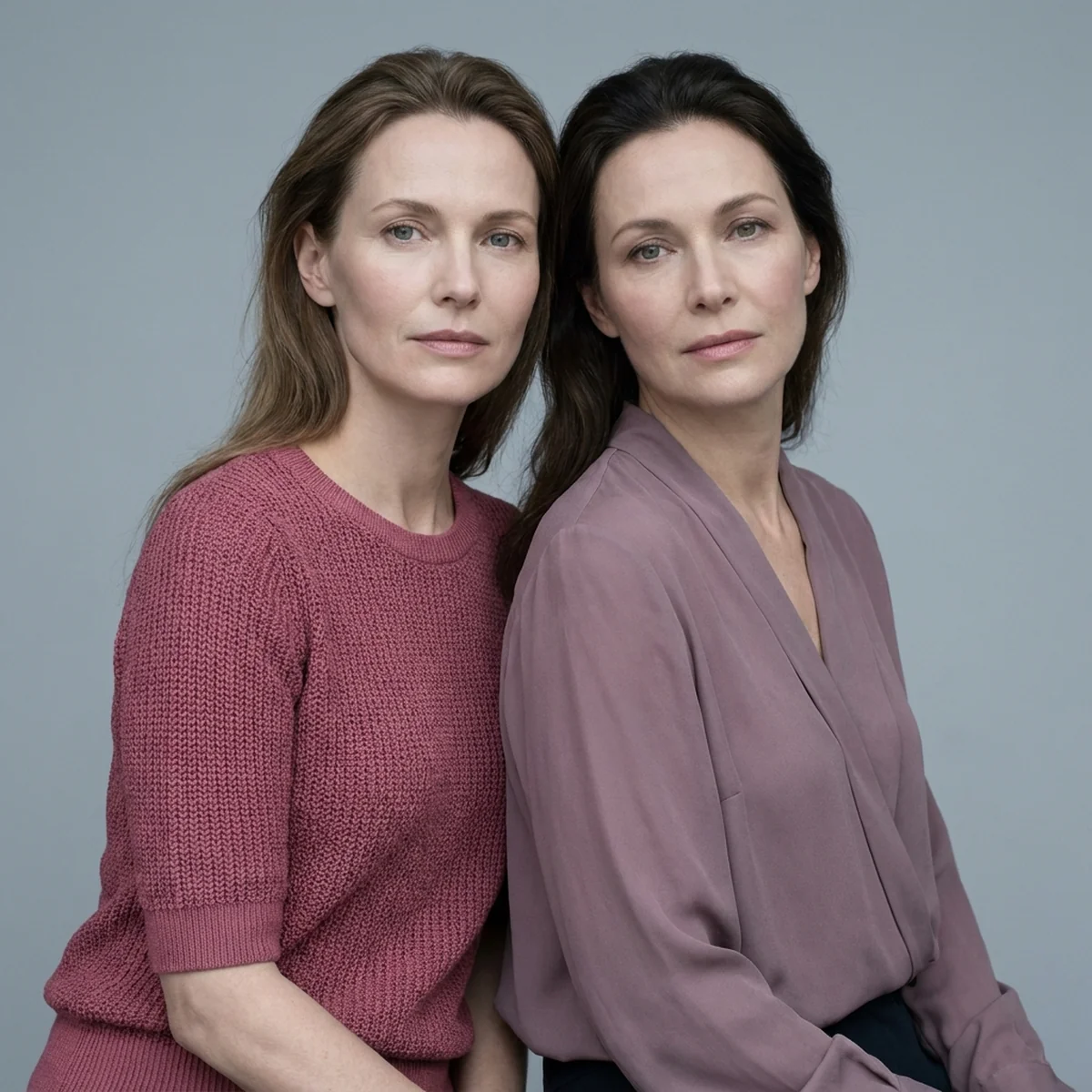
Why These Two Get Confused
Both seasons sit on the cool side with medium or low contrast, so almost every generic tip (“you suit blue,” “avoid orange”) fits them equally well and tells you nothing. And their palettes share a whole middle zone: rose, berry, mauve, blue-gray tones appear in both.
The difference lives at the edges of those palettes:
- A True Summer palette stays even. Its colors are cool and moderately clear from edge to edge — think rose berry, muted raspberry, clean dusty mauve. Nothing screams, but nothing fades either.
- A Soft Summer palette grays out toward its edges. Mushroom beige, weathered plum, tea rose — colors that look like the same shades seen through a light haze.
If pure, even cool colors feel comfortable on you and heavily grayed colors look slightly lifeless, you’re leaning True Summer. If grayed, blended colors make your features look more organized — and clearer colors start to bounce light around your face — you’re leaning Soft Summer.
Quick Reference
| Signal | Points to True Summer | Points to Soft Summer |
|---|---|---|
| Clear rose or berry near the face | Looks composed, adds polish | Slightly loud, pulls focus |
| Heavily grayed, dusty tones | Looks a touch flat or tired | Looks intentional, settled |
| Hair and skin overall read | Even, consistent saturation | Softly blended, low internal contrast |
| Best natural lip color | Rose berry, muted raspberry | Dusty mauve, muted rosy nude |
The Graying Test
This is the most direct self-check between the two, because it isolates exactly the axis that divides them.
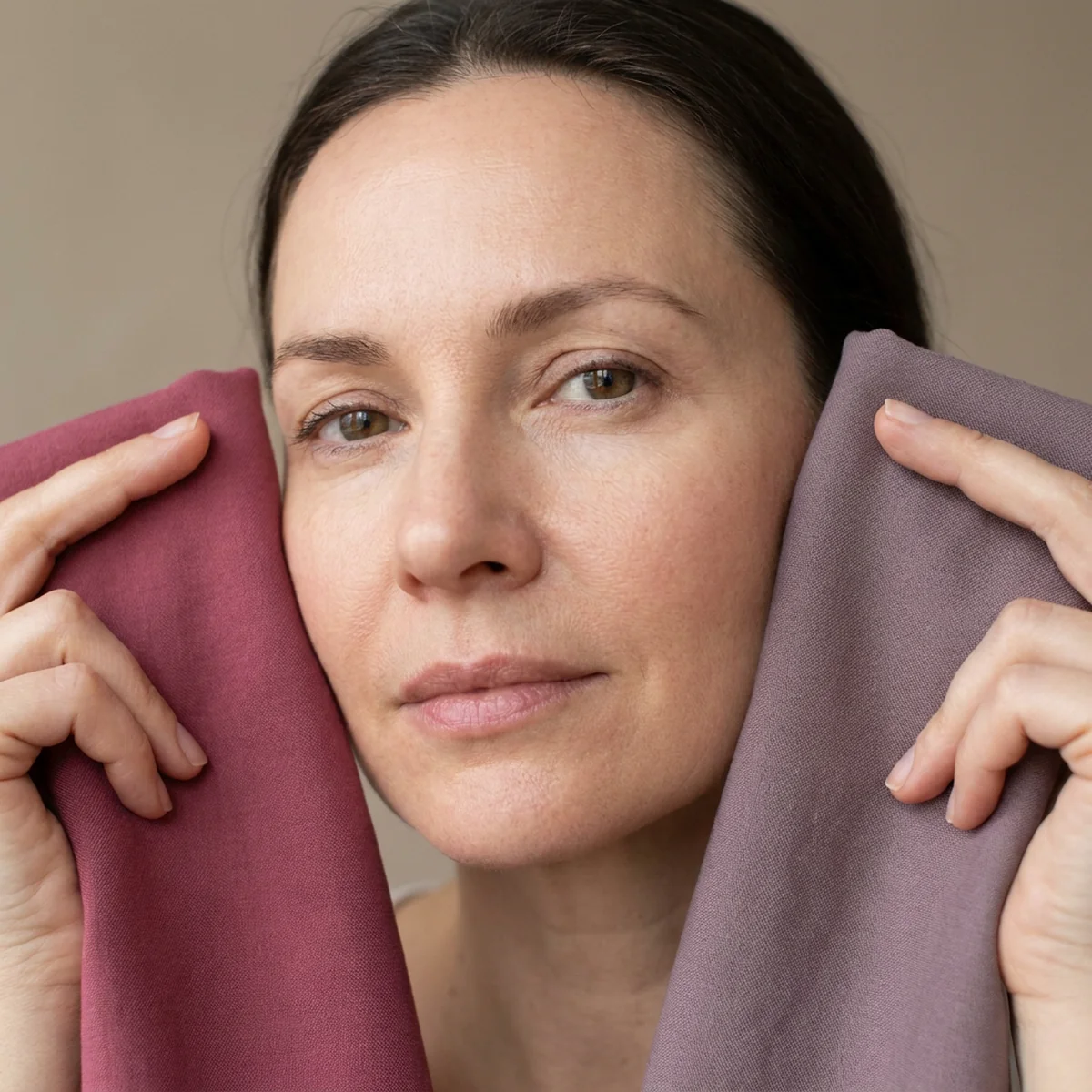
Hold two fabrics near your face in daylight, ideally with no makeup:
- One in a clear, even cool tone — a true rose pink or a clean slate blue.
- One in the same color family but visibly mixed with gray — a dusty mauve or mushroomy rose.
Watch three things: the under-eye area, the line of your jaw, and how “assembled” your face looks against each fabric.
- If the clearer fabric smooths things out and the grayed one makes you look slightly tired or washed toward the background → True Summer direction.
- If the grayed fabric quietly flatters you while the clearer one starts competing with your face → Soft Summer direction.
Do it more than once. Fabric tests are noisy when you’re tired, the lighting is warm, or the camera is doing the judging instead of a mirror.
What Each Season Actually Looks Like
True Summer
Even coloring where hair, eyes, and skin read as one consistent cool register. Contrast is moderate — noticeable but never stark. Clear-ish cool pinks, berries, and slate blues sit comfortably near the face, and the overall impression is composed and fresh rather than soft-focus.
In makeup terms, this season handles rose berry, muted raspberry, and cool rose lips without them overpowering anything, which is exactly what trips up genuinely Soft Summers.
Soft Summer
Everything blends. Hair, eyes, and skin share muted pigment, so there’s very little internal contrast to fight. Grayed colors — hushed mauve, mushroom beige, dusty stone — look intentional on this season, like they were tailored to it. Brighter cool colors don’t clash dramatically; they just make the person look slightly behind their own outfit.
Soft Summer makeup works when it stays diffused: rosy nudes, muted mauve blush, nothing crisp.
Makeup and Hair Signals
Coloring habits are one of the fastest tells, because most people have already been unconsciously self-correcting for years without knowing why.
True Summers tend to gravitate toward clean, moderately saturated makeup — a rose berry lip that reads as “put together” rather than heavy, blush with real pigment rather than a whisper of color. Ask a True Summer to wear a fully grayed-out mauve lip and they’ll often say it looks “unfinished,” even before they know the season vocabulary behind that instinct.
Soft Summers show the opposite pattern. Their makeup bags tend to be full of muted, blended shades — dusty rose, soft taupe, hushed berry — because anything with more clarity has quietly been feeling “off” for years. Hair follows a similar logic: ash-brown or cool taupe shades with gentle depth support Soft Summer, while True Summer can carry slightly more polish and shine in the same cool-brown family without looking artificial or overdone.
If you’re not sure which pattern describes you, look at what you already reach for on an ordinary day — not what you think you should wear. Habit is often more honest than intention.
Where People Go Wrong
The classic mistake is choosing based on contrast alone. Plenty of Soft Summers have medium contrast and conclude they must be True Summer — then wonder why “their” recommended colors look loud. Contrast separates Winter from Summer territory; saturation within the cool range is what separates these two.
The second mistake is assuming Soft Summer is simply “a duller version.” It isn’t a lesser palette — grayed tones are genuinely its power range, especially in professional settings where softer colors photograph calmly.
The third mistake is judging from photos instead of a mirror. Camera sensors and screen calibration shift saturation in ways that flatter or distort skin unpredictably, so a color that reads “clear” on your phone might look muddy in person. When in doubt, trust in-person daylight over a photo — especially one taken indoors under mixed lighting.
Can You Be Somewhere In Between?
Yes, and it’s common. The 12-season model draws borders through a continuous spectrum. If you sit between the two, build your base wardrobe from the shared middle — cool-neutral, gently muted colors — and let accessories reveal whether you tolerate more clarity (lean True) or more diffusion (lean Soft). Small, changeable pieces near the face — a scarf, a lip color, a blouse — are the safest place to test the edges before committing a whole wardrobe to one direction.
And if repeated self-tests keep flip-flopping, that ambiguity itself is information: a photo-based comparison adds a directional signal beyond guesswork, though it can shift with lighting and capture conditions rather than measuring your coloring directly.
FAQ
Is True Summer the same as Cool Summer? In most 12-season systems, yes — the labels refer to the same season: the Summer sub-season closest to the pure Summer archetype, with clean cool tones and medium contrast. Some guides say “True,” some say “Cool.”
Can Soft Summer wear brighter colors at all? Occasionally and in small doses. A clearer rose lip reads fine because lips are naturally saturated. The problem shows up in large near-face surfaces — coats, blouses, scarves — where brightness overwhelms muted coloring.
What about black? Neither season owns black well, but for different reasons. For True Summer it’s too harsh relative to moderate contrast; for Soft Summer it’s simultaneously too dark and too crisp. Soft navy or charcoal does the same job better for both.
Does hair color change the answer? It can shift it. Ash brown and cool taupe hair support both seasons, but pushing toward glossy cool-dark shades nudges you True Summer, while sun-faded, grayish tones blend naturally into Soft Summer.
Do accessories follow the same rule? Yes — metals and stones respond to the same saturation logic as fabric. True Summer handles brushed silver and clear cool stones (aquamarine, rose quartz) well, while Soft Summer looks better in matte, softly finished silver and stones with a slightly hazy cut, like moonstone or dusty rose quartz.
Final Thoughts
Don’t try to settle this by memorizing two palettes. Settle it with one question — clear or grayed? — tested against your own face in honest daylight. Once you know which direction your coloring rewards, everything else (lips, knits, coats, even glasses frames) stops being trial and error.
Not sure yet? Walk your result through the full season map and see where your coloring lands:
- Browse every season on the EverlySpark season hubs
- Comparing the neighboring Summer split? Read Light Summer vs Cool Summer next
- Compare the neighboring pair in Soft Summer vs Cool Summer
- Check the muted boundary in Soft Summer vs Soft Autumn
- Sharpen your undertone read with How to Identify a True Summer Undertone
- Or go straight to the photo-based personal color analysis
Not sure which season fits you best?
Start with a simple photo-based personal color analysis, then explore makeup guides and product picks tailored to your results.