season-guide
Soft Summer vs Cool Summer: What's Actually Different?
Soft Summer and Cool Summer both have cool undertones — but contrast level and your best neutrals reveal which one actually fits you.
If you’ve narrowed your personal color season down to somewhere in the Summer family, you’ve already done more than most people. You know you have a cool undertone. You know bright, saturated colors feel like too much. But now you’re stuck between Soft Summer and Cool Summer, and every explanation you read says roughly the same thing: both are cool, both are muted, both suit soft colors.
So what actually separates them?
The confusion is real — and it’s built into the system. Both seasons share a cool undertone and a preference for muted tones. But they’re distinct in ways that matter practically, especially in what colors actually work on your skin.
Quick Answer: Soft Summer is defined by low contrast and a slightly warm-blended muting — think dusty rose, warm taupe, muted sage. Cool Summer has cleaner, crisper cool tones with slightly more contrast — think clear rose, icy lavender, slate blue. The key difference isn’t just saturation. It’s contrast level and whether your best colors lean slightly warm-neutral or stay strictly cool.
Why Soft Summer and Cool Summer Get Confused
Both seasons belong to the Summer family, which means they inherit the same foundational qualities: a cool undertone, a preference for soft rather than vivid colors, and a tendency to look washed out in warm, earthy tones.
The confusion usually happens because these two sit on opposite ends of the Summer spectrum. Soft Summer borders Autumn. Cool Summer borders Winter. Both are Summer — but they’re pulling in different directions.
The difference is subtle. It’s about where on the muted spectrum you sit, how much contrast your coloring can handle, and whether the best colors on you lean slightly warm-neutral or stay clearly cool. Understanding your Summer undertone in more depth helps clarify which end of the spectrum you’re on.
What Soft Summer Actually Looks Like
Soft Summer is the most muted of the three Summer sub-seasons. It sits at the border between Summer and Autumn — which means it takes the cool undertone of Summer but softens it with an Autumn-influenced haze. Colors that work for Soft Summer look slightly dusty or hazy rather than clean and clear.
In practice:
- Colors that work tend to have a slightly warm-neutral quality — dusty rose, warm taupe, muted sage, rose-brown. Not warm colors exactly, but not strictly cool either.
- Contrast is low. Soft Summer coloring typically has minimal difference between hair, eyes, and skin — everything reads in the same soft, blended range.
- Bright colors look harsh immediately. Vivid or neon anything will overwhelm the palette.
- Strictly cool colors — icy white, electric blue, pure navy — can feel too sharp or stark.
The defining quality is that blended, soft haze. The colors that look best have a slightly grayed or dusty finish, as though they’ve been toned down with a neutral. This is part of what makes Soft Summer different from Soft Autumn — Soft Autumn has the same low contrast and muting, but its colors lean warm rather than cool-neutral.
What Cool Summer Actually Looks Like
Cool Summer sits at the other end of the Summer spectrum, bordering Winter. It takes Summer’s cool undertone and adds slightly more contrast and clarity than Soft Summer.
In practice:
- Colors that work are distinctly cool — clear rose, icy pink, dusty lavender, soft navy, slate blue, cool gray. Less tolerance for warm-leaning neutrals than Soft Summer has.
- Contrast is medium. Cool Summer coloring often has a slightly clearer difference between features — think cooler skin tone with defined hair and eye color.
- Warm neutrals like camel, khaki, or warm beige look off — they conflict with the cool undertone in a visible way.
- Icy or cool-bright colors work better here than for Soft Summer — they don’t feel too stark.
The defining quality is clarity within coolness. The colors still aren’t vivid, but they’re cleaner and crisper than Soft Summer’s palette.
The Real Test: Contrast Level
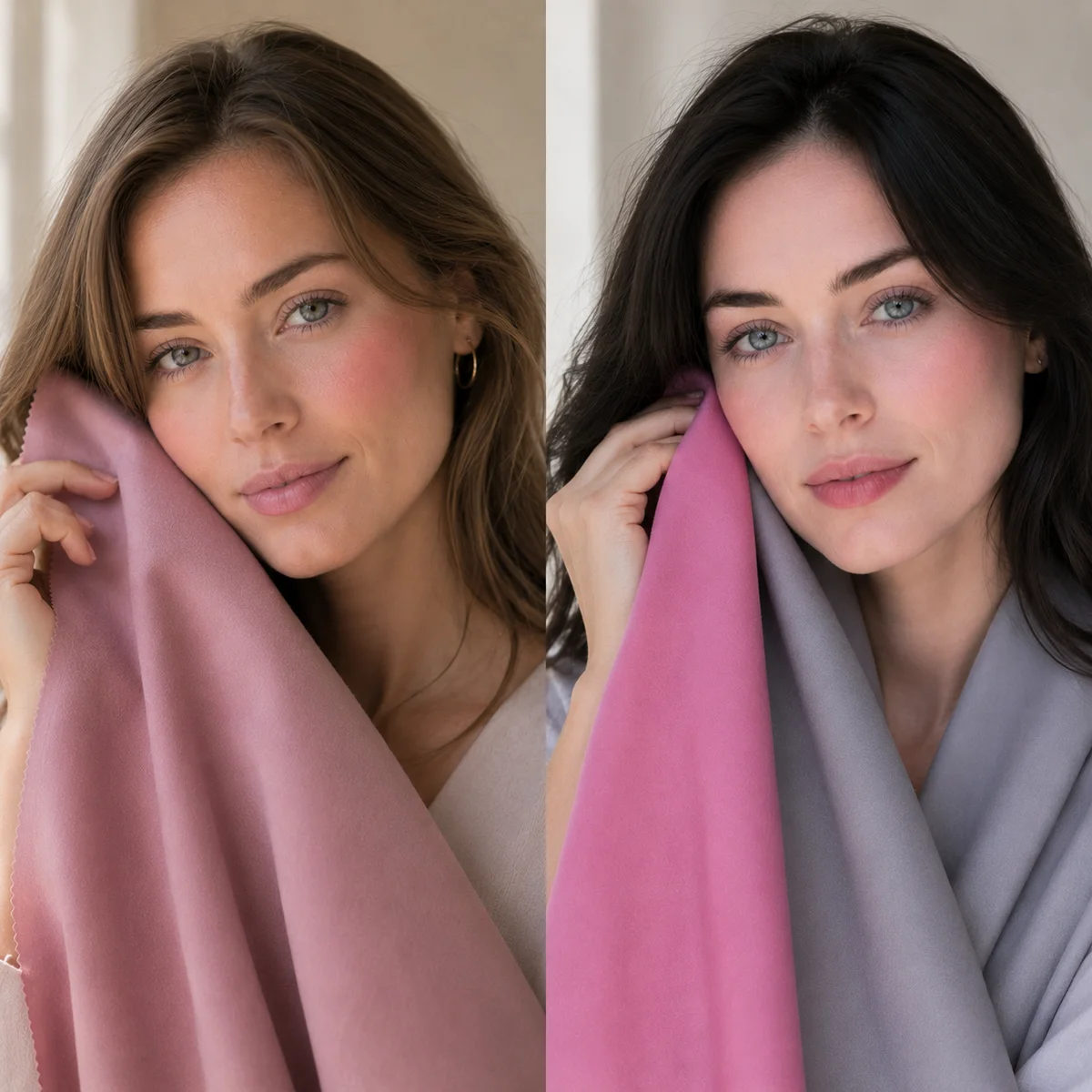
The most practical way to distinguish Soft Summer from Cool Summer isn’t the color tests most guides rely on. It’s contrast level.
Soft Summer coloring is low-contrast — hair, skin, and eyes tend to read in similar value ranges. When you put on a high-contrast outfit (black top, white collar, bold pattern), it can look like the outfit is wearing you rather than the other way around.
Cool Summer coloring has slightly more contrast. Not dramatic — this isn’t the high-contrast territory of Winter or Deep Autumn. But there’s a clearer presence that means you can handle a little more definition than Soft Summer can.
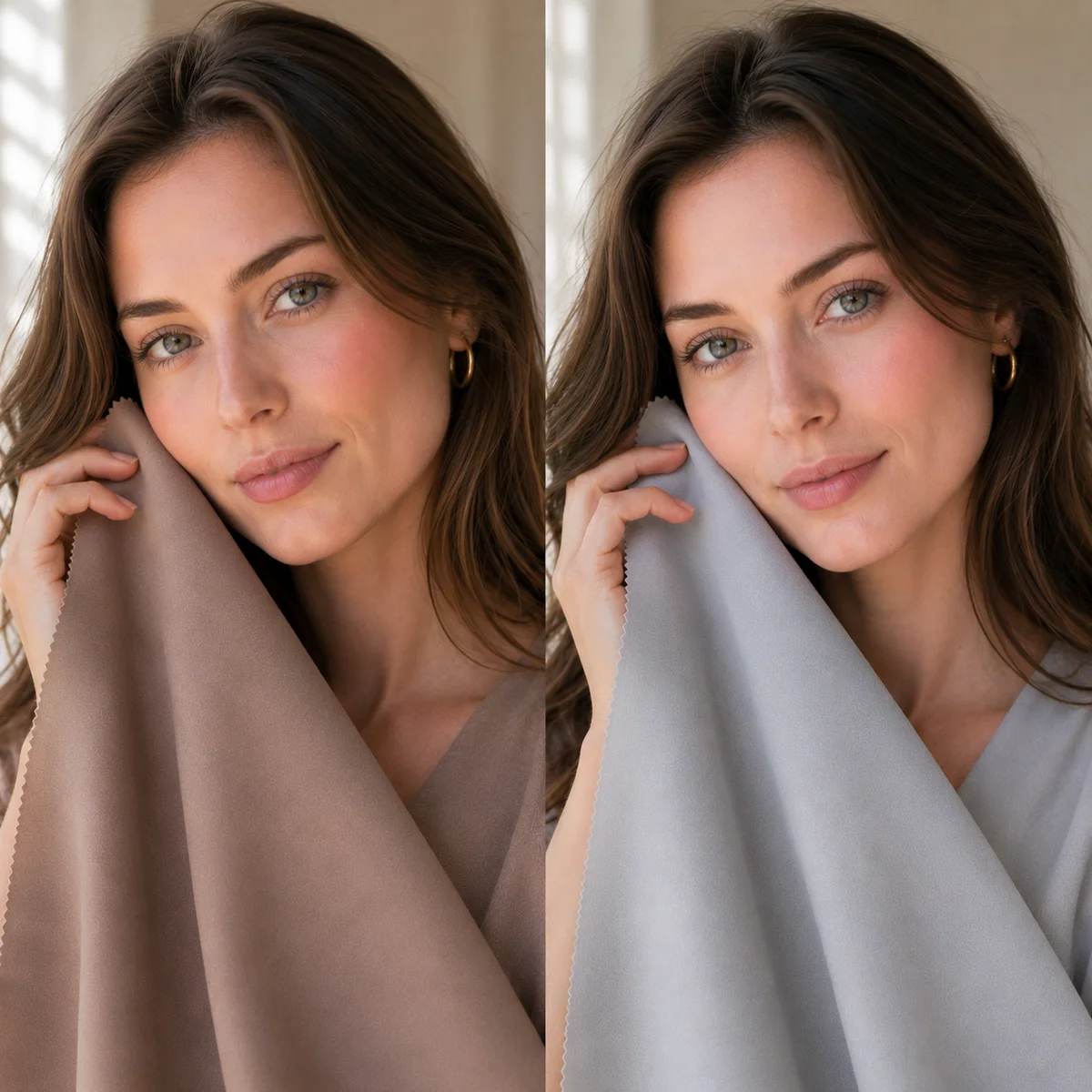
The practical test: hold a piece of warm taupe or dusty warm beige near your face in natural light. Soft Summer will usually find these neutrals flattering — they blend with the softness of the palette. Cool Summer will often find them slightly dull or muting, and will prefer cooler neutrals like dove gray or cool taupe instead.
This is the same principle behind undertone identification — the direction of your best neutrals tells you more than the veins or jewelry tests. If you’re still working through the cool vs warm question, the undertone guide goes into this in detail.
Where People Go Wrong With This
The most common mistake is using the veins test or warmth tests to separate Soft Summer from Cool Summer — but that doesn’t work here, because both seasons are cool.
Another common error is assuming the most muted options are always right for Summer. This is true for Soft Summer, but Cool Summer can handle slightly cleaner or crisper colors as long as they stay cool.
The test that actually works: fabric draping with colors that specifically fall between Soft Summer and Cool Summer palettes. Try:
- Dusty rose vs clear rose — which makes your skin look clearer?
- Warm taupe vs cool dove gray — which makes your features look more defined?
- Soft sage vs slate blue — which feels like “you”?
If the dusty, slightly warm-neutral versions consistently win, Soft Summer is the stronger match. If the cleaner, cooler versions win, Cool Summer is more likely.
Practical Color Applications
Foundation
For Soft Summer: look for foundations with a neutral-cool or slightly neutral undertone — not too pink, not too warm. Beige-rose or neutral-cool formulas work well.
For Cool Summer: lean into cooler undertones. Pink-rose or cool-neutral foundations look more natural. Warm beige will pull slightly off.
This is one area where getting the undertone right at the formula level matters a lot — two foundations at the same depth can read very differently, which is why testing along the jawline in daylight matters more than trusting the shade name.
Clothing near the face
Both seasons look washed out in clearly warm colors — camel, orange, golden yellow. But the line is in different places.
Soft Summer can often wear dusty warm neutrals (warm taupe, dusty peach, muted khaki) without looking off. These work because of the Autumn influence in the palette.
Cool Summer: warm neutrals tend to look dull. Stick to cool neutrals — dove gray, cool off-white, dusty lavender, slate blue.
Makeup colors
Soft Summer: muted rose, dusty mauve, warm rose-brown lip colors; soft brown or warm taupe eye looks; rosy blush leaning neutral.
Cool Summer: clear rose, cool pink, soft berry; cool-toned gray or navy liner; pink-rose blush with a cool direction.
FAQ
Can Soft Summer wear black? Not as a go-to. Black is high-contrast and cool-crisp — it tends to look stark against Soft Summer coloring. Charcoal, dark gray, or soft navy are better alternatives. Cool Summer handles black slightly better, though it can still feel a bit sharp — it isn’t the most flattering option for either season.
Is Cool Summer the same as True Summer? They’re used interchangeably in many 12-season systems. “True Summer” refers to the same season — the Summer sub-season that sits closest to a pure Summer archetype, with clean cool tones and medium contrast. Some systems call this “Cool Summer,” some call it “True Summer.”
Can I fall between Soft Summer and Cool Summer? Yes — many people sit between sub-seasons, and the 12-season model itself is a simplification of a continuous spectrum. If you’re between the two, focus on the overlapping palette: cool-neutral tones that are muted but not too dusty or too crisp. Colors like dusty rose, soft blue-gray, and muted lavender work for both.
What if I look good in both warm-dusty and cool-clear colors? You might be sitting right between the two — or you could be Light Summer, the third Summer sub-season that can handle a slightly wider range. The photo-based personal color analysis samples your photo’s colors and applies fixed rules to suggest a direction when self-tests aren’t giving you a clear answer.
Do Soft Summer and Cool Summer look different in hair color? Yes. Soft Summer tends to work best in muted ash brown, cool taupe, or dusty rose-brown — anything too golden or too stark (jet black or platinum) will look off. Cool Summer suits ash blonde, cool brown, or soft cool highlights — and can handle slightly more clarity than Soft Summer.
Can Soft Summer wear silver or gold jewelry? Silver and white gold tend to work for both seasons. Soft Summer can sometimes wear mixed metals or rose gold without it looking wrong — the slightly warm quality of the palette gives some flexibility. Cool Summer is more strictly silver. Yellow gold on either season tends to create a contrast that feels slightly off.
Is Soft Summer the same as Muted Summer? In different naming systems, Soft Summer is sometimes called “Muted Summer” or “Dusty Summer.” The names vary by framework, but the palette characteristics are consistent: lower contrast, slightly warm-muted colors, Autumn-influenced softness.
What’s the next step after identifying my Summer sub-season? Explore the 12 Summer sub-season color palettes to see your full color range — beyond clothing into makeup, hair, and accessories. You can also try the personal color analysis at everlyspark.com/analyze if you want a verified result rather than self-diagnosis.
Final Thoughts
Soft Summer and Cool Summer share the same foundation: cool undertone, preference for muted colors, and a tendency to look washed out by warm or vivid tones. The difference is in the details — contrast level, whether your best neutrals lean slightly warm or stay strictly cool, and how much clarity your palette can handle.
Start with the neutral test: warm taupe vs cool dove gray, held near your face in natural light. That one comparison tends to reveal more than the jewelry test or the veins test.
For a deeper look at how Summer sub-seasons sit within the full 12-season system, and to identify your complete color palette, the personal color analysis at everlyspark.com/analyze walks through the full picture.
Not sure which season fits you best?
Start with a simple photo-based personal color analysis, then explore makeup guides and product picks tailored to your results.