season-guide
Light Spring vs Light Summer: What's Actually Different?
Light Spring and Light Summer both have delicate, low-contrast coloring — but one is warm and one is cool, and that difference shows.
Both Light Spring and Light Summer have something in common that almost no other seasonal pair shares: they’re genuinely delicate. Light coloring, low contrast, soft features. A high-contrast palette — navy, black, vivid red — looks like it belongs to someone else entirely.
But there’s a fundamental split between them that makes all the difference: one is warm, and one is cool.
Quick Answer: Light Spring has a warm undertone with a golden, peachy quality — think warm ivory, apricot, warm aqua, and peachy coral. Light Summer has a cool undertone with a rosy, ashy quality — think rose-white, lavender, soft pink, and cool mint. The lightness and low contrast are the same. The direction of that lightness — warm or cool — is completely different.
Why Light Spring and Light Summer Get Confused
Most personal color guides describe both seasons as: delicate, low contrast, suited to soft and pastel colors. That’s accurate. But it leaves out the most important distinction.
The confusion happens because the shared lightness is so visually dominant. Both seasons look overwhelmed by dark or vivid colors. Both look best in softer, lighter palettes. But the warm-cool split between them is as significant as the split between any warm and cool season — it just operates at a lighter, more delicate scale.
If you’ve done the self-tests and still can’t decide, the issue usually isn’t that you’re reading the tests wrong. It’s that you’re testing with colors that aren’t distinct enough. You need clearly warm vs clearly cool colors at the same lightness level to see the difference.
What Light Spring Actually Looks Like
Light Spring sits at the intersection of Spring and Summer — it takes Spring’s warm undertone and blends it with Summer’s lightness and lower contrast.
Light Spring coloring typically has:
- A warm, golden quality underneath the skin — often peachy or ivory with warmth
- Hair that reads in warm light-to-medium tones — honey blonde, warm brown, strawberry blonde
- Eyes that tend toward warm hazel, golden brown, or light warm green
- A complexion that looks radiant in warm, peachy, and golden-adjacent light colors
Colors that specifically work for Light Spring: warm ivory, peach, coral, warm aqua, golden yellow, soft camel, light salmon. There’s a characteristic glow when the colors align — the skin looks almost lit from within.
What doesn’t work: cool, ashy colors — lavender, cool pink, gray-based tones. These tend to make Light Spring skin look flat or slightly dull, even when the colors themselves are soft and light. You can see specific examples of the colors that make Light Spring complexions come alive in this Light Spring color guide.
What Light Summer Actually Looks Like
Light Summer sits at the intersection of Summer and Spring — it takes Summer’s cool undertone and blends it with the lightness and slightly brighter quality of Spring.
Light Summer coloring typically has:
- A cool, rosy or slightly ashy quality underneath — often described as pinkish-fair or cool ivory
- Hair that reads in cool light tones — ash blonde, cool medium brown, or silver-blonde
- Eyes that tend toward cool blue, gray, or cool green
- A complexion that looks clear and fresh in cool, rosy, and icy colors
Colors that specifically work for Light Summer: rose-white, soft pink, lavender, pale blue, cool mint, icy gray, dusty rose. The characteristic effect is that the skin looks crisp and clean — fresh rather than flat.
What doesn’t work: warm, golden colors — peach, apricot, warm coral, ivory with yellow. These tend to give Light Summer skin a slightly muddy or yellowed quality, even in lighter shades.
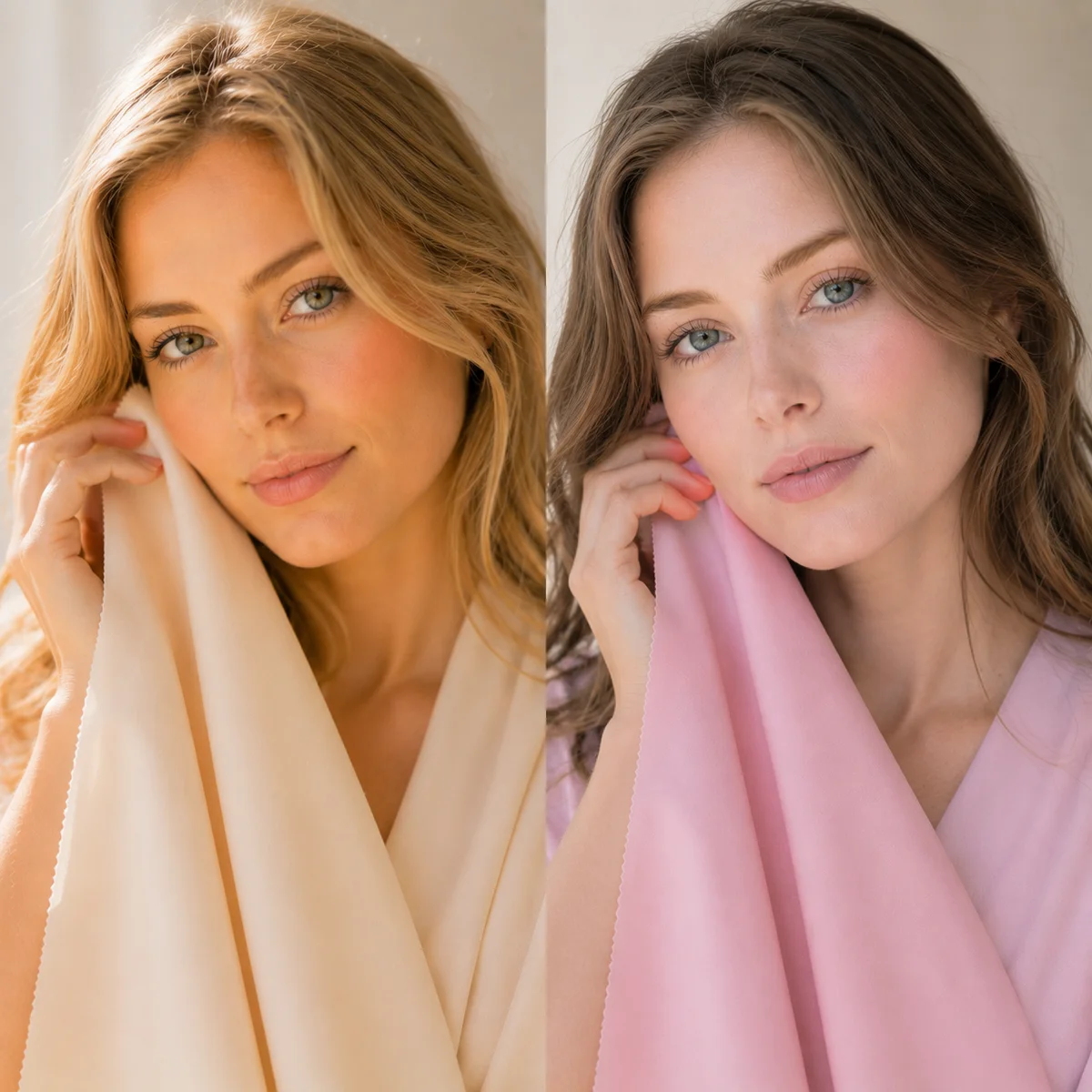
The Test That Actually Works
The standard warm-cool tests — veins, jewelry, white vs ivory — can work here, but they’re less reliable at the lighter end of the spectrum. Both Light Spring and Light Summer have light, relatively clear complexions, which makes the undertone signals subtler than usual.
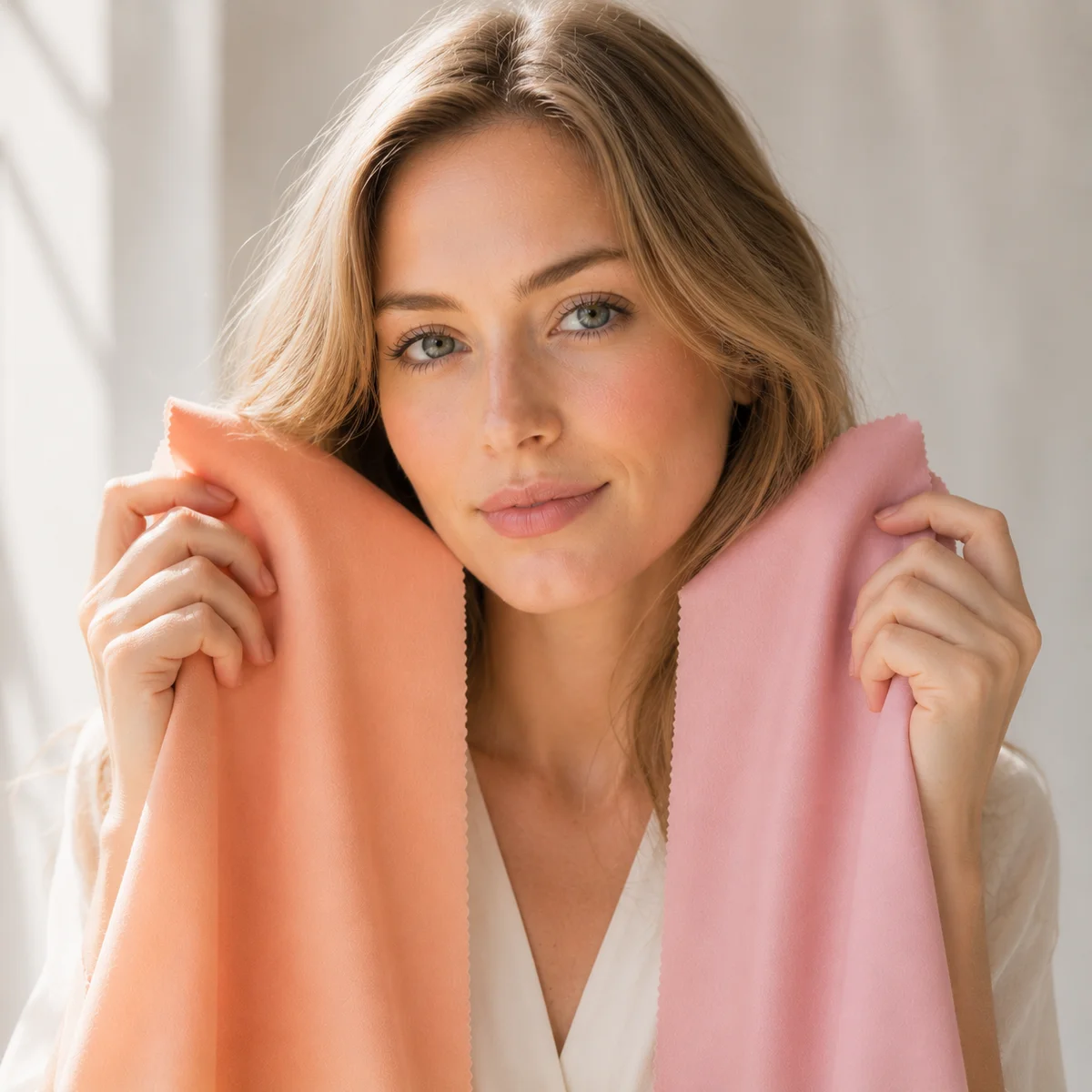
The test that gives clearer results: hold clearly warm vs clearly cool colors at the same lightness level near your face in natural light.
Try:
- Warm peach vs cool soft pink — which makes your skin look clearer and more alive?
- Warm ivory vs cool rose-white — which blends more naturally with your complexion?
- Warm aqua vs cool pale blue — which makes your features look more defined?
If the warm versions consistently produce a glow and the cool versions look slightly flat, Light Spring. If the cool versions make your skin look fresh and the warm versions look slightly muddy or yellow, Light Summer.
The warm vs cool undertone guide goes into this test in more detail, including why the veins and jewelry tests have limitations — especially for lighter complexions where the signals are subtler.
Where the Difference Shows in Practice
Whites and near-whites
This is where the warm-cool split is most visible for light seasons.
Light Spring: warm ivory, cream, warm white look flattering. Pure cool white can look slightly stark. Cool gray is draining.
Light Summer: rose-white, cool off-white, and soft cool gray look most natural. Warm ivory can look slightly yellowish. Pure white is workable, but cool-tinted whites look cleaner.
Pinks
Both seasons can wear pink — but different pinks.
Light Spring: peach-pink, salmon, warm coral. The pinks that lean toward orange or yellow.
Light Summer: rose-pink, dusty rose, cool pink. The pinks that lean toward purple or blue.
Foundation undertone
The undertone split matters as much in foundation as it does in clothing. Light Spring needs a warm or neutral-warm formula — cool-based foundations will look slightly off. Light Summer needs a cool or neutral-cool formula — warm foundations will pull yellow. This is one of the most practical applications of knowing which light season you are.
A Common Mistake
Many people with Light Spring coloring get misidentified as Light Summer because they gravitate toward pastel colors generally — and the marketed pastel palette skews cool. Lavender, soft blue, rose-pink dominate “pastel” collections.
The mistake is assuming that any pastel works for a light season. It doesn’t. Pastel lavender can look lovely on Light Summer and flat on Light Spring. Pastel peach can glow on Light Spring and look muddy on Light Summer.
This is why some people feel stuck between the two. If you’ve been mixing warm and cool pastels without noticing, you may not have a strong signal either way. That uncertainty is exactly what this page is designed to resolve: repeat the fabric comparison with the most clearly warm and clearly cool options you can find.
FAQ
Can Light Spring wear cool colors? Occasionally, if they’re warm-adjacent. A warm aqua or slightly warm green can work for Light Spring. But strictly cool colors — lavender, cool gray, icy blue — tend to drain the palette. The occasional cool accent is less of an issue than making cool colors the primary choice near the face.
Can Light Summer wear warm colors? In small amounts. A warm white scarf isn’t going to be dramatically wrong. But warm colors consistently near the face — peach tops, ivory, golden tones — tend to make Light Summer skin look slightly yellowish or muddy rather than fresh and clear.
Is Light Spring the same as Warm Spring? Not exactly. Warm Spring (or True Spring) has a higher contrast and more saturation than Light Spring. Light Spring shares the warm undertone but keeps everything lighter and softer — lower contrast, less saturation. Light Spring is often described as Spring’s most delicate sub-season.
What’s the difference between Light Summer and Cool Summer? Cool Summer (True Summer) has more contrast and can handle slightly crisper cool colors than Light Summer. Light Summer keeps everything softer and lighter — lower contrast, more delicate palette. If you find that even “soft” cool colors look slightly strong, it’s often a saturation issue rather than an undertone mismatch.
Does Light Spring or Light Summer suit gold or silver jewelry better? Light Spring typically looks better in warm gold or rose gold. Light Summer typically looks better in silver or white gold. This is one of the more reliable tests at the light end of the spectrum — if the difference between your reaction to gold vs silver is clearly visible, it’s a useful signal.
Can I tell from hair color alone? Sometimes. Warm blonde (honey, golden, strawberry) often points toward Light Spring. Cool or ash blonde points toward Light Summer. But hair color alone isn’t reliable — hair changes over time, and many people color their hair. Treat it as one data point, not a conclusion.
What if I look good in both warm peach and cool pink? You may be sitting very close to the light neutral range — some people genuinely straddle the Spring-Summer line. In this case, focus on the colors that consistently look best rather than colors that are just “acceptable.” The personal color analysis at everlyspark.com/analyze samples your photo’s colors and applies fixed rules to suggest a direction when the result feels ambiguous.
What’s the next step after identifying my season? Exploring your full seasonal color palette gives you a complete picture — colors for makeup, clothing, hair, and accessories all mapped out. It’s also worth understanding how these two seasons fit within the 12-season color system to see the full picture.
Final Thoughts
Light Spring and Light Summer look similar on the surface — both have that quality of lightness and low contrast that makes dark, saturated palettes feel like they belong to someone else. But the warm-cool split between them is real, and it shows clearly in the colors that actually make your skin look alive.
If you’re between the two, start with the neutral test: warm peach vs cool soft pink held near your face in natural light. That comparison — at the same lightness — tends to give a clearer signal than the veins or jewelry tests.
For a complete picture of where Light Spring and Light Summer sit within the 12-season system, and to find your full palette, the personal color analysis at everlyspark.com/analyze walks through the full process.
Not sure which season fits you best?
Start with a simple photo-based personal color analysis, then explore makeup guides and product picks tailored to your results.