guide
Warm vs Cool Undertones: The Simplest Guide
Warm or cool — the two undertones that shape how colors look on you. Here's what they mean and the most reliable way to find yours.
Most guides give you a checklist. Check your veins. Try on gold jewelry. Hold white paper near your face.
The problem is they don’t always agree.
You check your veins and they look greenish — warm. Then you hold up gold jewelry and it looks worse than silver — cool. You try on white and feel washed out — but so does ivory. At some point the tests start contradicting each other, and you’re left more confused than when you started.
So let’s strip this down to what undertone actually is, which tests actually work, and what to do with the answer.
Quick Answer: Warm undertones have golden, peachy, or olive qualities in the skin. Cool undertones lean pink, rosy, or bluish. Neutral falls between both. The most reliable way to identify yours is how your skin reacts to clearly warm vs clearly cool colors held near your face in natural light — not the veins test, which is more variable than most guides admit.
What Undertone Actually Is
Undertone is not the same as skin tone.
Skin tone is your surface color — fair, medium, tan, deep. Undertone is the quality underneath that surface. Two people with identical surface skin tones can have completely different undertones, which is why the same foundation shade can look perfect on one person and slightly off on another.
The simplest way to think about it: skin tone is how light or dark your complexion is. Undertone is whether it leans warm or cool — the direction of the color beneath, not the depth.
There are three categories: warm, cool, and neutral.
What Warm Undertone Actually Looks Like
Warm undertones have a yellow, golden, peachy, or olive quality in the skin. This doesn’t mean your skin looks yellow — it means there’s a warmth or glow to it that reflects those tones.
In practice, warm-undertoned skin tends to:
- Look flattering in camel, olive green, warm ivory, and terracotta
- Look better against gold jewelry than silver
- Look sunnier or more golden compared to someone with the same surface skin tone but a cooler undertone
- Get a healthy-looking tan that comes out golden rather than reddish
Spring and Autumn personal color seasons fall on the warm side of the spectrum — though the depth and saturation vary considerably between them.
What Cool Undertone Actually Looks Like
Cool undertones have a pink, rosy, or bluish quality. Again, this doesn’t mean your skin looks pink — it means there’s a coolness that reads in that direction.
Cool-undertoned skin tends to:
- Look flattering in dusty rose, navy, cool gray, and icy lavender
- Look better against silver jewelry than gold
- Have a slightly more ashy or rosy quality compared to a warm-undertoned person at the same depth
- Burn in the sun more readily and go pink rather than golden
Summer and Winter personal color seasons fall on the cool side, though the contrast level and intensity differ significantly between them.
The Neutral Zone
Neutral undertone means you have both warm and cool qualities without one clearly dominating. This is more common than most guides suggest — probably the most common, actually.
If you fall neutral, both gold and silver jewelry work reasonably well. Both warm ivory and cool white look acceptable near your face. You have more flexibility with color, but you also have less of an obvious “home base” to orient around.
Neutral doesn’t mean colorless — it means balanced.
Why the Veins Test Is Unreliable
The veins test says: green veins = warm, blue-purple veins = cool. It’s the most commonly cited test, and it’s the most consistently unreliable.
Here’s why. Everyone’s veins look blue in photographs and under most lighting — veins carry deoxygenated blood, which is dark red, but the way light transmits through skin makes them appear blue or blue-green depending on the depth of the vein, the thickness of the skin over it, and the lighting conditions at the time. The “green” that warm-undertoned people see is usually the skin tone around the vein, not the vein itself.
That said, it can work as a rough signal when the difference is very obvious. If your wrist looks distinctly more pink-purple than yellow-green, cool is likely. If it looks distinctly more olive or yellow-toned overall, warm is likely. The problem is that most people fall in the ambiguous middle, and the test gives them no signal — just confusion.
The Test That Actually Works
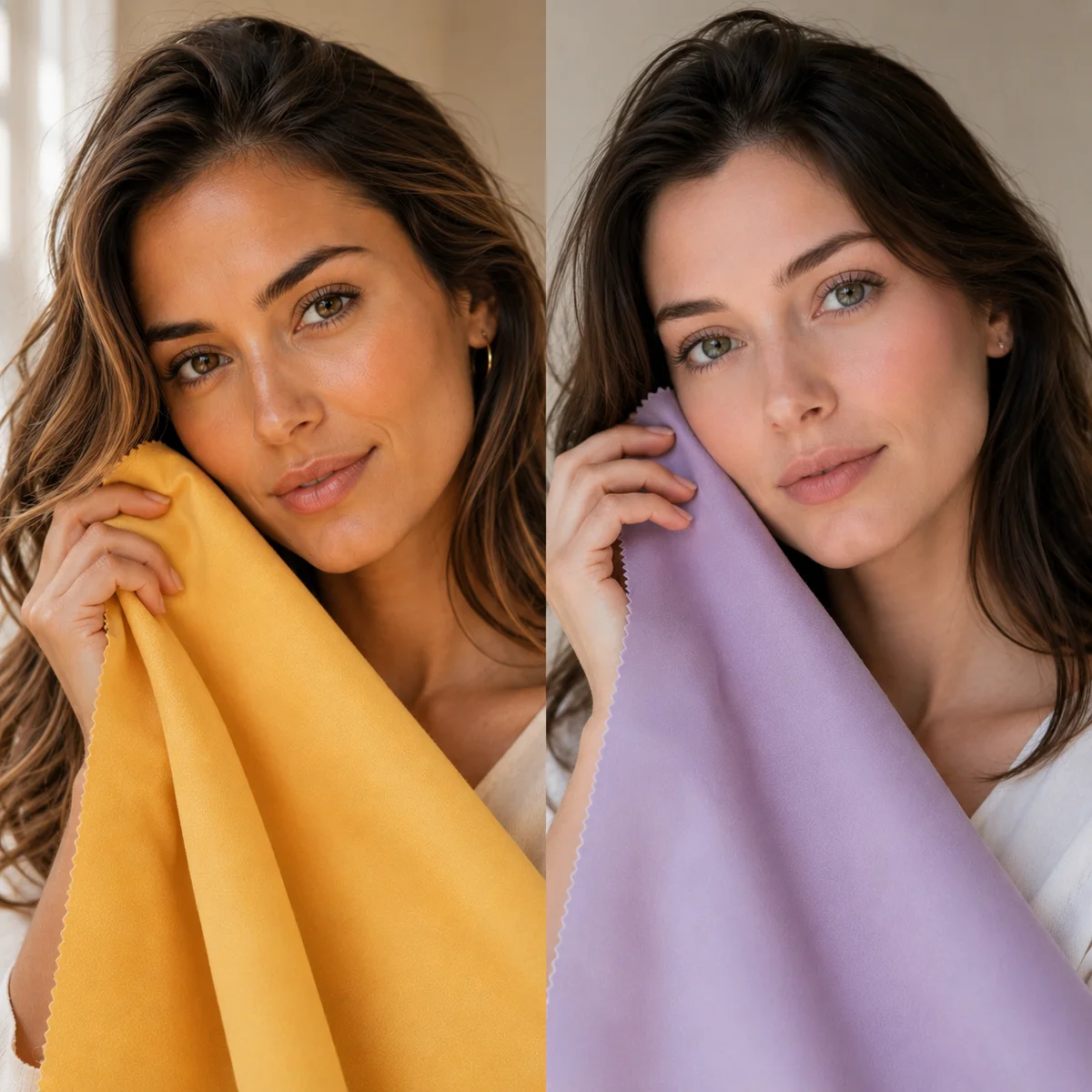
Color draping is more reliable than the veins test, and you don’t need a professional colorist to try a basic version.
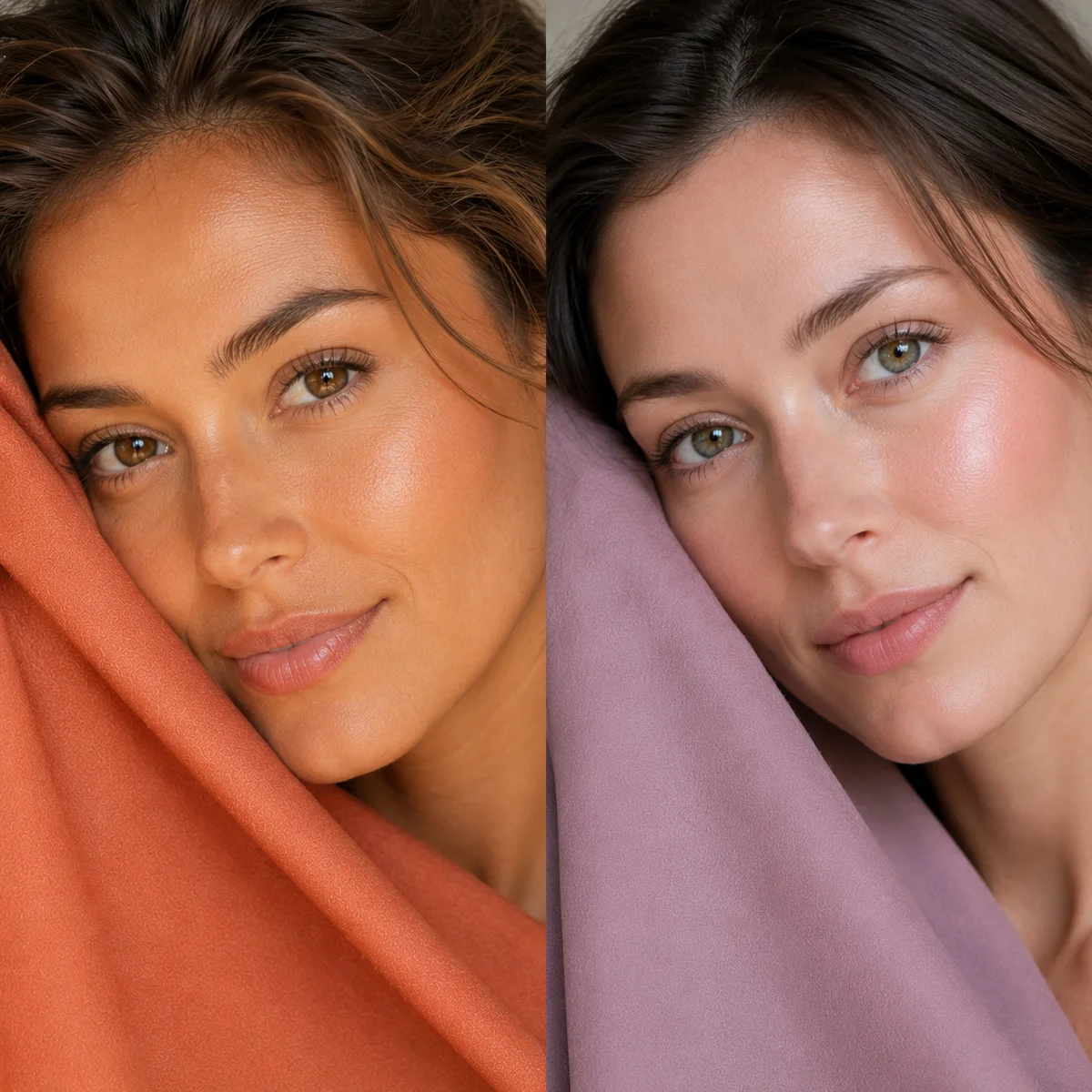
Take two pieces of fabric or paper — one clearly warm (a golden yellow or warm peach), one clearly cool (a cool pink or icy lavender). Hold each near your face in natural daylight. Look at your skin, not the fabric.
Ask: does my skin look clearer, more even, and more alive? Or does it look slightly off, dull, or tired?
Most people can see a difference with stark enough colors. If neither seems to make a difference with those colors, you’re likely neutral. If warm colors consistently make your skin look healthier and cool colors make it look flat (or vice versa), you have your answer.
This is, incidentally, the same principle behind why some colors make your skin look brighter — it’s not about the brightness of the color, it’s about alignment with your undertone.
Why It Matters Practically
Knowing your undertone is the first step to understanding your personal color season, but it’s also immediately useful on its own.
Foundation: The most common makeup mistake is choosing the wrong undertone in foundation — getting the depth right but picking a formula that pulls too warm or too cool. If your foundation looks natural in the store but slightly off at home, undertone mismatch is often the cause — the same drape test above works for matching foundation, not just clothing.
Clothing near the face: Colors worn at the neckline have the most visible impact on how your skin looks. Tops, scarves, and jackets in your undertone’s direction will generally make your complexion look clearer. This holds across all depths and skin tones — it’s the temperature of the color that matters, not its darkness.
Hair color: Warm hair colors (golden blonde, auburn, copper) tend to harmonize with warm undertones. Ash tones and cool-based colors suit cool undertones better. When hair color and undertone conflict, the result often looks slightly off in a way that’s hard to diagnose.
The undertone discovery leads naturally into the next step: finding your full personal color season, which adds contrast level and saturation to the picture and gives you a complete palette.
FAQ
Is undertone the same as skin tone? No — skin tone refers to your surface depth (fair, medium, tan, deep). Undertone is the warm or cool quality beneath the surface, independent of depth. A fair person and a deep-skinned person can share the same undertone.
Can undertone change over time? Your core undertone stays consistent throughout life. What changes is surface skin tone — from tanning, aging, illness, or medication — but the underlying warm or cool quality remains stable.
What if all the tests give me different answers? You’re probably neutral, or close to it. Neutral undertone is more common than most guides suggest, and the tests are calibrated for clear warm or clear cool — they don’t handle the middle well.
Is olive skin warm or cool? Olive skin has a greenish quality that sits at the intersection of warm and neutral. Most olive-toned people fall in the warm-to-neutral range, though the specific personal color season varies considerably. Olive itself is a surface tone descriptor, not an undertone.
What if I look terrible in both warm and cool colors? This usually means the depth or saturation is off, not necessarily the temperature. A neutral-cool person might look washed out in pale pastels but great in deep cool tones. Undertone is just one axis — intensity and contrast level matter too.
Does undertone matter more for makeup or clothing? Both matter, but for different reasons. Makeup undertone (especially foundation) has a more direct impact on how your skin looks at close range. Clothing undertone matters most for pieces worn near the face — tops, jackets, scarves.
Does the gold/silver jewelry test actually work? Better than the veins test, but still imperfect. Many people have mixed preferences that don’t map cleanly to undertone. Rose gold complicates things further. A stronger signal comes from clearly warm vs clearly cool colors draped near the face.
What’s the next step after identifying undertone? Undertone gives you warm or cool. Your personal color season adds contrast level and saturation to that foundation, giving you a complete color palette. Our guide to finding your personal color season walks through the full process.
Final Thoughts
Warm vs cool is the first and most important axis in personal color. Once you understand it clearly, a lot of previously confusing color advice starts to make sense — why camel looks great on some people and draining on others, why a foundation shade that matches in the tube looks off on skin, why certain hair colors read as natural while others look slightly wrong.
The veins test gives you a starting point. The color draping test gives you a real answer. And if you’re still not certain after both, a free personal color analysis at everlyspark.com/analyze takes a few minutes and puts your undertone — and full season — in clear terms.
Not sure which season fits you best?
Start with a simple photo-based personal color analysis, then explore makeup guides and product picks tailored to your results.