guide
Why Certain Lipstick Colors Look Better on Your Skin
Warm vs. cool tells you half the story for lipstick. Here's how depth and clarity, the other two parts of the 12-season system, decide the rest.
Most lipstick advice starts and ends with one question: are you warm or cool? Warm undertones get orange-based reds and warm corals. Cool undertones get blue-based pinks and berries. Pick a side, pick a lipstick.
That advice isn’t wrong. But it’s incomplete enough that it still sends a lot of people toward shades that don’t quite work.
Quick Answer: Warm vs. cool is only one of three dimensions that decide which lipstick shades actually flatter you — the other two are depth (how light or deep your overall coloring reads) and clarity (how soft or vivid it reads). That’s exactly what the 12-season color system tracks, which is why two people who are both “warm” can need very different lipstick intensities.
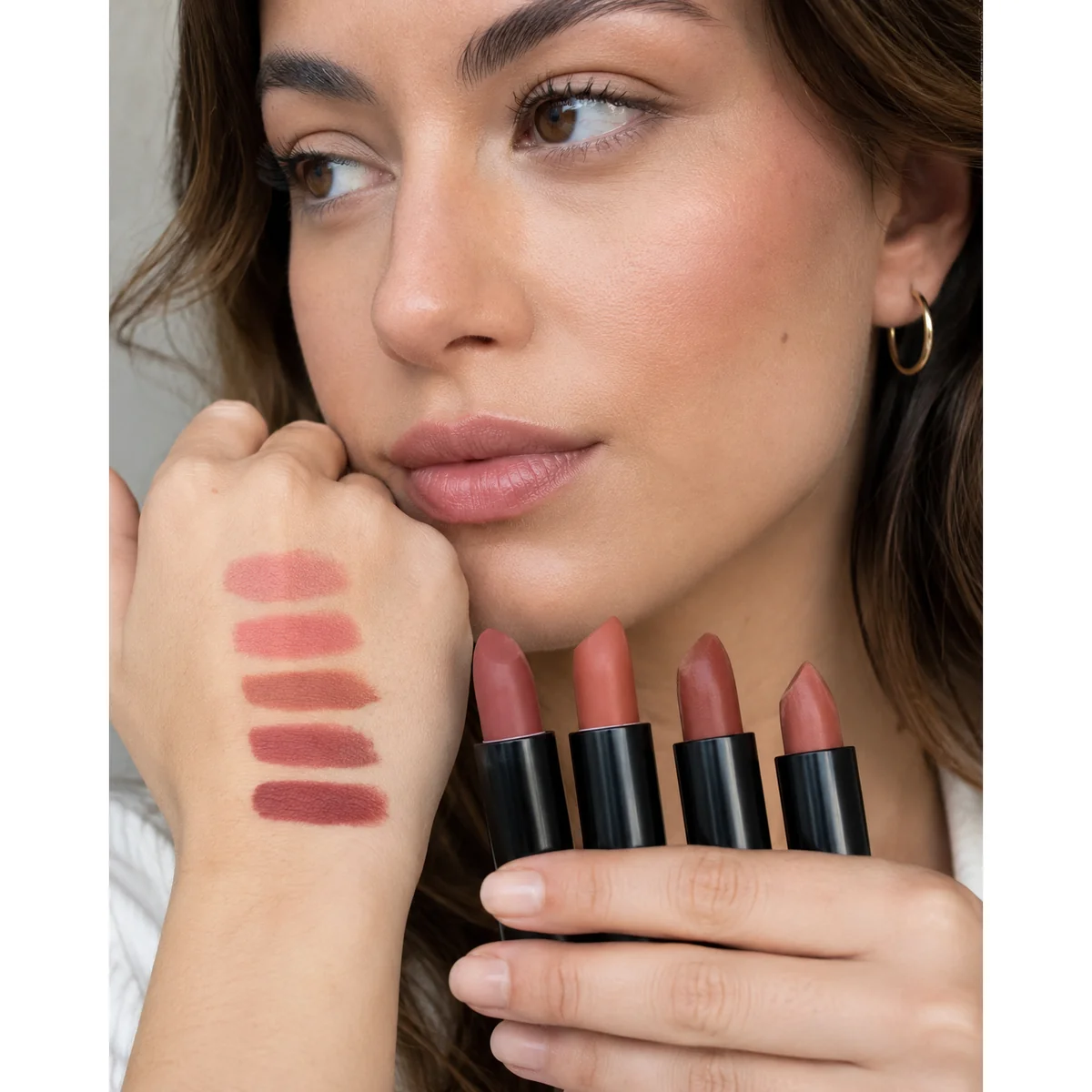
In this guide: why the warm/cool split misses real differences between people, what depth and clarity add to the picture, lipstick shade direction by season group, and where the match still comes down to your own lips rather than any chart.
Why “Warm or Cool” Lipstick Advice Falls Short
Undertone temperature tells you whether a color leans orange or blue-pink. It doesn’t tell you how saturated or how light or dark that color should be.
Two people can both be unambiguously warm — say, a Warm Spring and a Deep Autumn — and the exact same lipstick that looks fresh on one can look chalky or washed out on the other. Their temperature matches, but their actual coloring sits at opposite ends of the depth scale. Warm/cool answers one question. It leaves two more unanswered.
The Two Dimensions Undertone Guides Skip
Depth is how light or deep your overall coloring reads — hair, eyes, and skin value together, not skin tone in isolation. Lighter depth profiles (Light Spring, Light Summer) tend to get overwhelmed by the same saturated shade that a deep profile (Deep Autumn, Deep Winter) can wear without looking washed out.
Clarity is how soft and muted, or clear and vivid, your coloring reads. Soft profiles (Soft Summer, Soft Autumn) usually look better in muted, blended lip colors. Clear profiles (Bright Spring, Bright Winter) can carry saturated, high-contrast shades that would look slightly dulling on a softer profile.
The 12-season system is essentially warm/cool crossed with these two extra axes. That’s the actual reason it produces more specific shade direction than a simple undertone quiz — not because it’s a fancier framework, but because it’s tracking more variables.
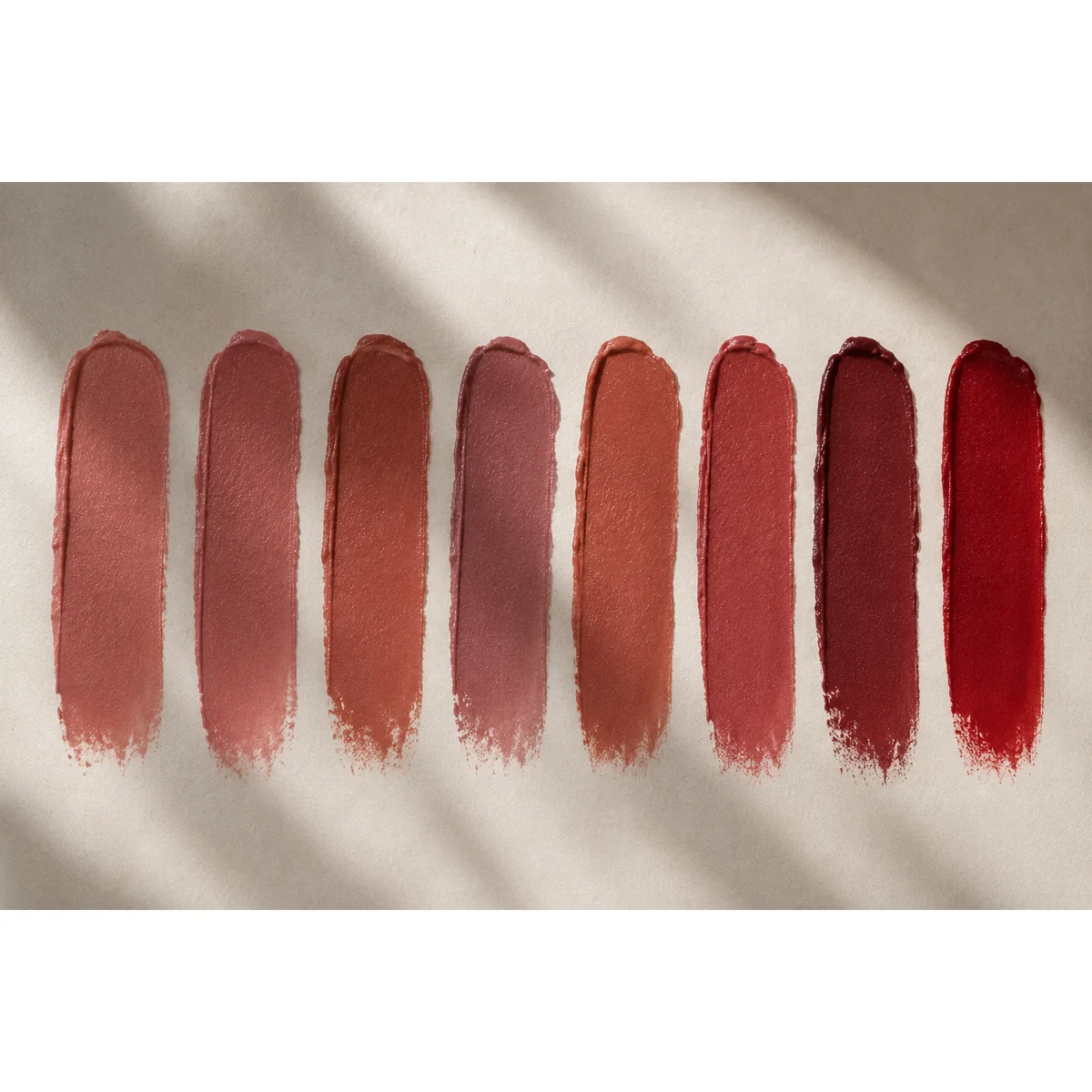
Lipstick by Season Group
Spring (Light Spring, True Spring, Bright Spring) — clear, warm, light-to-medium depth. Coral, warm peach, and clear watermelon pink tend to work well. Heavy plum or blackened reds usually read muddy against this profile’s natural clarity.
Summer (Light Summer, True Summer, Soft Summer) — cool-to-neutral, muted. Soft rose, dusty mauve, and cool-toned berry tend to suit this group. Strongly orange-based reds tend to clash.
Autumn (Soft Autumn, True Autumn, Deep Autumn) — warm, muted-to-rich, medium-to-deep. Terracotta, brick red, and warm cinnamon tend to work well. Bright blue-pink shades tend to look out of place.
Winter (Bright Winter, True Winter, Deep Winter) — cool-to-neutral, clear-to-deep, high contrast. True red, blue-red, deep berry, and fuchsia tend to suit this group. Soft, muted shades can underwhelm against this profile’s natural contrast.
Where It Still Comes Down to Trial and Error
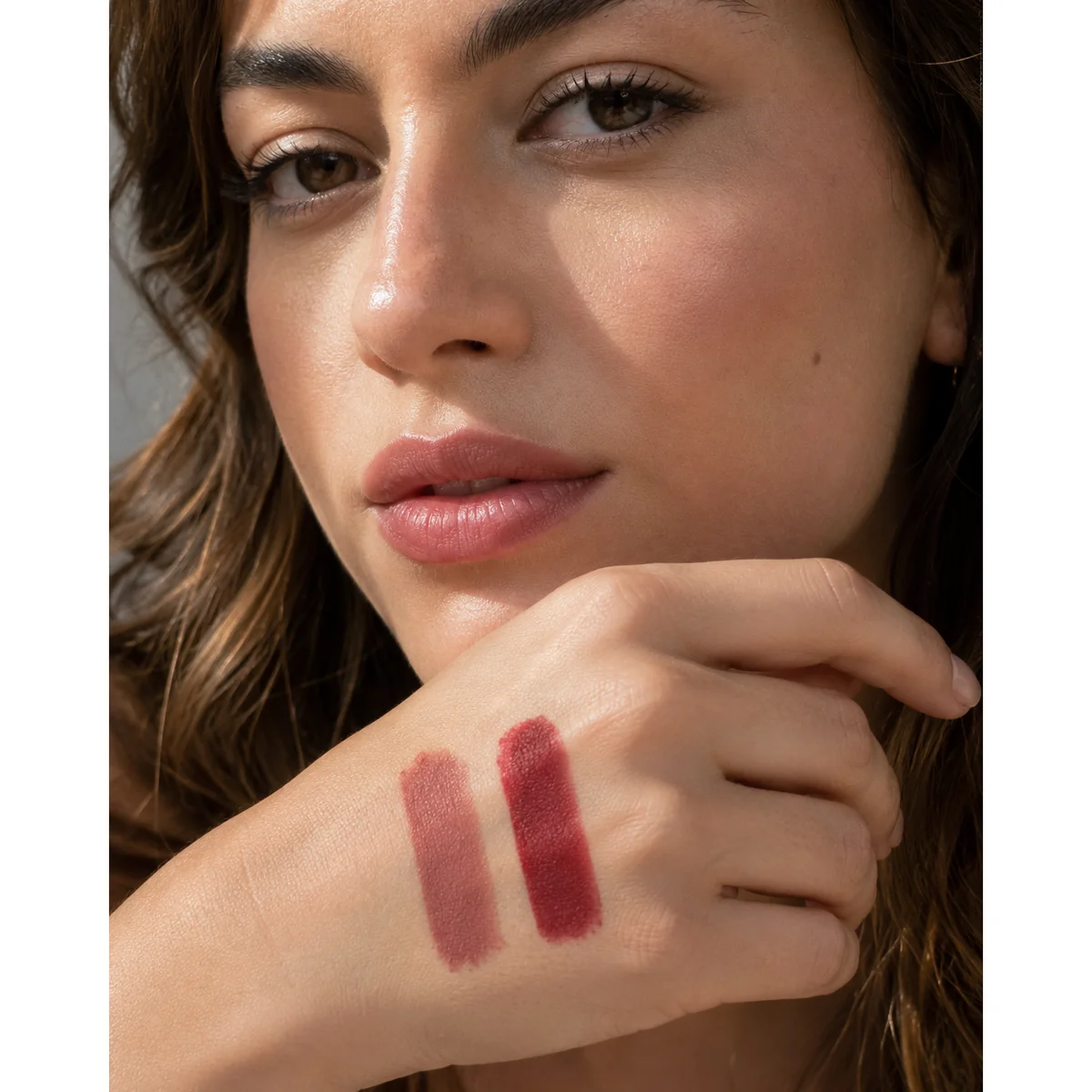
Even with season-specific direction, lip pigment varies a lot from person to person. Natural lip color, texture, and how a particular formula’s pigment sits on top of that natural color all shift the final result. A “True Autumn terracotta” can read differently on someone with naturally pigmented lips than on someone with very pale lips, because the lipstick’s color mixes with what’s already there rather than replacing it. Finish matters too — a matte version of a shade often reads more saturated than a sheer or glossy version of the exact same pigment.
That sounds like it undercuts the whole system. It does, partially. Season-based guidance narrows the range you’re choosing from. It doesn’t guarantee one single correct shade.
How to Test This on Your Own Lips
Swatch directly on the lip, not the back of your hand — skin and lip pigment aren’t the same color, and the gap can be larger than expected. Check the result in daylight rather than bathroom LED lighting, for the same reason any color check benefits from natural light. Compare two or three candidates side by side instead of judging a single shade in isolation.
If you’re not sure which season group you fall into to begin with, a free photo-based color analysis gives you a specific season as a starting point, and our 12-season complete guide breaks down where each subseason’s depth and clarity actually sit before you start shade-hunting.
If you already know your temperature but not the rest, the warm vs. cool breakdown is a useful first filter, and best colors for each season covers the wider wardrobe picture beyond lipstick alone. If you’ve already confirmed you’re a Soft Summer, we’ve also written a dedicated shade list for that profile.
FAQ
Is warm/cool undertone enough to pick a lipstick color?
Partially. It tells you whether to lean orange-based or blue-based, but not how light, deep, muted, or vivid the shade should be — that’s where the rest of the 12-season framework comes in.
What’s the difference between depth and clarity in the 12-season system?
Depth is how light or dark your overall coloring reads. Clarity is how soft and muted, or clear and vivid, it reads. Together with warm/cool, these are the three dimensions the system uses to sort people into one of twelve groups.
Can two people in the same season wear different lipstick shades?
Yes. A season group gives a shade direction, not one single allowed color. Personal lip pigment, a formula’s finish, and personal preference all still shift what looks best within that range.
Why does the same lipstick look different on two people with similar skin tone?
Lip pigment isn’t the same as skin tone, and a lipstick’s color sits on top of your natural lip color rather than replacing it. Two people with similar skin can still have noticeably different natural lip pigmentation.
Should I match my lipstick to my hair color or my skin tone?
Neither alone. The 12-season approach looks at skin, hair, and eye color together, since depth and clarity are read from the combination, not from skin tone by itself.
Is a free online color analysis accurate enough to choose lipstick by?
It’s a reasonable starting point for narrowing the shade range, the same way an in-person consultation is — both rely on judgment rather than a lab-measured standard, so confirming with an actual lip swatch in daylight is still worth doing.
Final Thoughts
Warm vs. cool isn’t wrong — it’s just one-third of the picture. Depth and clarity are doing more work than most lipstick guides give them credit for, which is the real reason a season-specific recommendation tends to land better than a generic undertone quiz.
The category gets you close. Your own lips, in daylight, get you the rest of the way. If you want a season-specific starting point, our color analysis takes a couple of minutes, and the full 12-season guide is there once you’re ready to look beyond lipstick.
Not sure which season fits you best?
Start with a simple photo-based personal color analysis, then explore makeup guides and product picks tailored to your results.