season-guide
The 12 Seasonal Color System Explained
Intro
If you’ve ever wondered why some colors make you look radiant while others make you look tired, the answer lies in the 12 seasonal color system.
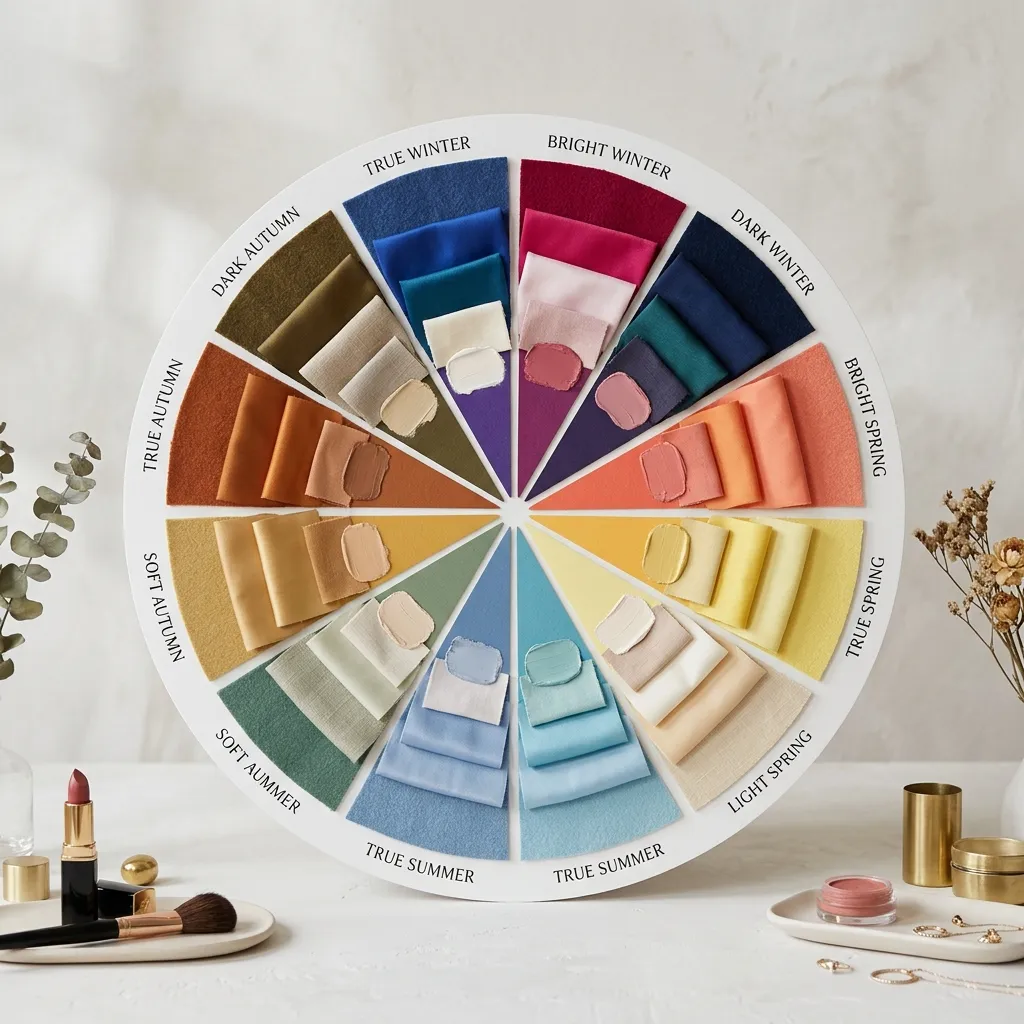
This system goes beyond basic fashion advice. It provides a structured way to understand which colors naturally harmonize with your skin tone, hair, and overall features.
In this guide, we’ll break down the 12 seasonal color system in a simple and practical way so you can start identifying your ideal palette.
What Is the 12 Seasonal Color System?
The 12 seasonal color system is an advanced version of the original four-season model.
Instead of grouping people into just Spring, Summer, Autumn, or Winter, it divides each season into three subcategories, creating a total of 12 unique color profiles.
This allows for much more precise and personalized color matching.
The Four Main Seasons
At the core of the system are four main categories:
- Spring → warm and bright
- Summer → cool and soft
- Autumn → warm and deep
- Winter → cool and high contrast
Each season is defined by a combination of undertone, depth, and chroma.
The 12 Sub-Seasons Explained
Each main season is divided into three variations:
Spring (Warm + Bright)
- Light Spring → light, warm, and fresh
- True Spring → purely warm and clear
- Bright Spring → warm with high intensity
Summer (Cool + Soft)
- Light Summer → light and cool
- True Summer → fully cool and balanced
- Soft Summer → muted and low contrast
Autumn (Warm + Deep)
- Soft Autumn → warm and muted
- True Autumn → rich and warm
- Deep Autumn → dark and intense
Winter (Cool + High Contrast)
- Bright Winter → cool and vivid
- True Winter → purely cool and bold
- Deep Winter → dark and dramatic
Why the 12 System Is More Accurate
The four-season system is helpful, but often too general.
For example, two people may both be “Winter,” but:
- One may suit bright, vivid colors
- Another may look better in deep, dark tones
The 12-season system captures these differences by adding nuance.
Understanding the Three Key Dimensions
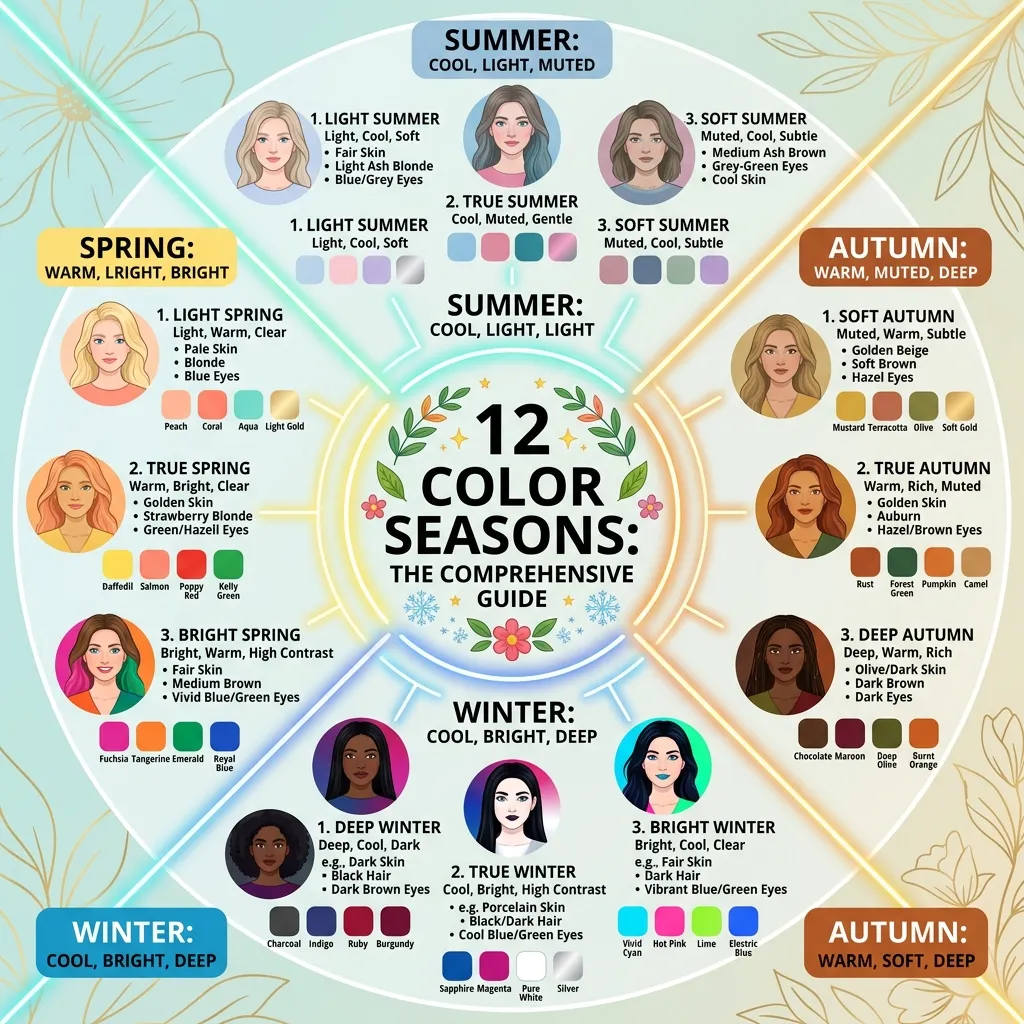
Every sub-season is defined by three core elements:
1. Undertone (Warm vs Cool)
- Warm → yellow, golden base
- Cool → blue, pink base
2. Depth (Light vs Deep)
- Light → softer, lower contrast
- Deep → stronger, darker features
3. Chroma (Soft vs Bright)
- Soft → muted and blended
- Bright → clear and vivid
These three dimensions determine your ideal palette.
How to Identify Your Season

To find your season, you need to evaluate:
- Your undertone
- Your overall contrast
- How your skin reacts to different colors
The most reliable method is comparing colors directly on your face under natural light.
Common Misconceptions
Many people assume their season based on hair color or eye color alone. However, personal color analysis is about harmony, not isolated features.
Another misconception is that you can wear any color as long as it is styled well. In reality, color harmony has a strong visual impact that styling alone cannot fix.
Why It Matters
Understanding your color season helps you:
- Choose flattering clothing effortlessly
- Pick the right makeup shades
- Avoid wasting money on unsuitable products
- Build a cohesive personal style
It simplifies decision-making and enhances your natural appearance.
Final Thoughts
The 12 seasonal color system provides a deeper and more accurate way to understand what truly suits you. Instead of guessing, you can rely on a structured approach that works consistently.
Once you identify your season, everything from your wardrobe to your makeup becomes more intentional and effective.
👉 Find Your Exact Season
Not sure which of the 12 seasons you belong to?
Try a personalized color analysis and discover your exact palette instantly.
Common Mistakes to Avoid
- Avoid overly bright neon shades.
- Avoid warm orange-coral tones when your season is cool.
- Avoid high-contrast finishes that overpower soft coloring.
Not sure which season fits you best?
Start with a simple photo-based personal color analysis, then explore makeup guides and product picks tailored to your results.