season-guide
How to Find Your Personal Color Season
Intro
Have you ever noticed that some colors make your skin glow while others make you look tired or dull? This is not random. It’s the foundation of personal color analysis.
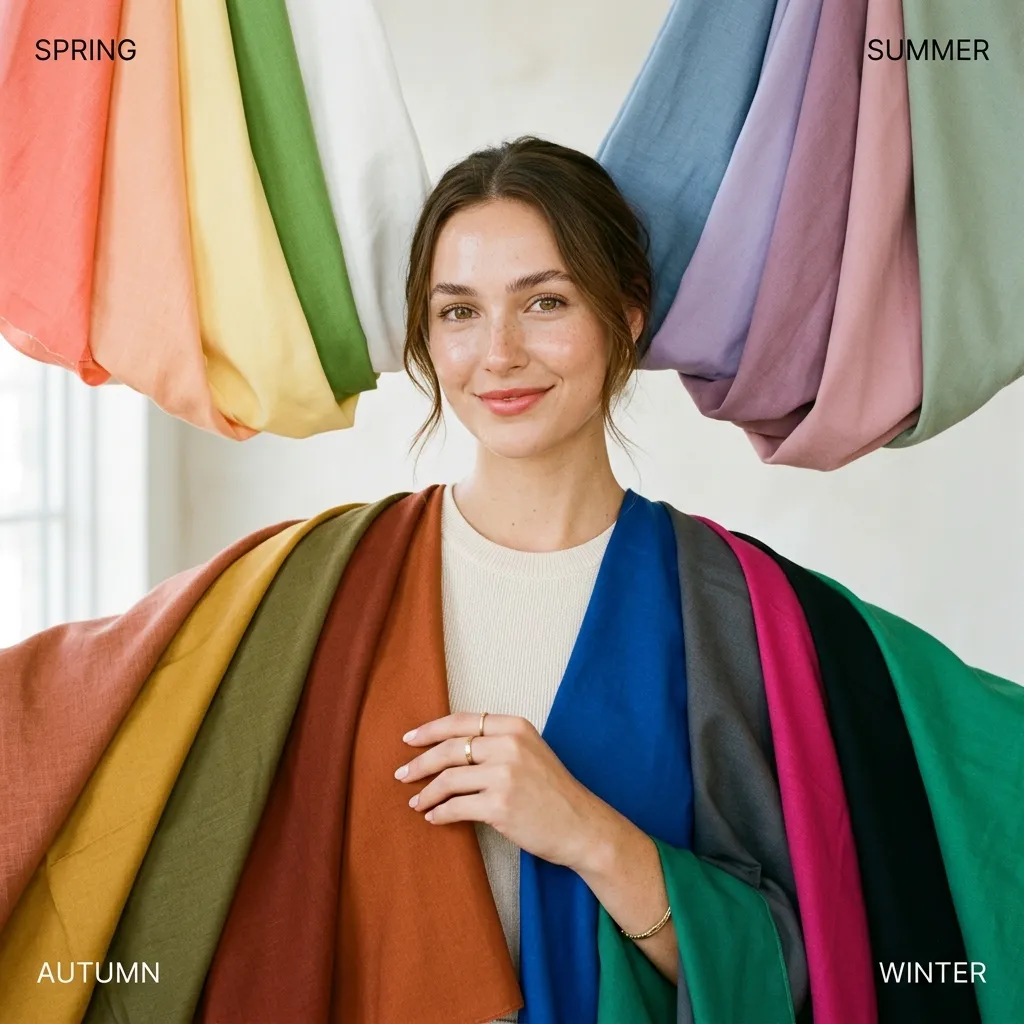
Finding your personal color season helps you choose clothing, makeup, and hair colors that naturally enhance your appearance. In this guide, you’ll learn how to identify your color season step by step, even if you’re a complete beginner.
What Is a Personal Color Season?
A personal color season is a group of colors that harmonize with your natural features.
It is based on three key elements:
- Undertone (warm or cool)
- Depth (light or deep)
- Chroma (soft or bright)
These factors determine which colors make your skin look clearer, healthier, and more balanced.
The Four Main Seasons
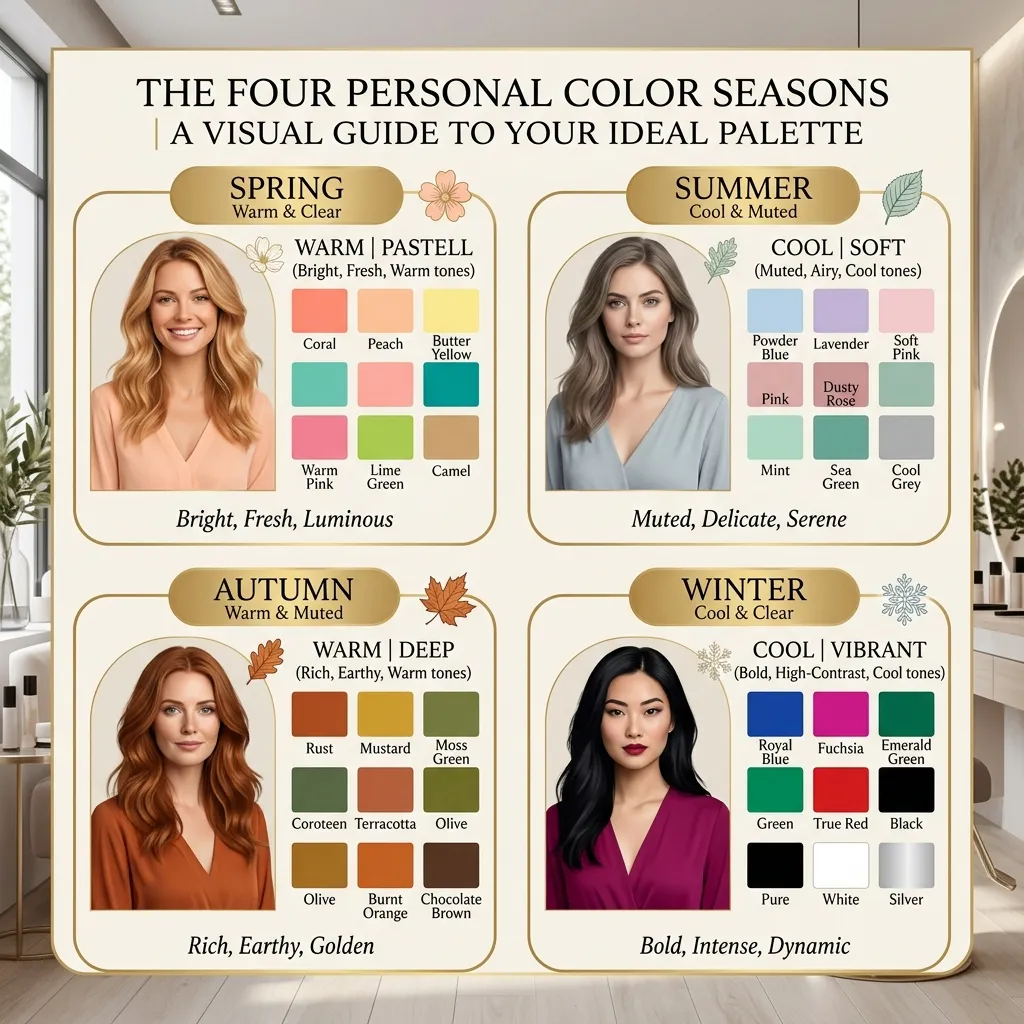
Personal color analysis is divided into four main categories:
- Spring → warm and bright
- Summer → cool and soft
- Autumn → warm and deep
- Winter → cool and high contrast
Each season has its own unique color harmony.
Step 1: Identify Your Undertone
The first and most important step is determining whether you are warm or cool.
Signs of warm undertone:
- Gold jewelry looks better
- Skin has a yellow or golden base
- Earthy colors feel natural
Signs of cool undertone:
- Silver jewelry looks better
- Skin has pink or bluish tones
- Cool colors feel more flattering
Undertone is the foundation of your color season.
Step 2: Determine Your Depth
Next, look at how light or dark your overall coloring is.
- Light → features are soft and low contrast
- Deep → features are strong and darker
This helps narrow your season further.
Step 3: Check Your Chroma (Soft vs Bright)
Chroma refers to how clear or muted your features appear.
- Bright → clear, vivid, high contrast
- Soft → muted, blended, low contrast
This is often the step people overlook, but it is essential for accurate results.
Step 4: Test Colors in Natural Light
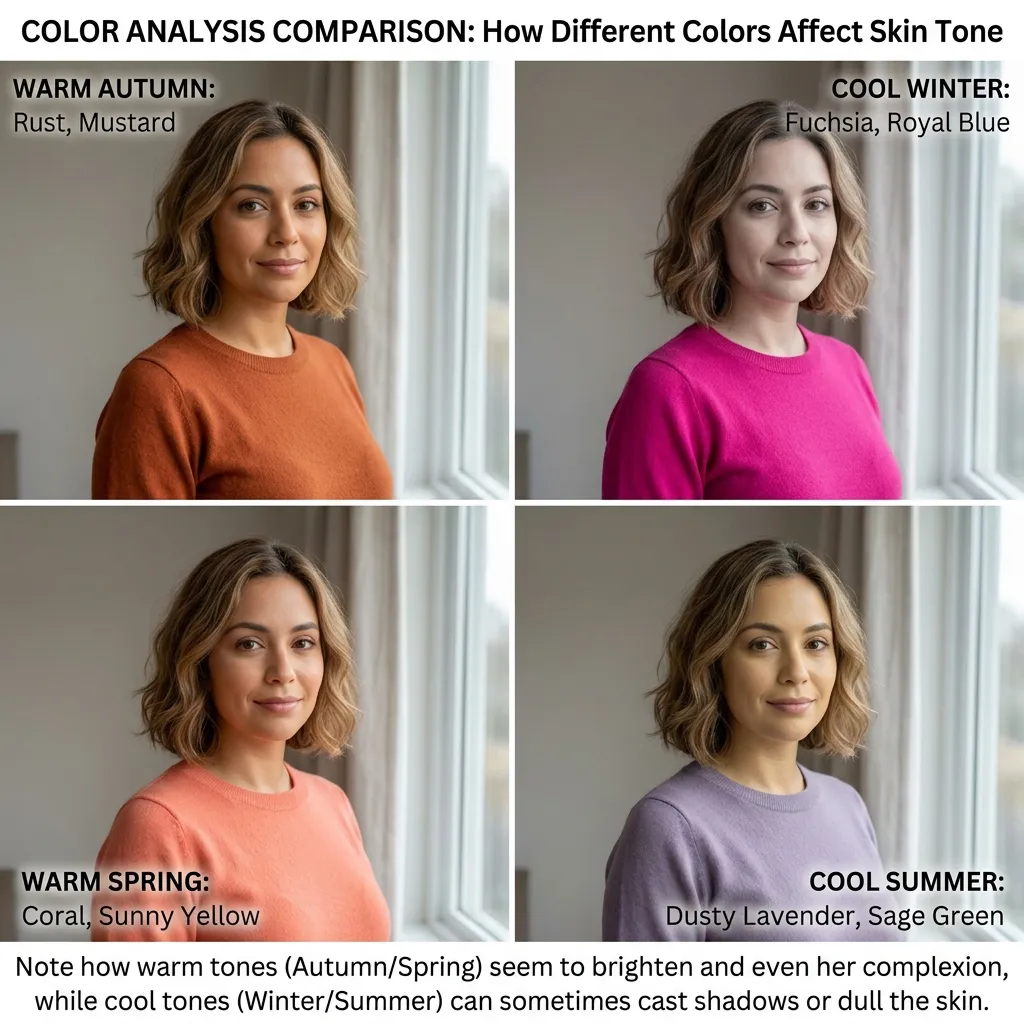
The best way to confirm your season is through comparison.
Try this:
- Wear different colors near your face
- Use natural daylight (not artificial lighting)
- Remove makeup for accuracy
Observe:
- Which colors make your skin look brighter?
- Which colors make your face look dull or uneven?
Your best colors will enhance your natural features effortlessly.
Common Mistakes
One common mistake is focusing only on favorite colors instead of what actually suits your skin.
Another mistake is relying only on online quizzes without visual testing.
Lighting, makeup, and camera filters can also distort results.
Why It Matters
Knowing your personal color season simplifies everything:
- Easier wardrobe decisions
- More flattering makeup choices
- Better shopping decisions
- More cohesive personal style
It reduces guesswork and helps you look naturally put together.
Can You Have More Than One Season?
Some people feel they sit between two seasons, especially if they have neutral undertones.
In these cases, you may have a dominant season with flexibility toward a neighboring one. However, there is always a primary harmony that works best.
Final Thoughts
Finding your personal color season is not about following strict rules — it’s about understanding what naturally enhances your features.
Once you discover your season, everything from fashion to makeup becomes easier and more intentional.
👉 Discover Your True Colors
Want a faster and more accurate result?
Try a personalized color analysis and instantly find the colors that truly suit you.
Common Mistakes to Avoid
- Avoid overly bright neon shades.
- Avoid warm orange-coral tones when your season is cool.
- Avoid high-contrast finishes that overpower soft coloring.
Not sure which season fits you best?
Start with a simple photo-based personal color analysis, then explore makeup guides and product picks tailored to your results.