Quick answer: “Brown or black?” is really two questions. The color decides how much your lashes stand out against your skin, brows and hair. The formula decides how the mascara behaves through your day and how it comes off at night. Pick the color for the look you want, then pick the formula for the conditions you actually have. If your current mascara gets one of those right, you only need to change the other one.
Search for brown vs black mascara and you’ll find the same advice repeated: black is dramatic, brown is natural, and the right one depends on your eye color. Search interest this week leaned on eye color too. In US Google Trends data for Nov 4 to 10, “what color mascara for blue eyes” was a rising search next to brown mascara.
But look at what Canadian searchers typed in the same week. The top searches related to brown mascara were “best brown mascara,” “brown tubing mascara” and “brown waterproof mascara.” Those last two aren’t about color at all. They’re about smudging, water and removal.
That mix is the point of this guide. A lot of mascara regret comes from solving one problem with the other. Someone switches to brown to look softer, but what actually bothered them was black smudges under the eye by mid-afternoon. A brown that smudges leaves a brown smudge.
Two decisions hiding in one question
| Decision 1: Color | Decision 2: Formula | |
|---|---|---|
| What it changes | How strongly the lash line reads from a normal distance | Whether it holds up to your day, and how you take it off |
| The question to ask | “How much definition do I want here?” | “What goes wrong with my mascara now, and what do I want removal to be like?” |
| Usual options | Brown, brown-black, black | Regular (washable), waterproof, tubing |
| What it can’t fix | Smudging, flaking, removal | Whether the look feels too strong or too soft |
Make each decision on its own terms. Then put them together.
Decision 1: How much definition do you want?
Start with the look, not the label
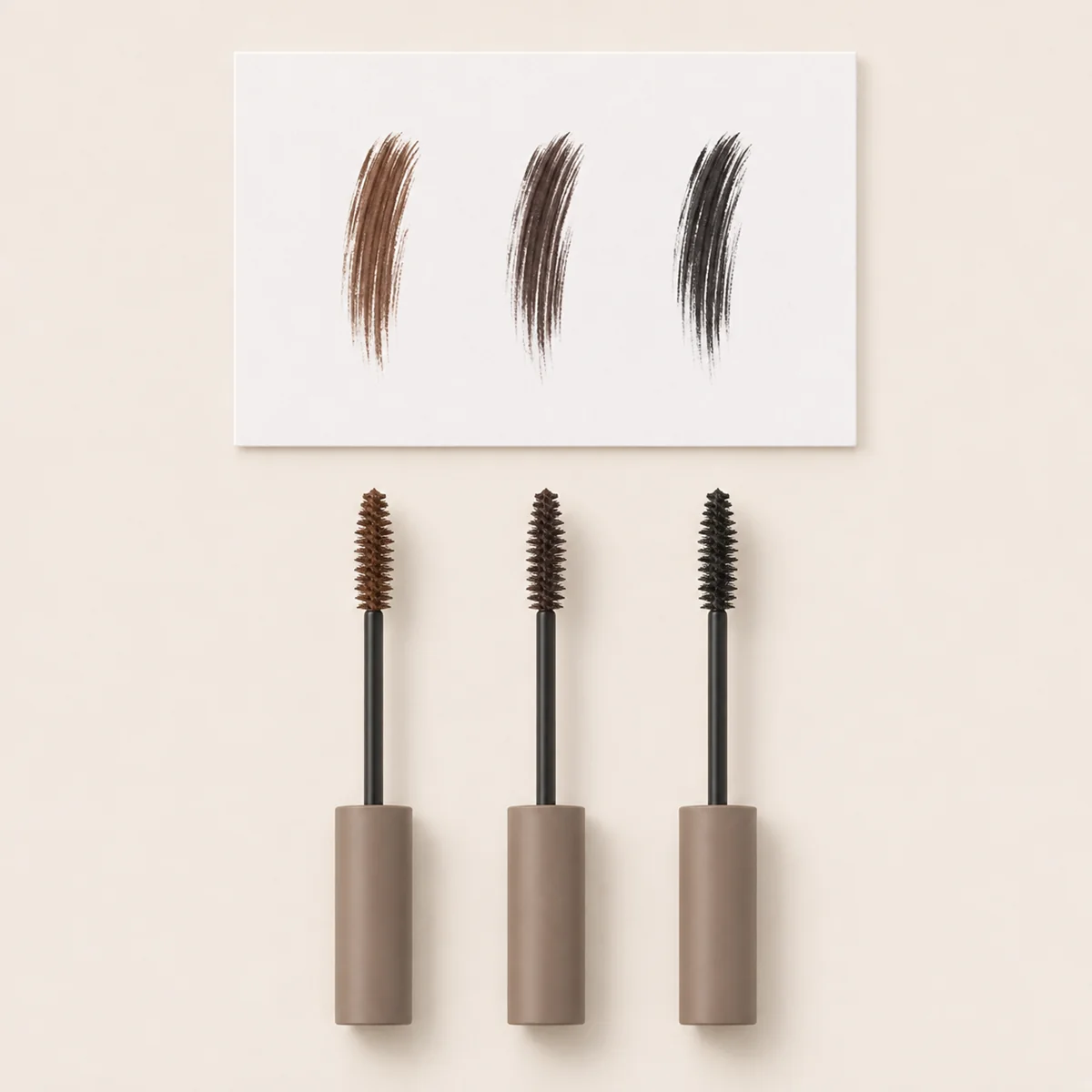
The color choice is mostly about contrast. Black gives the darkest frame at the lash line. Brown softens that frame. Brown-black sits between the two, and shade names don’t follow a shared standard. One brand’s brown can read almost black on lashes, and another’s can read warm and reddish. Judge a swatch or a product photo of the actual shade, not the word on the tube.
A few honest questions help more than an eye-color chart:
- Where is this for? An office day, a wedding, photos under strong flash and a weekend with no other makeup can call for different amounts of definition. It’s fine to answer “it depends.”
- What’s the rest of your face doing? With bare skin and brushed brows, black lashes may be the darkest thing on your face. With eyeliner and filled brows, the same black can blend into the rest.
- How does it feel when you look in the mirror? If black has started to feel like a costume, that’s useful information. If brown makes you feel like you forgot mascara, that is too.
Look at the gap, not just your eyes
Most color guides tie mascara shade to eye color. No7’s guide, for example, suggests brown for fair skin with blonde or red hair and blue or green eyes, and black for darker skin, eyes and hair. It also closes by saying there’s no right or wrong answer.
We’d go one step simpler. Instead of starting with eye color, look at the gap between your lashes and what’s around them: your skin, your brows, your hair near your face. When that gap is already wide, black adds a strong frame. When the gap is narrow, black can still work, it just reads as a bigger change. It’s the same idea as comparing low, medium and high contrast in an outfit, applied to a much smaller area. Hair color shifts the picture too, as our guide to choosing hair jewelry by hair contrast explains for a different accessory.
None of this makes black “wrong” for blue eyes or brown “wrong” for dark hair. It just tells you how big a change each one will be.
Decision 2: What does the formula need to handle?
Now forget color for a minute. The formula question is about your day and your evening.
What goes wrong now?
Write down what actually bothers you with the mascara you have:
- Marks under the lower lashes later in the day
- Flakes on the cheeks
- Lashes losing their curl
- Running when your eyes water, in rain, at the gym or in tears
- Removal that takes a lot of rubbing
If nothing on that list happens, your formula may already be fine, and the only open question is color.
The three formula types, briefly
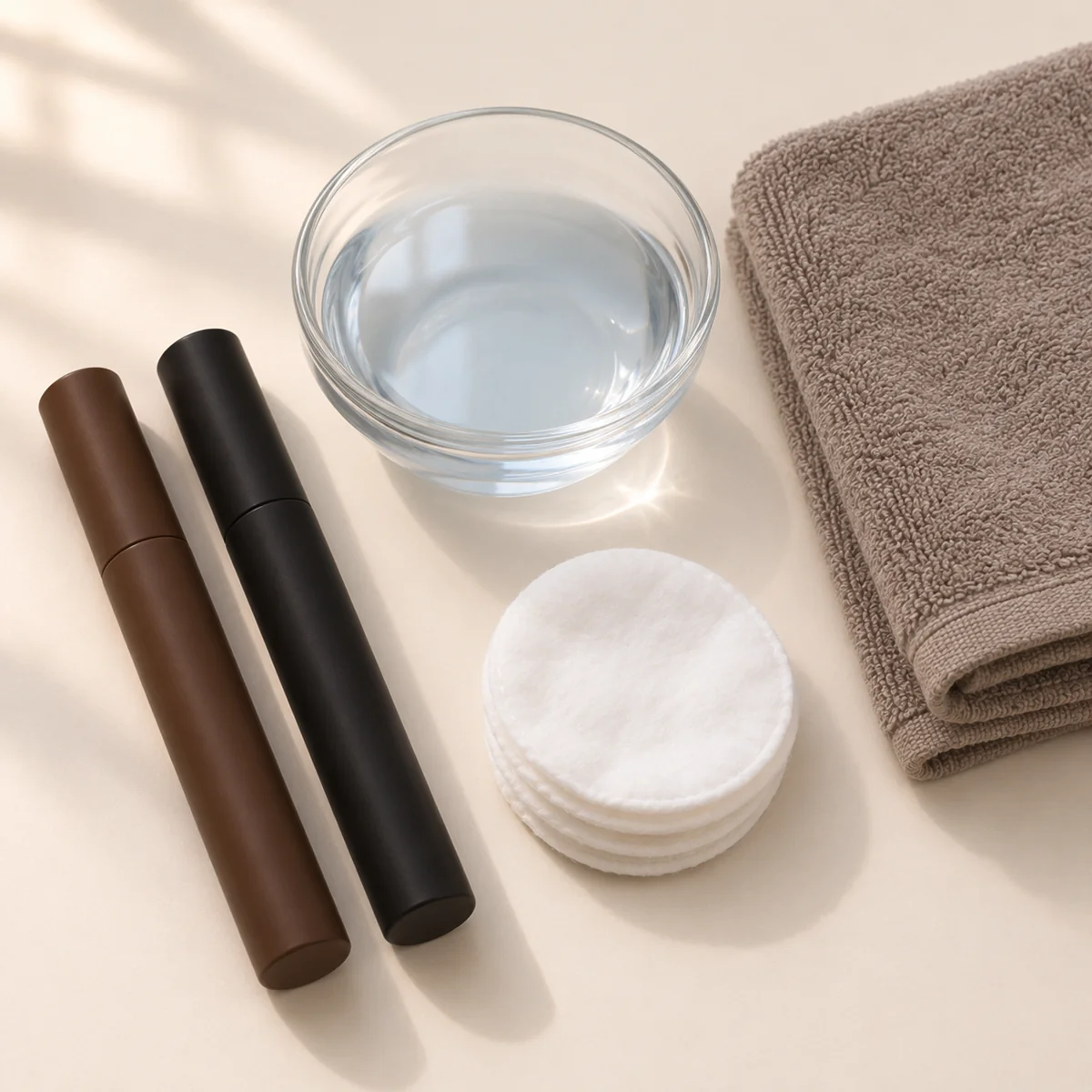
Regular (washable) mascara is the everyday default. Removal is usually with your normal cleanser, but check the product’s directions.
Waterproof mascara is made to resist water. That’s the reason people pick it for humid days, swimming or emotional events, and it’s also why it usually takes more than a splash to come off. Before you buy, read how the maker says to remove it, and think about whether that fits your evening routine.
Tubing mascara works differently. The maker of one well-known tubing formula describes it as forming tiny flexible polymer tubes around each lash, which come off with warm water and gentle pressure, without a special remover. That’s the manufacturer’s description, not an independent test. The same maker also notes that layering a waterproof mascara on top for extra curl hold can change how easily it comes off.
That last point matters. These aren’t three sealed boxes. Formulas vary within each type, and people layer them. So rather than picking a category, match the specific product’s directions to what you need.
Questions that point to a formula
| If this is your situation | Look at |
|---|---|
| Smudges under the eye later in the day | Products that describe themselves as smudge-resistant or tubing, and compare their removal directions |
| You’ll be in water, rain or tears | Waterproof formulas, and plan how you’ll remove it that night |
| You want removal with just warm water | Tubing formulas that say so in their directions, worn without a waterproof top coat |
| No complaints at all | Keep the formula you have |
Put the two answers together
Once you have both answers, the search gets narrow fast. “Softer look, needs to survive a humid commute” points to brown or brown-black in a smudge-resistant formula. “Strong frame, easy removal” points to black in a formula whose directions match the removal you want. People search for exactly these pairs, like “brown tubing mascara” and “brown waterproof mascara,” so check whether the line you like comes in both the shade and the formula you need.
And sometimes the answer is to change nothing, or only one thing:
- Color feels wrong, formula behaves: look for the same formula in a different shade first.
- Color feels right, formula misbehaves: keep the shade family, change the formula.
- Both are fine: you don’t need a new mascara. You needed to know why you were doubting it.
How to compare without buying twice
- Look before you try. The US FDA advises against sharing or swapping eye cosmetics. So a shared tester wand is for looking at the shade, on a card or the back of your hand, not for your lashes.
- Check in the light you’ll be seen in. Window light, office light and a phone camera can make the same lashes look different. Our blush color guide has more on why mirror and photo can disagree.
- Compare one change at a time. If you switch the color and the formula together and like the result, you won’t know which change you liked.
- Count the old tube. The FDA notes that manufacturers usually recommend discarding mascara two to four months after purchase. If yours is older than that, replacing it may be due anyway.
A few safety basics
From the same FDA guidance: don’t add water or saliva to thin out a dried mascara, stop using any eye cosmetic that irritates your eyes, and don’t use eye makeup while you have an eye infection. Throw out what you were using when the infection started. If redness, pain or irritation continues, see an eye doctor rather than switching products.
FAQ
Should I wear dark brown or black mascara?
Decide how much definition you want. Black gives the strongest frame, brown softens it, and brown-black sits between. Then choose the formula separately, based on smudging, water and how you want to remove it.
What eye color does brown mascara look best on?
Brown can look good on any eye color. Eye color is one part of the picture. The gap between your lashes and your skin, brows and hair says more about how big a change black or brown will be. If you’re curious how much color theory has actually been tested, our evidence map of seasonal color analysis is a good read.
Who should wear brown-black mascara?
Anyone who finds black a little too strong and brown a little too faint. Since shade names vary by brand, compare the actual color before buying.
Is tubing mascara the same as waterproof mascara?
Not exactly. Tubing formulas are described by their makers as removable with warm water, while waterproof formulas are made to resist water. Read each product’s own removal directions, and note that layering the two can change how removal works.
Does brown mascara smudge less than black?
Color doesn’t decide smudging. That comes from the formula and your conditions. Brown smudges may just be less noticeable than black ones.
Final thoughts
Brown vs black isn’t a test with a right answer. It’s two small decisions that are easier to make apart: how much you want your lashes to stand out, and what your mascara has to put up with. Get those clear, and the shopping part takes care of itself. Often it’s shorter than you expected.
If you’d like to see how contrast and color work across the rest of your face, try the 5-minute personal color triage, start your EverlySpark color analysis, or browse the 12 seasons.
Colors on screen can look different from real life depending on your display and lighting. This article is general information, not medical advice.
Sources checked (Nov 10, 2026): Google Trends, US, “brown mascara” related queries, Nov 4 to 10, 2026 (via EverlySpark weekly research); Google Trends, Canada, “brown mascara” top related queries, Nov 4 to 10, 2026 (via EverlySpark weekly research); No7 Beauty, “Black vs Brown Mascara: Which One Should You Wear?”; U.S. Food and Drug Administration, “Eye Cosmetic Safety” (content current as of June 28, 2022); Blinc Inc., “Tubing Technology” and FAQ (manufacturer information).