trends
Hair Jewelry: Choose Metal by Hair Contrast, Scale, and Placement
Apply gold, silver, and mixed-metal guidance to the visual problem unique to hair accessories: the hair background, shine, scale, and distance from the face.
A necklace is seen against skin or clothing. A hair clip is seen primarily against hair. That makes hair depth, texture, shine, placement, and exposed metal area as important as warm-versus-cool undertone.
This page is intentionally narrower than our canonical gold-or-silver jewelry guide. Use that guide for metal temperature and finish. Use this one to decide whether the accessory disappears, reads as a controlled accent, or becomes a statement against the hair.
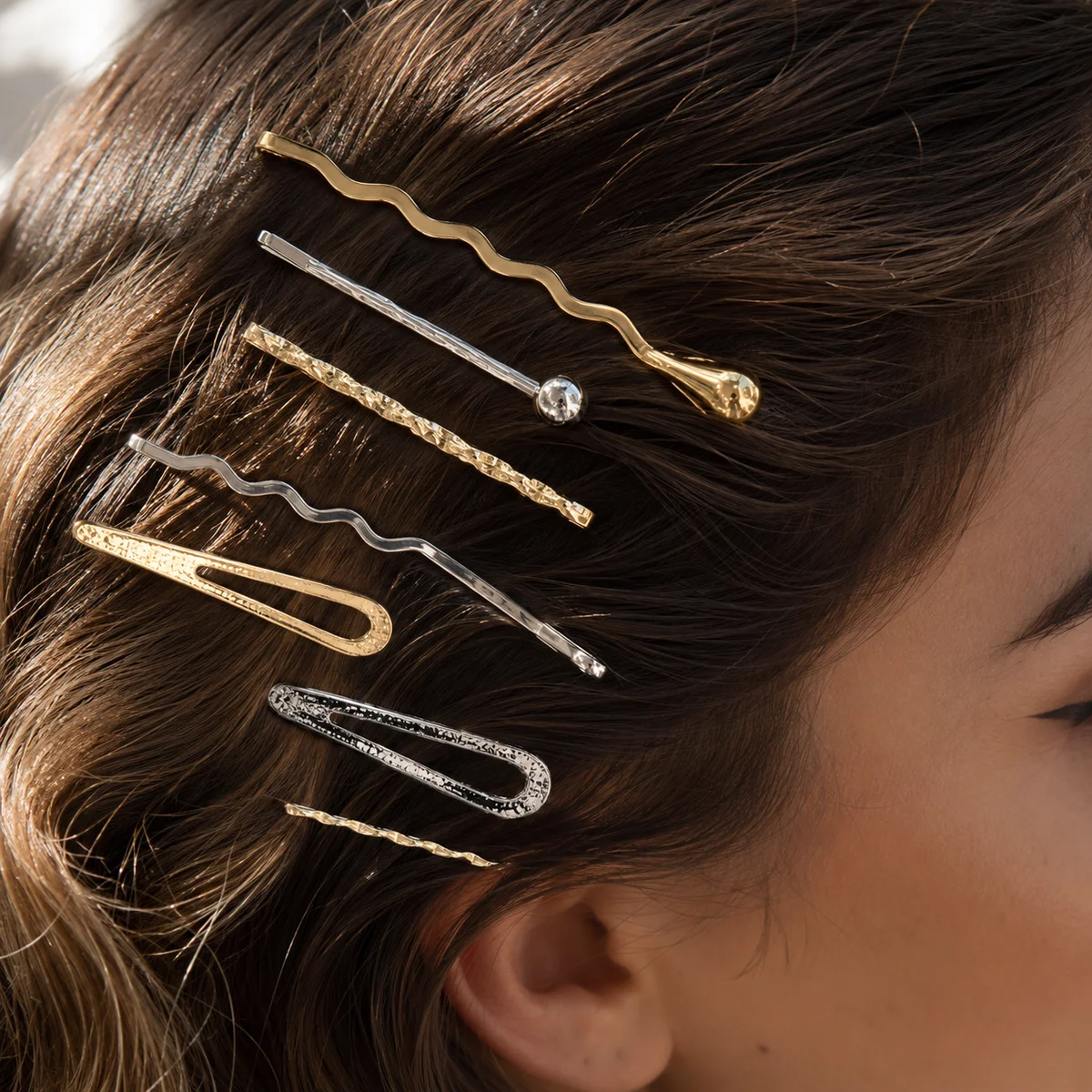
Quick decision
- Decide whether you want the piece to blend or contrast with the hair.
- Match its scale to the visible hair area and hairstyle.
- Compare shine against the hair’s own shine and texture.
- Choose metal temperature near the face.
- Test placement before buying duplicates.
A season label alone cannot answer steps 1–3.
Hair-background contrast matrix
| Hair background | Details |
|---|---|
| Very light blonde, silver, or white | For a subtle result: pale gold, brushed silver, fine low-shine pieces; For a statement result: dark bronze, gunmetal, clear colored stones; Common failure: bright silver can disappear; large black hardware can feel abrupt |
| Golden blonde or warm light brown | For a subtle result: pale/medium gold, warm matte metal; For a statement result: silver or gunmetal with deliberate cool contrast; Common failure: yellow gold with identical value can vanish |
| Ash blonde or cool light brown | For a subtle result: brushed silver, pewter, cool rose; For a statement result: polished gold as intentional contrast; Common failure: warm metal may look separate if scale is large |
| Medium brown | For a subtle result: medium gold, bronze, satin silver; For a statement result: high-polish gold/silver or contrasting stones; Common failure: tiny low-shine pieces disappear |
| Dark brown or black | For a subtle result: gunmetal for blend; deeper gold or silver for moderate contrast; For a statement result: polished silver, bright gold, pearl, high-contrast enamel; Common failure: multiple bright pieces can compete with the face |
| Copper, auburn, or vivid dyed warm hair | For a subtle result: bronze, antique gold, restrained warm metal; For a statement result: silver/gunmetal for deliberate temperature contrast; Common failure: bright yellow gold can merge into the hair rather than read clearly |
| Vivid cool or fashion-colored hair | For a subtle result: metal that repeats the color’s temperature at lower shine; For a statement result: opposite-temperature or high-polish metal; Common failure: too many high-chroma elements create uncontrolled competition |
This is EverlySpark styling analysis. “Failure” means the result misses the intended subtle/statement goal—not that the hair or metal is objectively wrong.
Subtle or statement? Decide before choosing a season metal
Choose subtle when:
- the accessory is for work or repeated daily wear;
- the hairstyle already has texture, braiding, or strong color variation;
- earrings, glasses, or makeup provide the main face-level accent;
- you want hardware to support rather than define the hairstyle.
Choose statement when:
- the hairstyle is visually simple and the accessory is the focal point;
- a camera or event distance requires more scale;
- the piece repeats another deliberate metal in the outfit;
- your palette and preference tolerate higher shine or contrast.
A Bright Winter does not need a statement clip, and a Soft Summer is not forbidden from one. The season suggests a starting contrast level; the intended design decides the outcome.
Scale depends on visible hair area
A small pin on a close crop can occupy a large share of the visible hairstyle. The same pin can disappear in long, dense curls.
Use this practical ratio-free test:
- Step back to normal conversation distance.
- If the piece is invisible but should be noticed, increase scale, shine, or contrast—one at a time.
- If the accessory is visible before the face, reduce exposed metal area, shine, number of pieces, or proximity to the hairline.
- Photograph from the front and side; clips often have very different profiles.
No exact number of clips is universally correct.
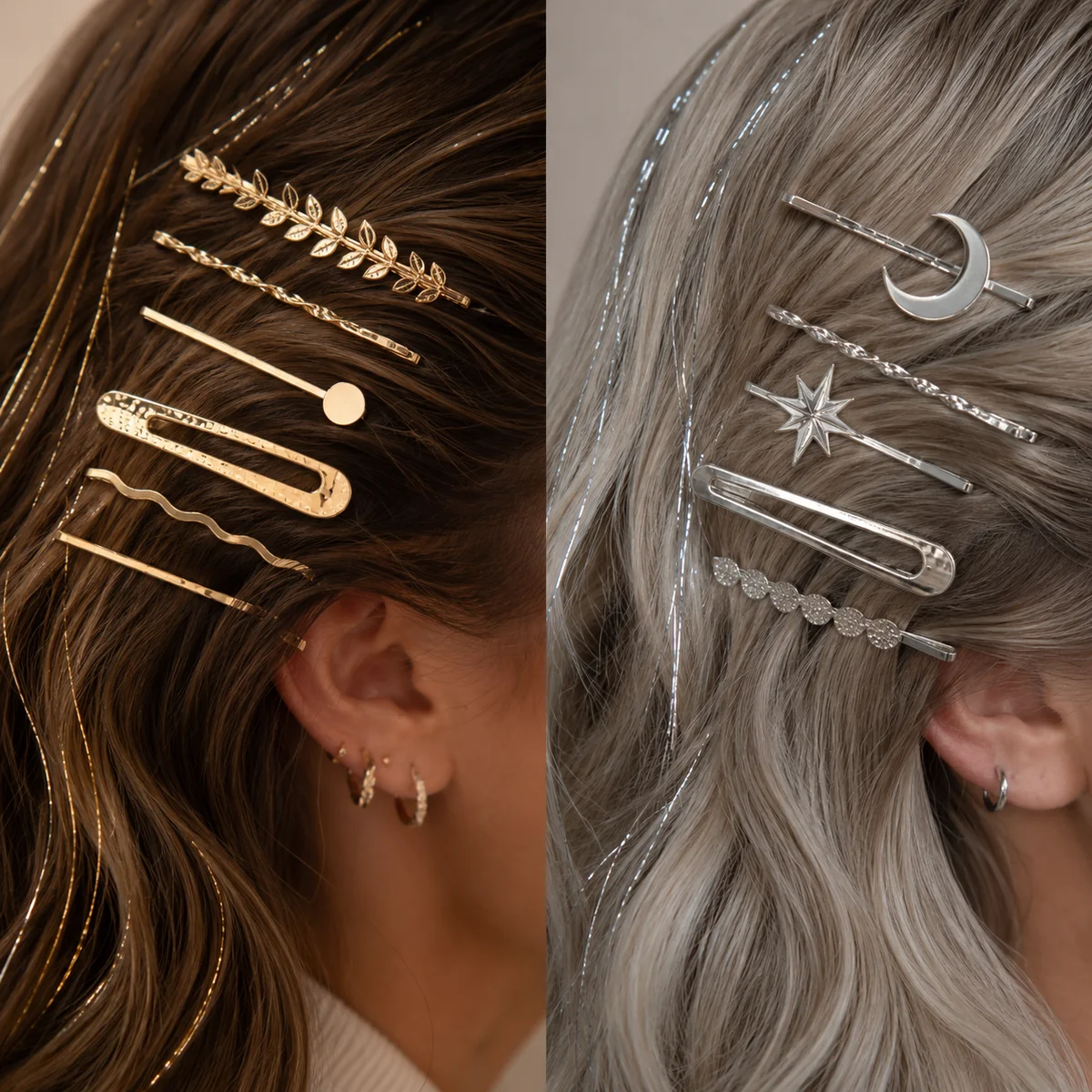
Placement changes both face and hair interaction
| Placement | Details |
|---|---|
| Part line or temple | Main visual relationship: face, brows, glasses, and hair simultaneously; Useful test: compare metal temperature and glare near the eyes |
| Above/behind ear | Main visual relationship: earrings and hair depth; Useful test: avoid accidental competition with large earrings |
| Crown/back | Main visual relationship: hair background more than skin; Useful test: prioritize visibility and security over undertone |
| Ends or scattered tinsel | Main visual relationship: repeated shine across movement; Useful test: test under intended indoor and outdoor light |
| Bun/ponytail hardware | Main visual relationship: larger concentrated field; Useful test: check weight, grip, and view from the back |
A piece near the temple may need the same temperature check as earrings. A barrette at the back can be chosen mainly for contrast against the hair.
Finish and texture
- Mirror polish produces small, bright highlights and can read higher contrast.
- Brushed or satin metal spreads light more softly.
- Antique or oxidized finish adds depth and may blend with dark or textured hair.
- Hair tinsel repeats many narrow highlights; total effect can become stronger than each strand suggests.
- Pearls, enamel, and stones add separate value and chroma variables, so do not attribute the result to metal alone.
If the metal family seems correct but the piece looks harsh, lower the shine before changing from silver to gold or vice versa.
Coordinate with glasses and earrings
Hair jewelry shares a small visual area with frames and earrings. Use one of three strategies:
- Repeat: same metal family and similar finish.
- Bridge: mixed-metal piece that includes both existing metals.
- Separate: deliberately contrasting metal but simpler scale elsewhere.
Accidental near-matches can look less intentional than clear separation. A pale warm gold clip beside a bright cool-gold earring may clash more than a deliberate silver-and-gold mix.
A controlled try-on
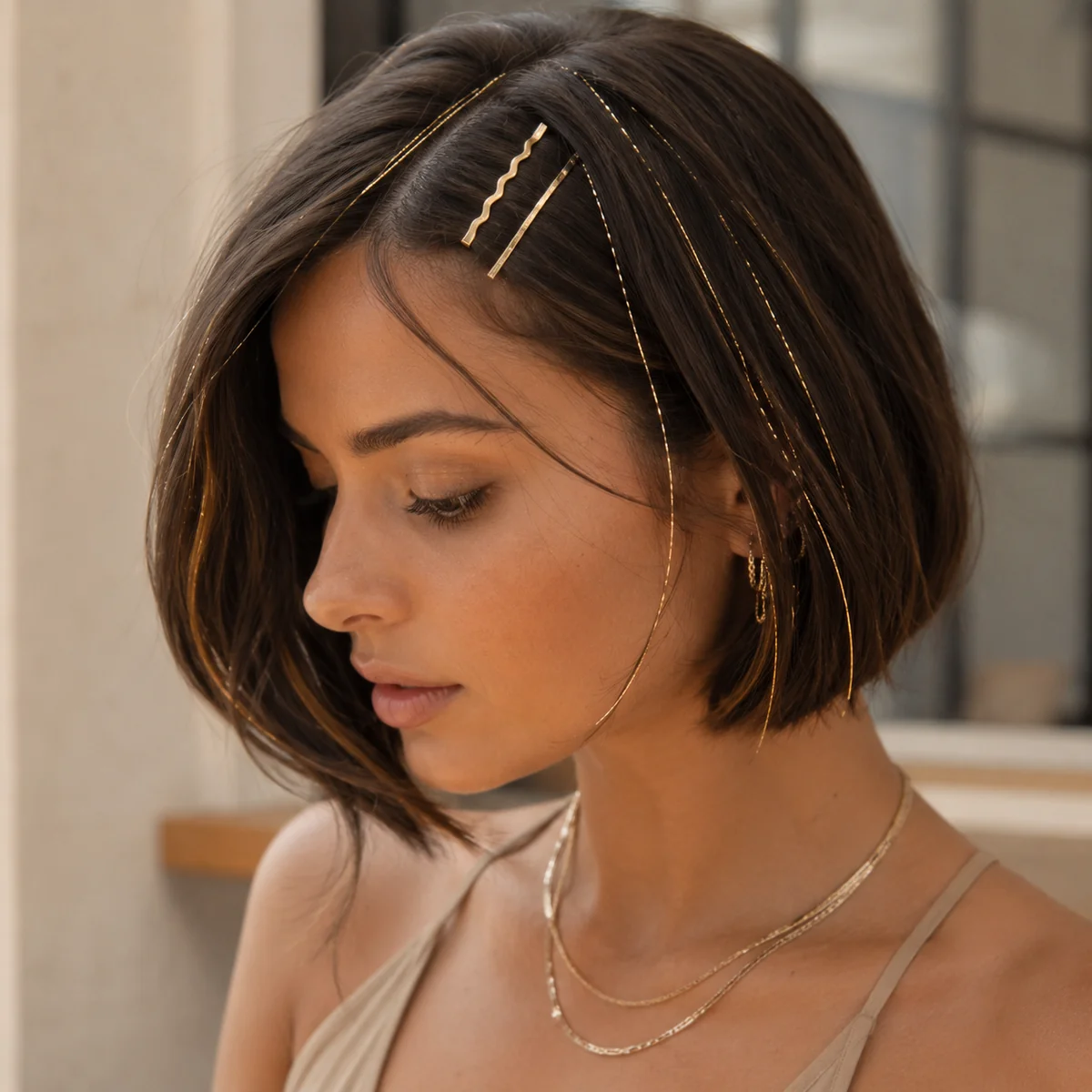
- Style the hair as you normally will.
- Compare matched gold and silver pieces at the same location.
- Keep size and finish as similar as possible.
- Check in indirect daylight and the event’s likely indoor light.
- Move the winning piece to two other placements.
- Decide whether you want blend or statement before scoring the result.
If the winner changes by placement, record that. It may mean the metal works against hair but not beside the face, or vice versa.
About trend claims
The previous article version described hair jewelry and specific short haircuts as 2026 breakouts based on unspecified search interest. That provenance was not documented, so the trend ranking and “all-time high” claim were removed.
Hair jewelry does not need a trend claim to be useful. Clips, pins, barrettes, combs, and tinsel create a recurring styling problem whenever reflective material sits against hair. This revised page is evergreen application guidance rather than a forecast.
Methodology and limits
The matrices are EverlySpark editorial synthesis based on observable contrast, finish, scale, and placement. They are not product-performance findings or a validated scientific hair-jewelry system. Images illustrate possible styling; they are not proof of a controlled comparison.
Use What Is Personal Color Analysis? for the temperature/value/chroma/contrast framework and the gold-or-silver guide for the general metal test. A photo-based season result is optional and should not override grip, weight, comfort, or whether the piece works against the hair.
Bottom line
For hair jewelry, choose the visual job first: blend or statement. Then adjust scale, shine, and placement against the hair. Use metal temperature as the final refinement near the face—not the only rule.
Not sure which season fits you best?
Start with a simple photo-based personal color analysis, then explore makeup guides and product picks tailored to your results.