product
7 Sunglasses Mistakes Men Make: Fit, UV, Glare, Then Style
Choose sunglasses in the right order: verified UV labeling, coverage, stable fit, task-specific glare control, proportion, and finally frame color.
Sunglasses are safety equipment, comfort equipment, and a face-framing accessory. Shopping by face shape alone puts those priorities backward.
Use this order:
- verified UV label;
- coverage and stable fit;
- activity-specific glare needs;
- optical comfort;
- proportion and personal style;
- frame and lens color.

Mistake 1: assuming dark lenses mean UV protection
The U.S. FDA advises choosing sunglasses labeled UV400 or 100% UV protection, which it says block more than 99% of UVA and UVB radiation. Lens darkness is not evidence of UV protection.
Before purchase: read the product label or official specification. If the claim is missing or a seller cannot verify it, color, brand, and face-shape advice are secondary.
Mistake 2: treating polarization as the same thing as UV blocking
Polarization reduces reflected glare from surfaces such as roads and water. The American Academy of Ophthalmology explains that polarization itself does not provide UV protection; a polarized pair still needs a separate UV-protection claim.
Choose polarization when: glare from driving, water, sand, or similar reflective settings is the problem.
Pause when: you rely on certain LCD screens or need to see icy patches; polarization can make some displays or surface cues harder to see.
Mistake 3: buying coverage that leaves large gaps
The FDA suggests considering large or wraparound frames because they cover more of the eye socket. More coverage can matter more than whether a frame is currently fashionable.
Ask:
- Do the lenses cover the eyes without large top or side gaps?
- Does the frame stay stable when you look down?
- Do your eyelashes touch the lens?
- Does the lower rim rest on the cheeks when you smile?
- Do the temples pinch or bow outward?
A wide frame is not automatically better; it must stay aligned and comfortable.
Mistake 4: using rigid face-shape rules instead of proportion
“Round faces need squares” and “square faces need circles” are easy slogans, not fit standards. Use them as optional design contrast, not prescriptions.
A better checklist:
| Checkpoint | Details |
|---|---|
| Frame width | What to observe: Temples sit without squeezing or flaring; If it fails: Try a different eye/bridge/temple size, not only a new shape |
| Bridge | What to observe: Frame stays level without sliding or pressure; If it fails: Change bridge fit or nose-pad design |
| Lens depth | What to observe: Coverage works without cheek contact; If it fails: Try shallower lenses or adjusted bridge fit |
| Brow relationship | What to observe: Top line feels intentional rather than randomly cutting across brows; If it fails: Compare one straighter and one curved top line |
| Visual weight | What to observe: Frame supports rather than hides the face; If it fails: Change rim thickness, transparency, or color contrast |
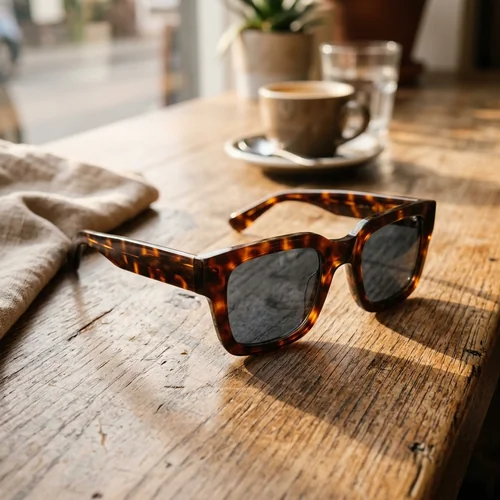
Mistake 5: choosing one pair for every task
Lifestyle, sport, prescription, and driving needs can conflict.
- A close wrap may improve side coverage for outdoor activity but feel visually out of place with formal clothing.
- A fashion frame may have verified UV protection yet insufficient stability for running.
- Polarization may improve road glare but interact poorly with a dashboard display.
- Special sports, occupational use, or direct sun/eclipse viewing require task-specific protection, not ordinary sunglasses.
Buy for the highest-risk routine first. Add a second style only if it solves a different real use case.
Mistake 6: making frame color more important than fit
Color matters because the frame sits close to the eyes and brows, but it is a finishing decision.
EverlySpark frame-color matrix:
| Visual direction | Details |
|---|---|
| Warm + light/clear | Lower-risk starting frames: honey, light tortoise, warm translucent brown, lighter gold; Test carefully: opaque jet black or very heavy dark tortoise |
| Cool + soft/light | Lower-risk starting frames: soft charcoal, blue-gray, brushed silver, cool translucent acetate; Test carefully: yellow-orange tortoise or mirror-bright high contrast |
| Warm + soft/deep | Lower-risk starting frames: dark tortoise, bronze, olive-brown, warm matte metal; Test carefully: icy silver or stark white |
| Cool + clear/deep | Lower-risk starting frames: black, gunmetal, silver, cool navy, high-contrast acetate; Test carefully: muddy low-contrast beige |
This is styling analysis, not protective-eyewear evidence. A personal color season cannot tell you whether a lens blocks UV.
If black feels too harsh, try reducing visual weight before abandoning dark frames: a thinner rim, translucent charcoal, softened black, or smaller lens shape may solve the problem. See Why Black Doesn’t Look Good on Everyone for the same contrast logic in clothing.
Mistake 7: buying named classics without verifying the exact model
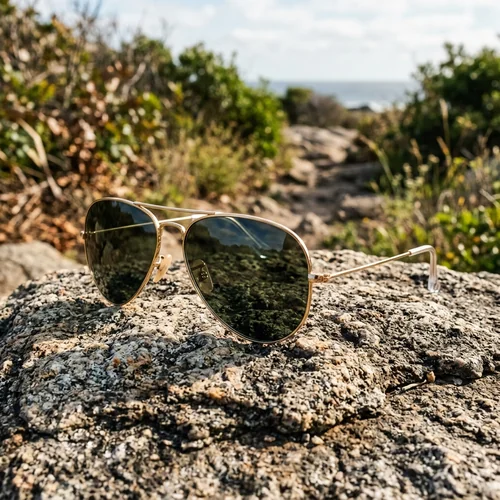
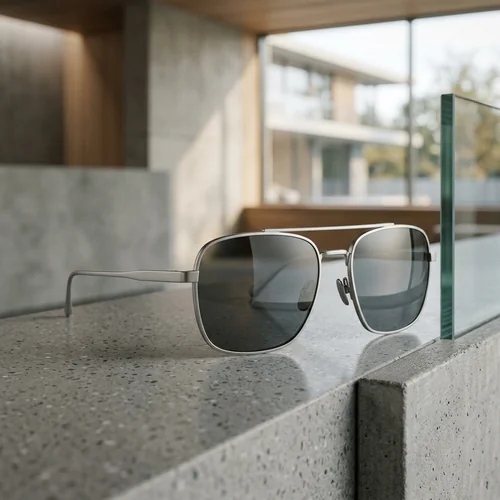
Wayfarer, browline, and aviator describe broad style families. A model name does not guarantee that its size, bridge, lens option, or current specification matches another version sold under a similar listing.

For any named product, verify on the exact manufacturer or authorized-retailer page:
- model number and size;
- lens material and tint;
- UV-protection claim;
- polarization, if needed;
- prescription compatibility, if needed;
- return policy after fit testing.
The prior version of this article contained product-first affiliate recommendations. They were removed because the visible article did not document the exact current specifications needed to justify them.
Affiliate disclosure: EverlySpark may use affiliate links elsewhere on the site. This revised guide contains no product purchase links; its selection order is independent of commission.
A 60-second store test
- Confirm UV400 or 100% UV-protection labeling.
- Put the frame on without adjusting it for 20 seconds.
- Look down, turn your head, smile, and check cheek/lash contact.
- Look toward a bright area without looking directly at the sun; assess comfort and coverage.
- If polarized, check the displays you actually use.
- Compare frame color only after both candidates pass steps 1–5.
When to skip the purchase
Skip or seek professional guidance when:
- the seller cannot substantiate UV protection;
- you need prescription lenses and the frame/lens combination has not been checked;
- the glasses create distortion, discomfort, headache, or unstable fit;
- the use is occupational, medical, high-impact sport, or direct solar viewing;
- the return policy prevents meaningful fit testing.
Sources and boundaries
- U.S. FDA: Tips to Stay Safe in the Sun — UV400/100% UV labeling, darkness warning, coverage, and price caveat. Checked 2026-09-07.
- American Academy of Ophthalmology: How to Choose Sunglasses — polarization-versus-UV distinction and consumer guidance. Checked 2026-09-07.
- ISO 12312-1:2022 scope record — general-use sunglasses standard context. The standard’s existence is not evidence that a specific pair complies.
Fit and frame-color tables are EverlySpark editorial decision support. The article images illustrate styles only; they do not show certification, optical performance, or controlled fit tests.
Bottom line
A flattering frame that lacks verified UV protection or stable fit is the wrong pair. Pass function first. Then use proportion, visual weight, and frame color to choose between the pairs that remain.
Not sure which season fits you best?
Start with a simple photo-based personal color analysis, then explore makeup guides and product picks tailored to your results.