fashion
Polo Shirt Colors for Dad: A Low-Risk Gift Method
Choose a wearable polo color from the recipient's real wardrobe, near-face neutrals, contrast, fabric, and exchange risk—even when you do not know his season.
A polo is a low-risk clothing gift only when three separate decisions work: he wears collars, the fit is exchangeable, and the color belongs in his actual wardrobe.
You do not need to diagnose his exact personal color season. A better surprise-gift method starts with observed behavior and uses seasonal color only to break a close tie.
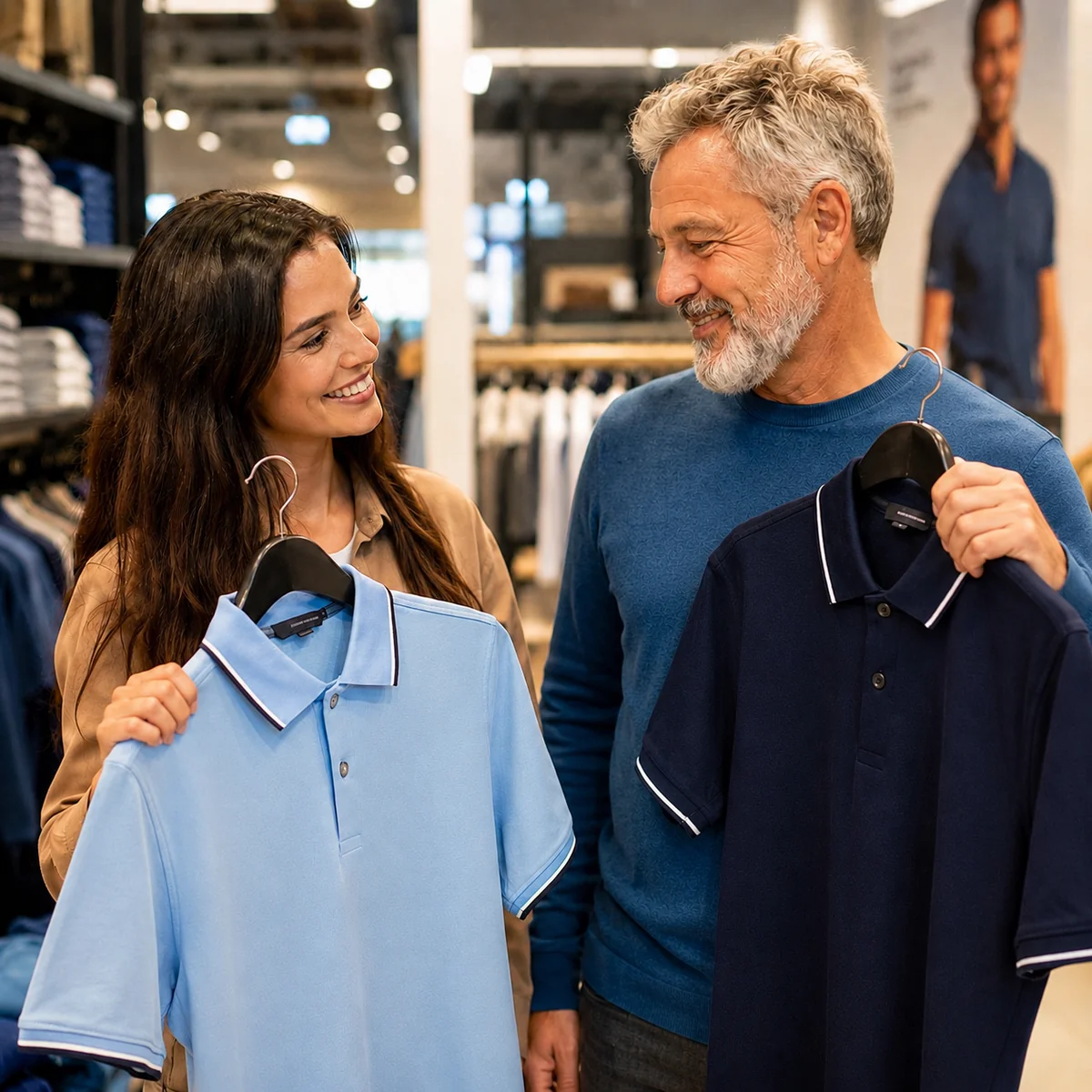
Quick decision order
- Confirm he already wears polos or similar collars.
- Copy the size and fit from a shirt he uses—not from a generic size conversion.
- Find the two near-face neutrals he wears most.
- Choose a color that works with his trousers and outerwear.
- Prefer a retailer with a workable exchange policy.
- Use undertone, value, chroma, and contrast only to refine the final shade.
If step 1 fails, do not buy a polo. Apply the same color method to a crew neck, overshirt, or another garment he already chooses.
The recipient-unknown safe-choice matrix
| What you can observe | Details |
|---|---|
| He repeatedly wears navy and charcoal | Lower-risk color direction: soft navy, charcoal, blue-gray; Why: already works with his wardrobe and likely trousers; Avoid assuming: that black is automatically equivalent |
| He favors camel, olive, cream, and brown | Lower-risk color direction: olive, warm navy, muted teal, camel; Why: connects to existing warm earth neutrals; Avoid assuming: that all warm colors must be orange or rust |
| His closet is mostly light neutrals | Lower-risk color direction: stone, cream, light blue, soft sage; Why: preserves a lighter value range; Avoid assuming: that deep navy is “safe for everyone” |
| He wears crisp black-and-white contrast | Lower-risk color direction: black, optic white, cobalt, clear burgundy; Why: supports an existing high-contrast pattern; Avoid assuming: that a muted beige gift will be versatile |
| His wardrobe mixes warm and cool neutrals | Lower-risk color direction: neutral navy, medium teal, balanced burgundy; Why: bridges both sides without a strong yellow/blue cast; Avoid assuming: that a precise season label is needed |
| You cannot inspect the wardrobe | Lower-risk color direction: a returnable medium-value blue or teal close to something he already owns; Why: color evidence is limited, so exchangeability matters most; Avoid assuming: that any one hue is universally flattering |
There is no risk-free universal navy. Very dark, cool navy may dominate someone who consistently wears light warm colors. The useful default is the navy closest to a shirt he already reaches for.
Use the four-axis system without pretending certainty
EverlySpark defines personal color with four working axes:
- Temperature: warmer versus cooler versions
- Value: lighter versus deeper
- Chroma: softer versus clearer
- Contrast: quieter versus more separated combinations
For a gift, infer these at low confidence from repeated wardrobe choices—not veins, ethnicity, age, or one photograph.
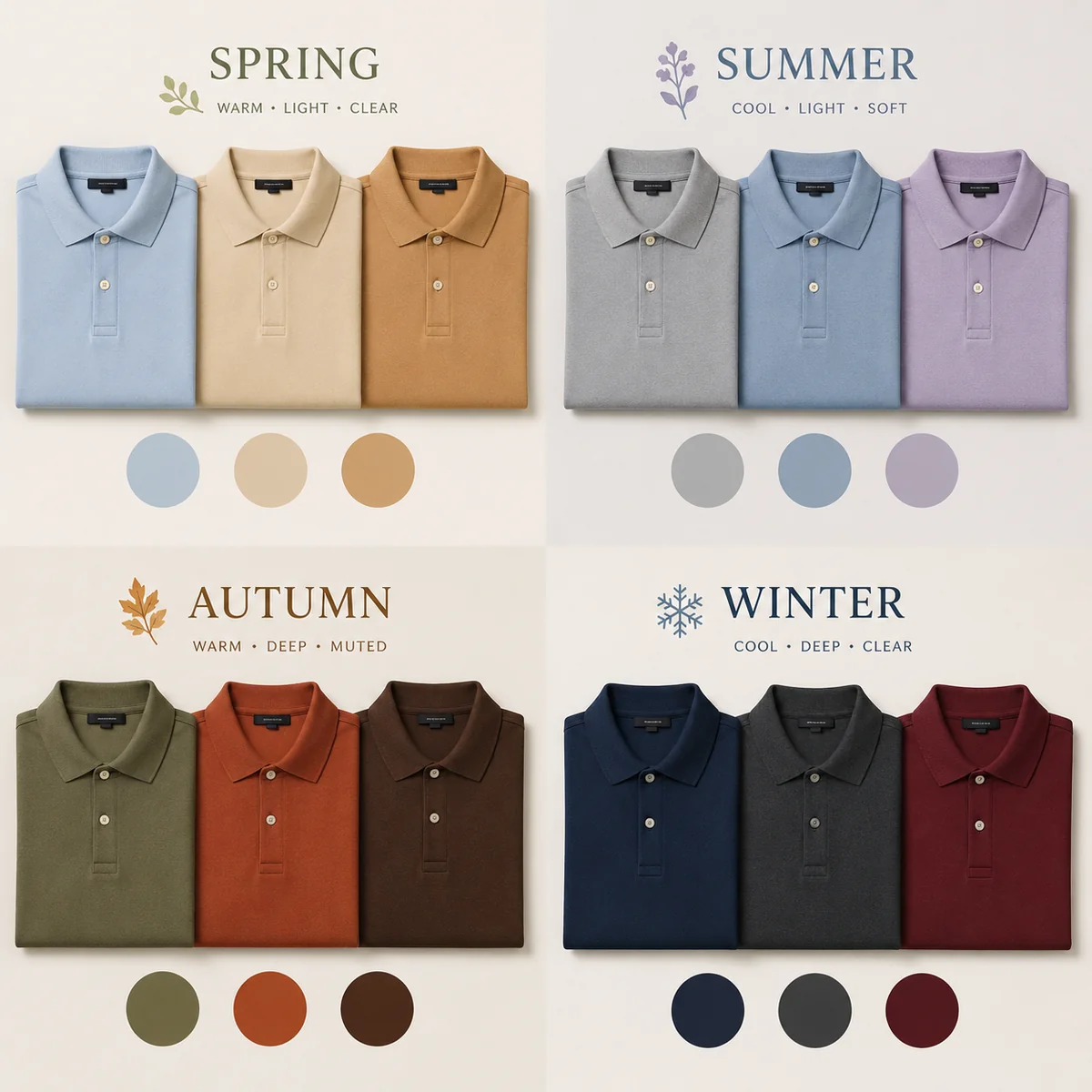
| Broad direction | Details |
|---|---|
| Warm + light/clear | Polo colors to test first: warm light blue, fresh green, cream, clear camel; Nearby alternative if it feels wrong: too pale → True Spring depth; too bright → softer warm neutral |
| Cool + soft/light | Polo colors to test first: dusty blue, soft navy, blue-gray, muted berry; Nearby alternative if it feels wrong: too gray → a slightly clearer cool blue |
| Warm + soft/deep | Polo colors to test first: olive, warm teal, rust, chocolate; Nearby alternative if it feels wrong: too heavy → camel or medium moss |
| Cool + clear/deep | Polo colors to test first: cool navy, charcoal, burgundy, black; Nearby alternative if it feels wrong: too severe → softer navy or smaller contrast |
These are starting hypotheses from the 12-season decision matrix, not guarantees.
How to inspect his closet without “typing” him
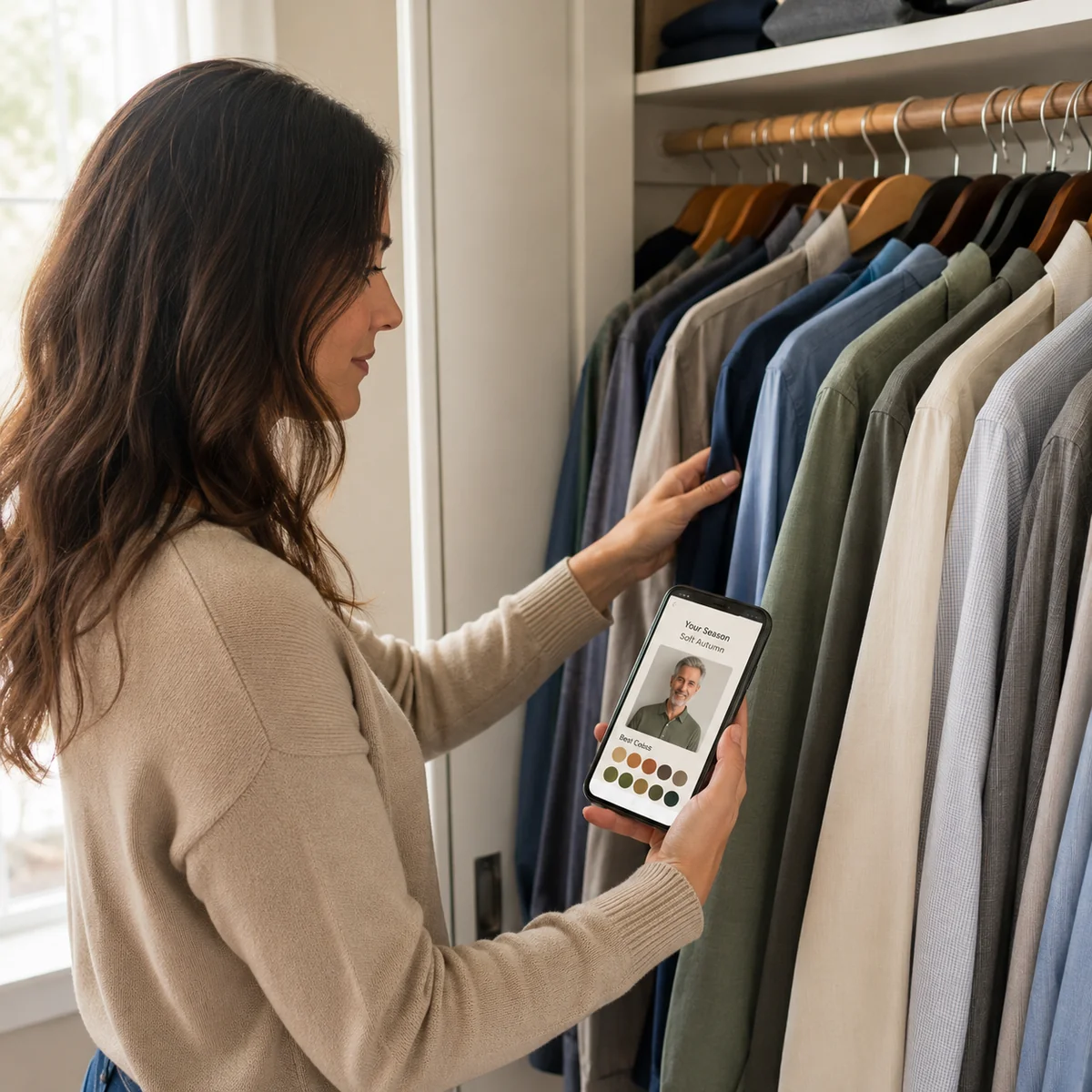
Choose three shirts he wears often and three he rarely wears.
Record:
- color family and whether it is warm or cool;
- light, medium, or deep value;
- muted or clear appearance;
- whether the shirt is solid or high-contrast;
- condition and fit.
The last point prevents a false conclusion. A shirt may be unworn because it shrank, pills, or fits badly—not because the color fails.
Compliments can be supporting evidence, but they are noisy. Repeated voluntary wear is usually more useful for a gift decision.
Fabric can change the color decision
A product thumbnail is not the garment.
- Piqué texture can break up reflected light and make a color read softer.
- Smooth mercerized or synthetic fabric may look shinier and clearer.
- Heathering lowers apparent chroma.
- Thin fabric can shift when layered over skin or an undershirt.
- Fading changes value and chroma after washing.
Check customer or manufacturer fabric details, care instructions, and real return terms. Do not transfer the appearance of a studio photo to every lighting condition.
The daylight and wardrobe check
If you can shop in person, hold the shirt near the recipient in indirect daylight without announcing a season test. If that is impossible:
- View the product on more than one calibrated-looking screen if available.
- Compare it with a known shirt under the same room light.
- Check whether it works with at least two trousers he owns.
- Keep tags and packaging intact.
- Treat easy exchange as part of the product value.
A photo-based color estimate can be used only with permission to use the person’s photo. EverlySpark’s analyzer provides a rule-based hypothesis, not a reason to override observed wardrobe behavior.
Reasons to skip a featured or popular polo
Skip a specific item when:
- only one color is available and it does not connect to his wardrobe;
- the retailer’s fit differs from the shirt used as your size reference;
- the fabric finish is much shinier, thinner, or heavier than he wears;
- the care instructions conflict with his routine;
- returns are costly or final sale;
- the recommendation is supported only by an affiliate listing rather than official specifications.
The prior version of this guide repeatedly linked one marketplace polo without documenting its brand, exact model, fabric, fit, or current color range. Those product claims and purchase CTAs were removed.
Affiliate disclosure: EverlySpark may earn commissions from affiliate links elsewhere. This revised guide contains no purchase link and does not rank a specific polo.
How much should personal color matter?
Color matters because a polo creates a large near-face field. It does not matter more than fit, comfort, identity, or whether he likes polos.
Use personal color when two otherwise suitable options remain. Do not use it to manufacture certainty from limited clues. For the method boundary, see What Is Personal Color Analysis?.
Gift checklist
- He already wears collars.
- Size and fit came from a garment he uses.
- The color connects to at least two existing outfits.
- Fabric and care suit his habits.
- The retailer allows exchange.
- The receipt is included.
- No unverified product or anti-aging claim is used to sell the gift.
Bottom line
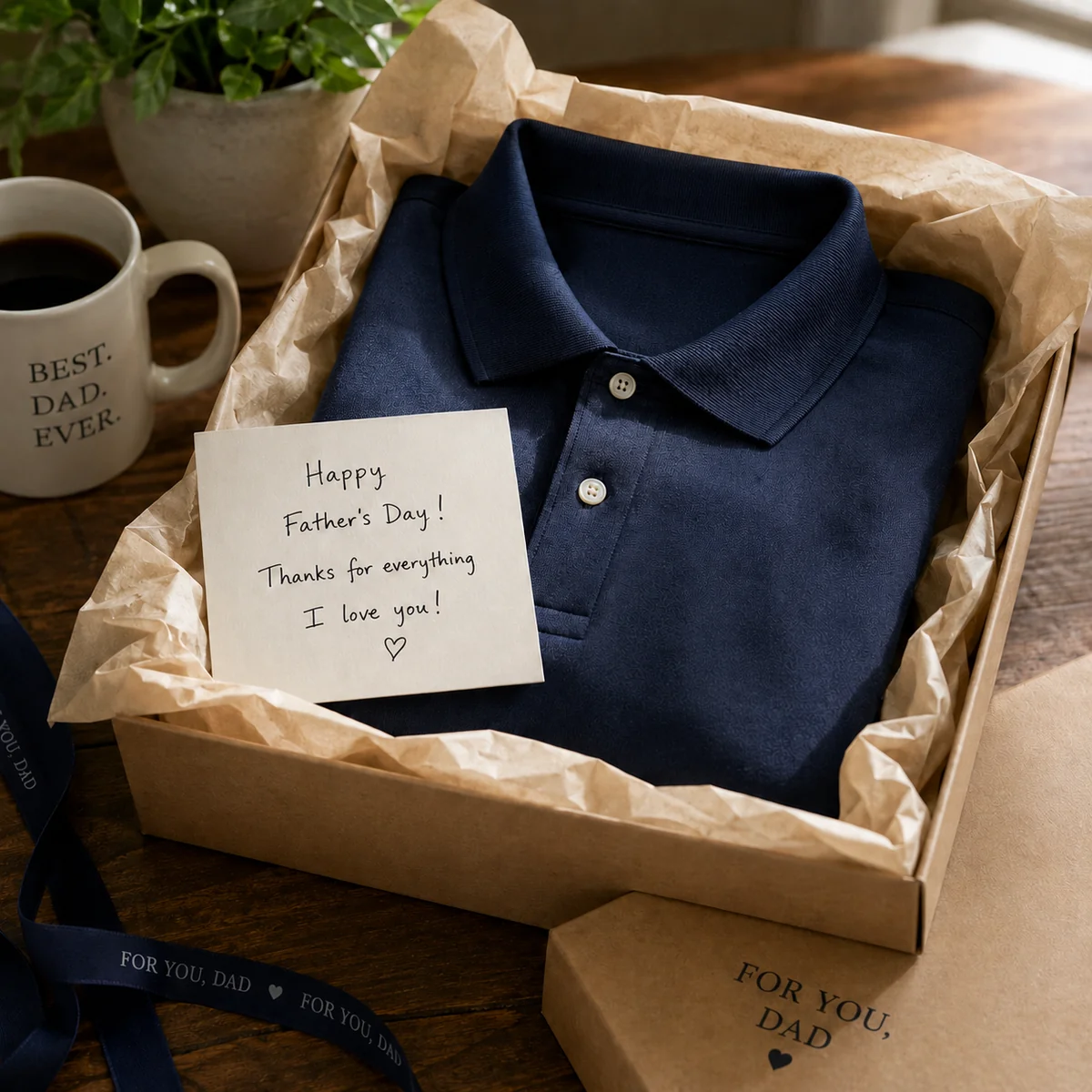
Do not secretly diagnose a season and bet the gift on it. Start with what he already wears, pick the closest useful color direction, check fabric and return terms, and use the seasonal framework only as a transparent tie-breaker.
If clothing is not the right gift category, the same recipient-friction method is applied in our Korean skincare gifts guide.
Not sure which season fits you best?
Start with a simple photo-based personal color analysis, then explore makeup guides and product picks tailored to your results.