season-guide
Deep Autumn vs Deep Winter: Key Differences
Intro
If you look best in deep, rich colors but feel unsure whether warm or cool tones suit you better, you may be deciding between Deep Autumn and Deep Winter. These two seasons are often confused because they both belong to the deeper end of the color spectrum — but their undertones and overall effects are very different.
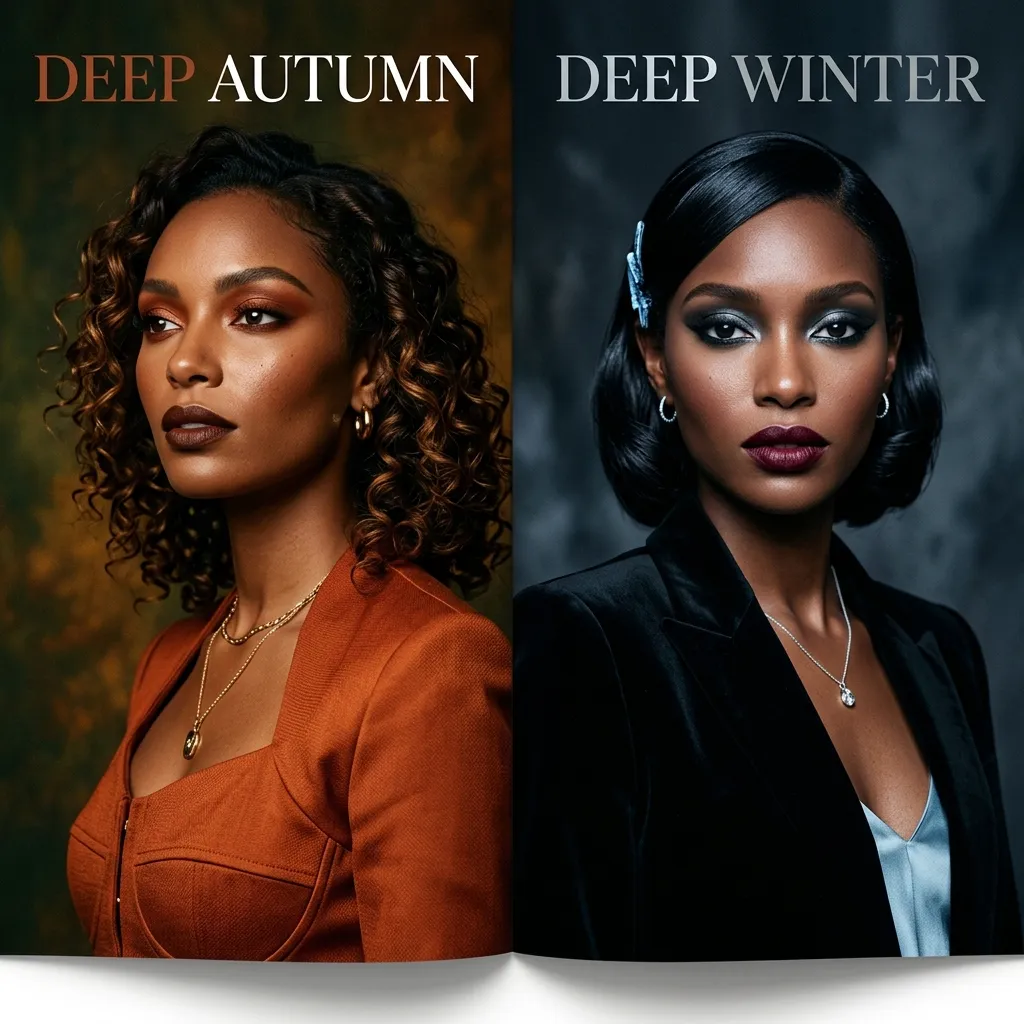
In this guide, you’ll learn the key differences between Deep Autumn and Deep Winter, how to tell them apart, and how to identify which one enhances your natural features.
What Deep Autumn and Deep Winter Have in Common
Both Deep Autumn and Deep Winter share a defining characteristic: depth.
This means:
- Darker colors suit you better than light ones
- You can handle richness without being overwhelmed
- Your features likely have strong presence
Because of this shared depth, many people assume they belong to the same category. However, the real difference lies in temperature and clarity.
Deep Autumn: Warm, Rich, and Earthy
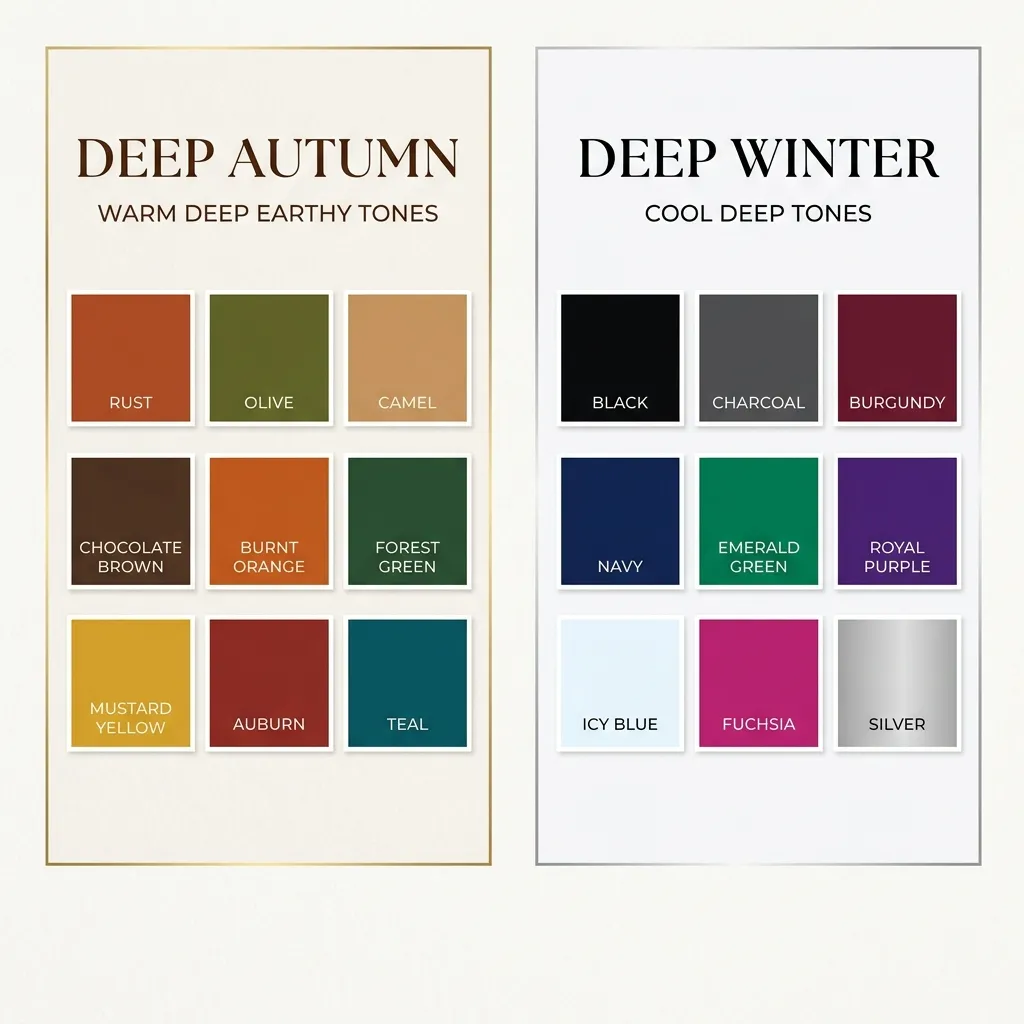
Deep Autumn is warm and slightly muted, with a grounded, natural feel.
Typical colors include:
- Rust
- Olive green
- Deep brown
- Warm burgundy
- Dark camel
These tones create warmth, richness, and depth without appearing overly sharp.
You may be Deep Autumn if:
- Your skin has a warm or neutral-warm undertone
- Gold jewelry looks better than silver
- Earthy tones enhance your complexion
Deep Winter: Cool, Deep, and High Contrast
Deep Winter is cool and more intense, with higher contrast than Deep Autumn.
Typical colors include:
- Black
- Charcoal
- Deep burgundy
- Icy blue
- Cool navy
These colors create a sharp, dramatic, and polished effect.
You may be Deep Winter if:
- Your skin has a cool or neutral-cool undertone
- Silver jewelry looks better than gold
- High contrast looks natural on you
The Key Difference: Warmth vs Cool Contrast
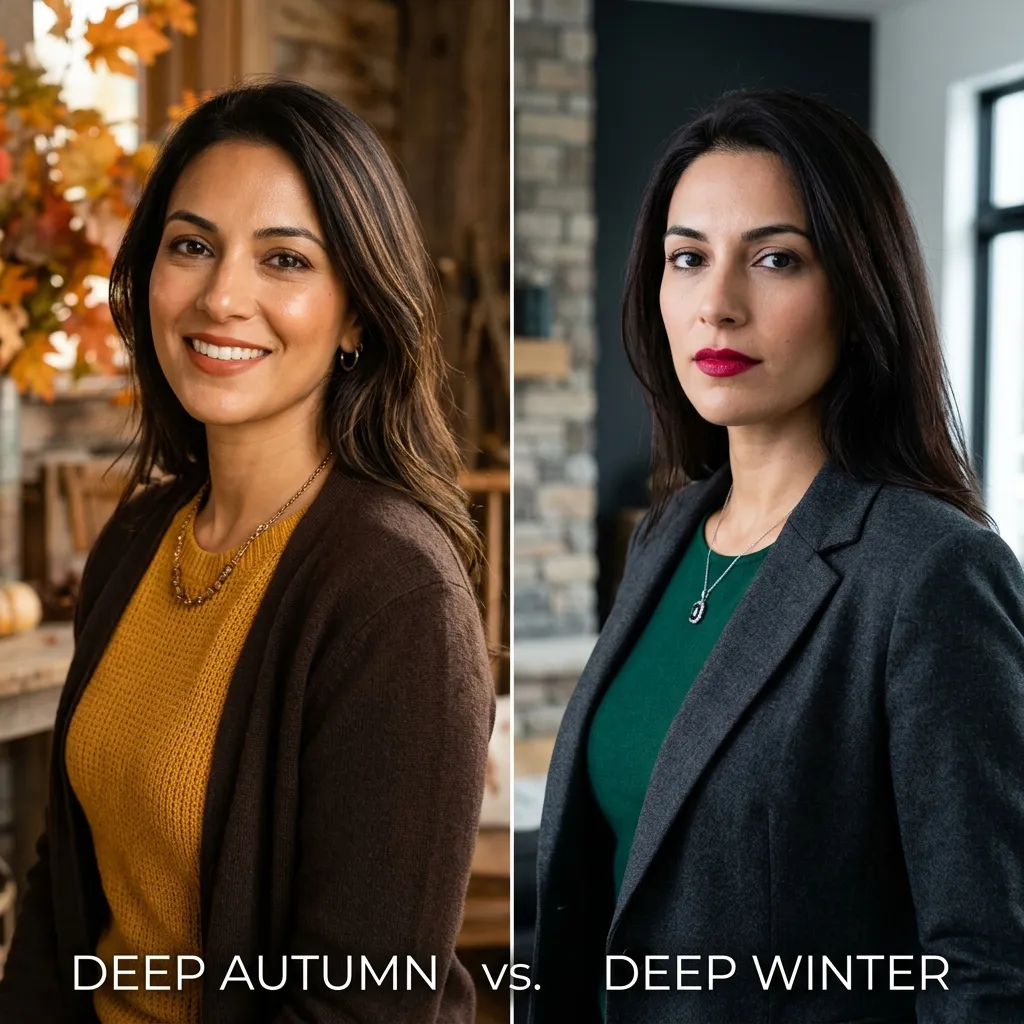
The most important difference between these two seasons is how color temperature interacts with depth.
- Deep Autumn → warm + deep + slightly muted
- Deep Winter → cool + deep + more clear and contrasting
Even though both palettes are dark, their emotional impact is very different.
How to Tell the Difference
Try this simple test in natural light:
- Wear a warm deep color (like rust or olive)
- Then wear a cool deep color (like black or deep burgundy)
Observe:
- Does warmth make your skin glow and look richer? → Deep Autumn
- Does cool contrast make your features sharper and clearer? → Deep Winter
Common Mistakes
Many people focus only on depth and ignore undertone. While both seasons share deep coloring, temperature changes everything.
Another mistake is assuming black suits everyone. Black is a key color for Deep Winter, but it can feel too harsh for Deep Autumn.
What Happens If You Choose the Wrong One?
Wearing the wrong palette can subtly affect your appearance:
- Cool tones on Deep Autumn → flat and lifeless
- Warm tones on Deep Winter → heavy and dull
- Overall balance is disrupted
These differences may seem small, but they significantly impact how polished and cohesive you look.
Final Thoughts
Deep Autumn and Deep Winter may share depth, but their undertones create completely different results. One emphasizes warmth and richness, while the other highlights cool contrast and intensity.
Understanding this difference allows you to choose colors that work with your natural features — not against them.
👉 Discover Your True Season
Still unsure whether you are Deep Autumn or Deep Winter?
Try a personalized color analysis and find your perfect palette instantly.
Common Mistakes to Avoid
- Avoid overly bright neon shades.
- Avoid warm orange-coral tones when your season is cool.
- Avoid high-contrast finishes that overpower soft coloring.
Not sure which season fits you best?
Start with a simple photo-based personal color analysis, then explore makeup guides and product picks tailored to your results.